

As an Amazon Associate GolferHive.com earns from qualifying purchases.
Realistic Golf Ball Cake Pops: Gourmet Hole-in-One Treats for Golfers
Struggling to achieve truly realistic golf ball cake pops without ugly clumps or unexpected cracking? Crafting bakery-quality treats often leaves home bakers deeply frustrated by lumpy chocolate and heavy dough.
To make realistic golf ball cake pops, you must use a food-grade silicone golf ball mold to achieve the signature dimpled texture. Combine a moist interior cake mixture with a properly thinned bright white finish candy coating. Ensure the pops are thoroughly chilled before dipping to completely prevent cracking.
Drawing from professional confectionery standards and expert baker tips, we have perfected this edible golf balls technique. Discover the exact science of cocoa butter crystallization and the secret tools needed for a flawless matte white coating. Your golf themed party is about to get a stunning centerpiece.
Contents
show
7 Steps to Make Realistic Golf Ball Cake Pops
To successfully complete these 7 steps, you will prepare a precise cake ball mixture, portion perfect spheres, and carefully melt your white chocolate coating before pressing the treats into a 3D golf ball mold. Learning how to make these high quality realistic golf ball dessert ideas requires more than just standard rolling. The transition from a basic golf ball shape to a masterpiece relies heavily on temperature control and using the right cake pop sticks.
When following this step by step guide, you will master the delicate balance between chilling your dough and applying a thin, smooth finish. Professional bakers rely on this exact sequence to prevent the dreaded stick-slip and ensure their making golf ball creations look incredibly lifelike. Let’s dive into this easy to follow, foolproof workflow for beautiful perfect golf balls that will dazzle your party guests.
1. Prepare the Moist Cake Ball Mixture

Save this foolproof cake mixture ratio to your baking boards!
To prepare the perfect moist cake ball mixture, gently crumble a baked boxed cake mix and combine it with a minimal amount of buttercream frosting until it just holds its shape. Finding the ideal balance between homemade vs store bought cake and your chosen frosting is critical.
Focus entirely on achieving the perfect binder ratio. Too much frosting makes the pops incredibly heavy and prone to falling right off the stick. Too little frosting makes the cake crumbly and impossible to mold. The density of cake mixture directly impacts the long-term structural integrity of cake pops. Using this expert baker tips approach ensures your dough forms flawlessly.
Ingredients
- 1 box of premium vanilla or white boxed cake mix (baked according to package instructions and cooled)
- 1/3 cup of rich buttercream frosting (avoid over-saturating the mix)
- Large glass mixing bowl
- Food processor or stand mixer (optional, for ultra-fine crumbs)
Instructions
- Crumble cake thoroughly using clean hands or a food processor until entirely reduced to fine, even crumbs with no large chunks remaining.
- Mix frosting into the crumbs one tablespoon at a time, gently kneading the mixture until it reaches a play-dough consistency.
- Squeeze a small amount of the cake ball mixture in your palm; if it holds its shape without cracking or feeling greasy, the hydration is perfect.
Pro-Tip: Over-frosting is the number one reason cake pops fall off their sticks. For professional results, rely on the natural moisture of the cake and use frosting merely as a mild binder to maintain the structural integrity of cake pops.

2. Portion Perfect Spheres with a Cookie Dough Scoop

Pin this portioning trick so all your golf balls are uniform in size!
To portion perfect spheres, use a 1-tablespoon stainless steel cookie dough scoop to measure the dough uniformly, then vigorously roll balls between your palms until completely smooth. This guarantees every single bite-sized piece matches perfectly.
Inconsistent sizes will absolutely ruin the molded effect when making small vs large cake pops. You need these to be life-sized and perfectly uniform so they fit precisely inside the silicone mold without overflowing. Following industry standards for portion control demands precision, followed immediately by refrigeration to solidify the fats before dipping.
Ingredients
- Prepared cake ball mixture
- 1 Tablespoon stainless steel cookie dough scoop
- Parchment paper or wax paper
- Large baking sheet
- Digital kitchen scale (for advanced precision)
Instructions
- Scoop dough using the 1-tablespoon measure, leveling it off flat against the side of your bowl to ensure every pop is completely uniform.
- Roll balls vigorously between the palms of your hands until the surface is entirely smooth, eliminating any seams or cracks where chocolate could seep.
- Place the spherical cake bites onto your parchment-lined baking sheet.
- Chill mixture in the refrigerator for exactly 2 hours, or in the freezer for 15-20 minutes until firm but not frozen solid.
Pro-Tip: If your dough feels too soft while you roll balls, chill the bowl for 10 minutes. A completely smooth surface before molding is crucial to prevent moisture in chocolate which causes seizing and cracking.
3. Melt and Thin the Bright White Candy Coating

Save this secret ingredient trick for flawlessly smooth cake pops!
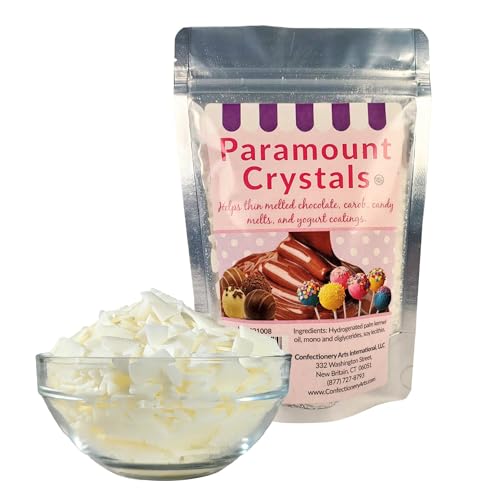
To melt and thin the bright white candy coating properly, gently heat your white candy melts in the microwave and stir in paramount crystals until the mixture flows flawlessly without clumps. Achieving a beautifully thin coating is non-negotiable for detailed molds.
Solve the universal baking pain point of clumpy white chocolate by introducing paramount crystals. When comparing candy melts vs white chocolate, melts are easier to use but often need thinning for a smooth finish. Managing the surface tension in dipping requires the right viscosity so it won’t drag or form thick, unsightly layers that obscure your intricate details.
Ingredients
- 1 bag (12 oz) high-quality white candy melts or Ghirardelli white chocolate
- 1-2 tablespoons of paramount crystals (or coconut oil/EZ Thin)
- Microwave-safe silicone melting bowl or chocolate melter pot
- Silicone spatula for stirring
Instructions
- Melt chocolate or candy melts in a microwave-safe bowl on 50% power in 30-second intervals, stirring vigorously after each interval until mostly smooth.
- Add paramount crystals one teaspoon at a time to the warm mixture, stirring continuously until they melt completely into the coating.
- Thin coating until it flows off your spatula like warm honey; it should run in a smooth, continuous ribbon rather than dropping in thick clumps.
- Allow the bright white finish coating to rest for 3-5 minutes so the temperature drops slightly, avoiding thermal shock when it hits the chilled cake balls.
Pro-Tip: Utilizing paramount crystals instead of vegetable oil prevents the hygroscopic properties of sugar from drawing out oil later, a common culprit when trying to stop oil leaking in professional confectionery finish types.
4. The Secret to the Dimple: Getting the Realistic Texture with a Mold

Don’t skip this molding step—pin it for the ultimate hyper-realistic texture!
To get the realistic dimpled texture, brush a thin layer of melted coating directly into a food-grade silicone golf ball mold before gently pressing the chilled cake ball inside. This method ensures every single crevice is perfectly filled.
Creating authentic 3d golf ball cake pops requires a specific embossed surface. Instead of pressing a solid, dipped cake ball into a dry mold, you must apply texture by coating the silicone first. Understanding silicone mold curing and shrinkage prevention eliminates air bubbles and helps you easily fix uneven dimples. This level of detail guarantees your treats mimic the surface of actual sporting equipment.
Ingredients
- Food-grade silicone golf ball mold (2-part 3D spherical mold with embossed surface)
- Prepared, perfectly thinned white candy coating
- Food-safe detail paintbrush
- Clean, dry kitchen towel
Instructions
- Ensure your silicone golf ball mold is entirely clean and meticulously dried; even a micro-drop of water will cause the chocolate to seize and ruin the dimpled texture.
- Apply texture coating by spooning a small amount of thinned white chocolate into the bottom half of the mold cavities.
- Use your food-safe paintbrush to push the chocolate up the sides of the mold, ensuring it fills every single dimple to avoid air bubbles and fix uneven dimples.
- Press into mold gently; place one chilled cake ball into the chocolate-lined cavity, being careful not to push so hard that the cake touches the silicone directly.
- Spoon a little more chocolate over the top of the cake ball to seal it, preparing it for the stick insertion.
Pro-Tip: Always coat the mold with chocolate before inserting the cake ball. If you try to press into mold a naked cake ball and pour chocolate over it, you will trap air and lose the hyper-realistic dimples completely.

5. Secure the Lollipop Sticks Without Cracking

Never lose a cake pop to the dipping bowl again—pin this securing trick!
To secure the lollipop sticks without cracking the cake, dip the stick tips into warm melted chocolate before inserting them halfway into the partially chilled cake spheres. This creates an edible glue that bonds the stick securely to the dough.
Addressing the most common bakery failure requires proactive structural engineering. A heavy cake ball needs the right cake pop sticks to prevent the stick coming out during finishing. When deciding between lollipop sticks vs golf tees, always use sturdy food-safe sticks for the actual insertion. Establishing this temperature bridging prevents cracking and showcases advanced expert baker tips.
Ingredients
- Heavy-duty 6-inch white lollipop sticks
- Melted, warm white candy coating (your “glue”)
- Assembled mold cavities with cake balls resting inside
Instructions
- Dip stick directly into your warm melted white chocolate, coating about 1/2 inch of the tip.
- Insert stick straight down into the center of the cake ball resting inside the mold, pushing about halfway through—do not pierce the bottom of the mold!
- Secure stick by wiping away any excess chocolate that pools around the insertion point; a small “collar” of chocolate is fine and acts as structural glue.
- Refrigerate the entire mold for 15-20 minutes, allowing the chocolate shell and the stick’s “glue” to completely harden and fuse with the chilled cake.
Pro-Tip: If your cake pops are cracking when you insert stick, your cake balls are too cold (frozen), or your sticks are too thick. Let the rolled cake rest at room temperature for 3 minutes before insertion to balance the temperature and prevent cracking.

6. Dip and Seal for a Professional Smooth Finish

Master the tap-and-twirl method for a flawless finish—save to your technique boards!
To seal the pops for a professional smooth finish, carefully dip any exposed cake into the warm chocolate, tap the excess off gently against your wrist, and rotate the pop continuously. This guarantees an even layer without destroying your molded front.
Completing the visual trompe l’oeil effect requires seamlessly blending the back coating with your molded dimples. When dipping cake pops, managing the intersection of chocolate + shells is critical. Avoid causing bloom on chocolate by regulating temperatures carefully. Setting up your styrofoam block ahead of time allows you to establish that smooth coating instantly, relying heavily on pro-decorator techniques.
Ingredients
- Completely chilled and set molded cake pops
- Remaining warm, thinned white chocolate
- Thick styrofoam block or wooden cake pop drying stand
- Clean hands
Instructions
- Gently peel the silicone golf ball mold away from the hardened chocolate shell; the pop should release easily, revealing a perfect, hyper-realistic dimpled front.
- If the back half of your cake is exposed, dip stick and pop carefully into the warm coating just up to the edge of the molded shell.
- Tap excess chocolate off by holding the stick horizontally and gently tapping your wrist (not the stick) with your free hand to vibrate the excess coating away.
- Rotate pop slowly while tapping to ensure an even, smooth surface on the back.
- Set coating by sticking the pop upright into your styrofoam block to dry completely at room temperature.
Pro-Tip: Never shake the cake pop directly to remove excess chocolate; this guarantees the heavy ball will slide right off the stick. Always tap the wrist of the hand holding the pop to safely vibrate the chocolate off like a true professional.

7. Display Your Edible Golf Balls on a Themed Stand

Elevate your party presentation with these easy styling tricks—pin for later!
To perfectly display your edible golf balls, arrange the finished treats upright on an acrylic cake pop stand accented with green paper shreds and authentic golf tees. This transitions your delicious bakes into high-end event decor.
When preparing for an elegant event like the Masters Tournament, how you package pops and display treats makes a massive impact. Beautifully integrating your golf party supplies ensures the dessert table serves party guests while flawlessly matching the golf themed party aesthetic. Mastering these final food presentation tips and understanding shelf-life stability cements your specialty baking expertise.
Ingredients
- Fully dried and set realistic golf ball cake pops
- Clear acrylic cake pop stand
- Wooden or plastic golf tees (clean/new)
- Edible green Easter grass or green paper shreds
- Clear cellophane bags and green ribbon (if gifting)
Instructions
- Assemble your clear acrylic cake pop stand and ensure the base is stable on your dessert table.
- Display treats by gently inserting the sticks into the pre-drilled holes, leaving adequate space between each pop so they don’t bump and chip.
- Scatter green paper shreds or edible green grass around the base of the stand to mimic a lush fairway or putting green.
- Nestle clean, real golf tees into the grass around the base to tie the golf-themed desserts together perfectly.
- To package pops for a retirement gift or party favor, slide a clear cellophane bag over the top and tie tightly at the base with a Masters-green ribbon.
Pro-Tip: For maximum shelf-life stability, keep displayed pops away from direct sunlight or hot event lighting. Candy coating will begin to sweat and lose its pearlescent sheen if the room temperature exceeds 75°F (24°C).

Key Takeaways: Your Quick Guide to Realistic Golf Ball Cake Pops
To master these realistic golf ball cake pops, you must prioritize temperature control, the correct frosting ratios, and high-quality candy melts. Reviewing these core insights ensures you can execute these beautiful golf ball cake balls flawlessly without having to re-read every detailed step.
For time-pressed bakers and busy event planners, remembering these troubleshooting rules is the difference between dimpled cake pops that shine and treats that crumble. By synthesizing complex baking chemistry into actionable rules, you can confidently apply these tested recipe standards to your next batch. Keep these expert baker tips top of mind before you begin.
- Utilize Food-Grade Silicone Molds for Authenticity – To achieve hyper-realistic golf ball cake pops, you must use a specialized 3D silicone golf ball mold; hand-rolling and scoring cannot replicate genuine dimpled texture.
- Perfect the Cake-to-Frosting Binder Ratio – Use frosting sparingly when making the cake ball mixture. Over-hydrating the moist interior makes the spheres heavy, leading directly to them falling off the stick.
- Thin Your Coating with Paramount Crystals – To ensure a seamless, smooth coating that easily fills the mold’s tiny crevices, thin your white candy melts with paramount crystals rather than water or milk, which will seize the chocolate.
- Lock the Stick with a Chocolate Anchor – Always dip stick into melted chocolate before inserting it into the chilled cake ball. This creates a solid structural bond that guarantees your pop survives the final dipping process.
- Troubleshoot Cracks by Managing Temperatures – To prevent cracking, ensure your cake balls are thoroughly chilled but not completely frozen solid. Extreme temperature differences between freezing cake and hot chocolate cause instant thermal shock and structural cracking.
- Avoid Shaking to Prevent Casualties – When removing excess chocolate, tap your wrist rather than violently shaking the stick. This utilizes gentle vibration to shed the coating while protecting the structural integrity of cake pops.
- Store Properly to Prevent Oil Leaking – If you notice oil weeping from your pops, your cake was too moist or the room is too warm. Store finished golf themed cake pops in an airtight container in the refrigerator to maintain their bright white finish and firm exterior.
People Also Ask About Realistic Golf Ball Cake Pops
Navigating common confectionery questions about realistic golf ball cake pops ensures your event desserts turn out flawlessly without unexpected cracking or weeping. Whether you are wondering how to make realistic golf ball cake pops efficiently or simply trying to figure out what mold is best, mastering these details elevates your baking.
Many beginners struggle with golf ball cake balls cracking due to extreme temperature shifts, or they find their candy melts too thick for dipping. By understanding the science behind the ingredients and utilizing expert chef recommended techniques, you can overcome these hurdles. Review these frequently asked questions to refine your skills and achieve bakery style perfection.
How to make realistic golf ball cake pops?
To make realistic golf ball cake pops, you must combine chilled vanilla cake balls with melted white candy coating inside a 3D silicone golf ball mold.
First, crumble baked cake with a small amount of buttercream. Roll into smooth spheres and chill. Next, coat the cavities of a food-grade embossed mold with thinned white chocolate. Gently press the cake ball inside, secure a lollipop stick, and let it set completely before unmolding the detailed treat.
What mold is best for golf ball cake pops?
The best mold for golf ball cake pops is a 2-part, food-grade silicone 3D sphere mold featuring a deeply embossed dimpled texture.
According to professional bakers, flexible silicone is vastly superior to rigid plastic because it allows you to easily peel the mold away from the hardened chocolate without snapping the stick or ruining the delicate pearlescent sheen. Ensure the cavity size matches your cookie dough scoop (typically 1.5 inches in diameter).
How to get the dimple effect on cake pops?
To get the authentic dimple effect on cake pops, you must paint or pool melted chocolate directly into a textured silicone mold before inserting the cake.
Do not try to press a solid cake ball into a dry mold, and do not try to hand-stamp dimples into a dipped pop. Brushing the thinned white candy melts into the mold first ensures the chocolate reaches every crevice, completely eliminating air bubbles and creating a hyper-realistic surface.
What kind of chocolate is best for coating golf ball pops?
High-quality white candy melts or premium white couverture chocolate mixed with cocoa butter are best for coating golf ball pops.
Candy melts (like Wilton or Ghirardelli melting wafers) are heavily preferred by beginners because they do not require complex tempering to harden with a beautiful matte white coating. If you use real white chocolate chips, they must be properly tempered, or they will remain soft and sticky at room temperature.
Why are my cake pops cracking?
Cake pops crack when the internal cake ball expands as it warms up, breaking the rapidly shrinking, hardened chocolate shell on the outside.
This thermal shock happens when you dip completely frozen cake balls into extremely hot chocolate. To prevent cracking, chill your cake balls in the refrigerator (not the freezer) so they are firm but not frozen, and allow your melted candy coating to cool for 5 minutes before dipping.
How to thin out white chocolate for dipping?
Thin out white chocolate for dipping by stirring in paramount crystals, solid vegetable shortening, or specialized EZ Thin oil.
Never use water or milk, which will instantly seize the chocolate into an unusable, chalky paste. For professional bakery style results, stir in one teaspoon of paramount crystals at a time to your warm clumpy white chocolate until it cascades smoothly off your spatula in a continuous ribbon.
How to prevent cake pops from falling off the stick?
Prevent cake pops from falling off the stick by dipping the tip of the lollipop stick into melted chocolate before inserting it into the cake.
This creates an edible glue. Furthermore, ensure your cake mixture isn’t too heavy; using too much buttercream makes the pop dense and slippery. Finally, when removing excess chocolate, tap your wrist gently rather than violently shaking the cake pop sticks up and down.
Do I need paramount crystals for candy melts?
While not strictly mandatory, paramount crystals are highly recommended to thin out thick candy melts and achieve a smooth, professional coating.
Candy melts often melt down to a thick, gloopy consistency that drags heavy on delicate cake dough and obscures molded details. Adding paramount crystals lowers the viscosity of the chocolate, resulting in a thin coating that flows effortlessly into mold dimples and sets with a perfect, snappy finish.
Can I make golf ball cake pops in advance?
Yes, you can make golf ball cake pops in advance; fully assembled pops stay fresh in the refrigerator for up to one week.
For longer preparation, you can roll the naked cake balls and freeze them in an airtight container for up to 6 weeks. When ready to decorate for your golf themed party, thaw the balls in the refrigerator overnight before dipping them in fresh, warm chocolate.
How to store golf ball cake pops?
Store finished golf ball cake pops in a sealed, airtight container in the refrigerator to maximize freshness and prevent the oil from weeping.
If you are displaying them on a cake pop stand for an event, keep them in a cool, air-conditioned room away from direct sunlight. To prevent condensation (sweating) when taking them out of the fridge, let them sit at room temperature for 30 minutes before removing the airtight lid.
Final Thoughts on Realistic Golf Ball Cake Pops
To successfully create the ultimate realistic golf ball cake pops, you must master the balance of temperature, binders, and proper molding techniques. Creating these DIY treats doesn’t require a culinary degree, but it does demand a professional approach to executing your cake ball mixture and candy coatings.
By swapping out generic hand-rolling techniques for a specialized 3D mold and respecting the science of cocoa butter crystallization, you have elevated a standard bakery treat into a hyper-realistic, trompe l’oeil masterpiece. Remember that the foundation of success lies beneath the chocolate shell. Perfectly portioned, lightly frosted cake paired with precisely thinned candy coating guarantees that your golf party favors will not only look like they belong on a PGA green but will hold their structural integrity long after the party starts.
Rely on the tested recipe techniques outlined above—like the wrist-tap method and the chocolate anchor seal—and you will effortlessly avoid the dreaded cracking and slipping that plagues so many home bakers. Knowing that these are the exact industry standards used by boutique bakeries to achieve high-ticket artisanal cake balls should give you massive confidence in the kitchen.
Whether you are catering an elaborate Masters viewing party in August 2026, assembling a thoughtful Father’s Day gift box, or crafting memorable treats for a corporate retirement bash, these custom cake pops are guaranteed to be a hole-in-one.
What flavor of cake will you be using for your edible golf balls—classic vanilla, rich chocolate, or a vibrant red velvet? Let us know in the comments below, and don’t forget to pin your favorite steps to your party planning boards!
Last update on 2026-08-18 / Affiliate links / Images from Amazon Product Advertising API
