

As an Amazon Associate GolferHive.com earns from qualifying purchases.
Ultimate Golf Ball Resin Art: 7 Ideas for Flawless Gifts 2026
Struggling to find that perfect, one-of-a-kind golf gift? You want to create something memorable, but the idea of making professional-looking golf ball resin art seems daunting, especially when trying to avoid those pesky bubbles and imperfections.
Golf ball resin art involves encapsulating golf balls in clear epoxy resin to create stunning decorative or commemorative items like paperweights, trophies, or lamps. This guide provides 7 unique ideas and the essential techniques you need to achieve stunning, bubble-free results, ensuring your creations are flawless gifts.
Drawing from established best practices and proven casting methodologies, this guide breaks down the entire process. You will discover how to select the right materials, master the art of the perfect pour, and create professional-grade pieces. Get ready to turn cherished golf balls into impressive works of art.
Contents
show
Ultimate Golf Ball Resin Art: 7 Ideas for Flawless Gifts 2026
Creating a unique, handmade golf ball resin art piece is a fantastic way to commemorate a special achievement or craft a truly unique golf gift. From a stunning hole in one trophy to functional home decor like coasters, the possibilities are endless. This guide explores seven distinct project ideas, providing you with the step-by-step instructions and expert casting tips needed to transform simple golf balls and epoxy resin into beautiful, lasting creations. We’ll focus on techniques to solve common problems like avoiding air bubbles and achieving a perfectly centered ball, ensuring your finished piece is a flawless commemorative sculpture.
1. Craft a Commemorative Hole-in-One Trophy Paperweight
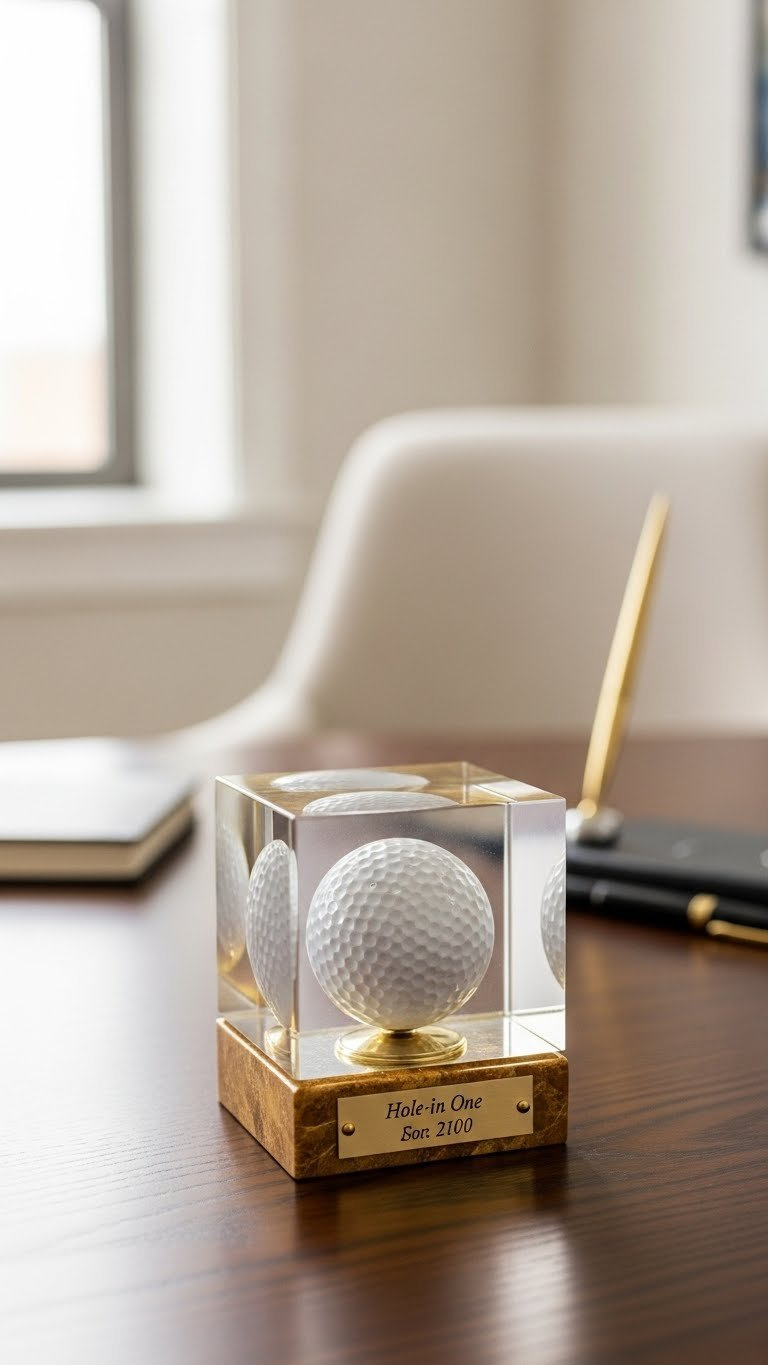
Pin this elegant golf trophy idea to your ‘DIY Gifts for Golfers’ board!
Materials Needed
- Deep pour epoxy resin with long pot life for clarity
- Silicone cube mold (e.g., 3x3x3 inch, flexible silicone)
- Hole-in-One golf ball (clean and dry)
- Small, thin brass plate for engraving (optional)
- Nitrile gloves, respirator, and eye protection (safety equipment for resin)
- Mixing cups, stir sticks
- Heat gun or lighter (for surface bubbles)
- Optional: Pressure pot for resin (for ultimate bubble removal)
Step-by-Step Directions
- Prep: Ensure your golf ball is meticulously clean and dry. Place the silicone cube mold on a perfectly level surface.
- Mix Resin: Accurately measure and mix the deep pour epoxy resin according to the manufacturer’s ratio guide. Stir slowly for 3-5 minutes to minimize introducing air bubbles.
- First Pour: Pour a small amount (about 1/4 inch) of clear epoxy into the mold. Allow it to partially cure (tacky, but not fully hard) for 2-4 hours, or until it can support the golf ball without it sinking too much.
- Center Ball: Gently place the golf ball onto the partially cured resin. If using, place the brass plate on the side or bottom as desired. Use a custom jig or temporary supports if necessary to ensure a centered focal point.
- Second Pour: Slowly pour the remaining mixed resin around the golf ball, filling the mold to the desired height. Pouring slowly helps prevent air bubbles from becoming trapped.
- Degas: Use a heat gun or lighter to gently sweep over the surface to release any surface bubbles. If you have a pressure pot for resin, place the mold inside and cure under pressure.
- Cure: Allow the epoxy resin to cure fully, usually 24-72 hours, in a dust-free environment.
- De-mold & Finish: Once fully cured, de-mold the golf ball paperweight. Sand and polish the surfaces as needed for a high-gloss finish.
Pro-Tip: To avoid an off-center golf ball, create a temporary golf ball centering jig by taping thin wooden skewers across the top of your mold to hold the ball in place during the initial partial cure. Using a pressure pot for resin is the most effective way to achieve a truly bubble-free resin finish.

2. Illuminate Your Space with a Glowing Golf Ball LED Lamp
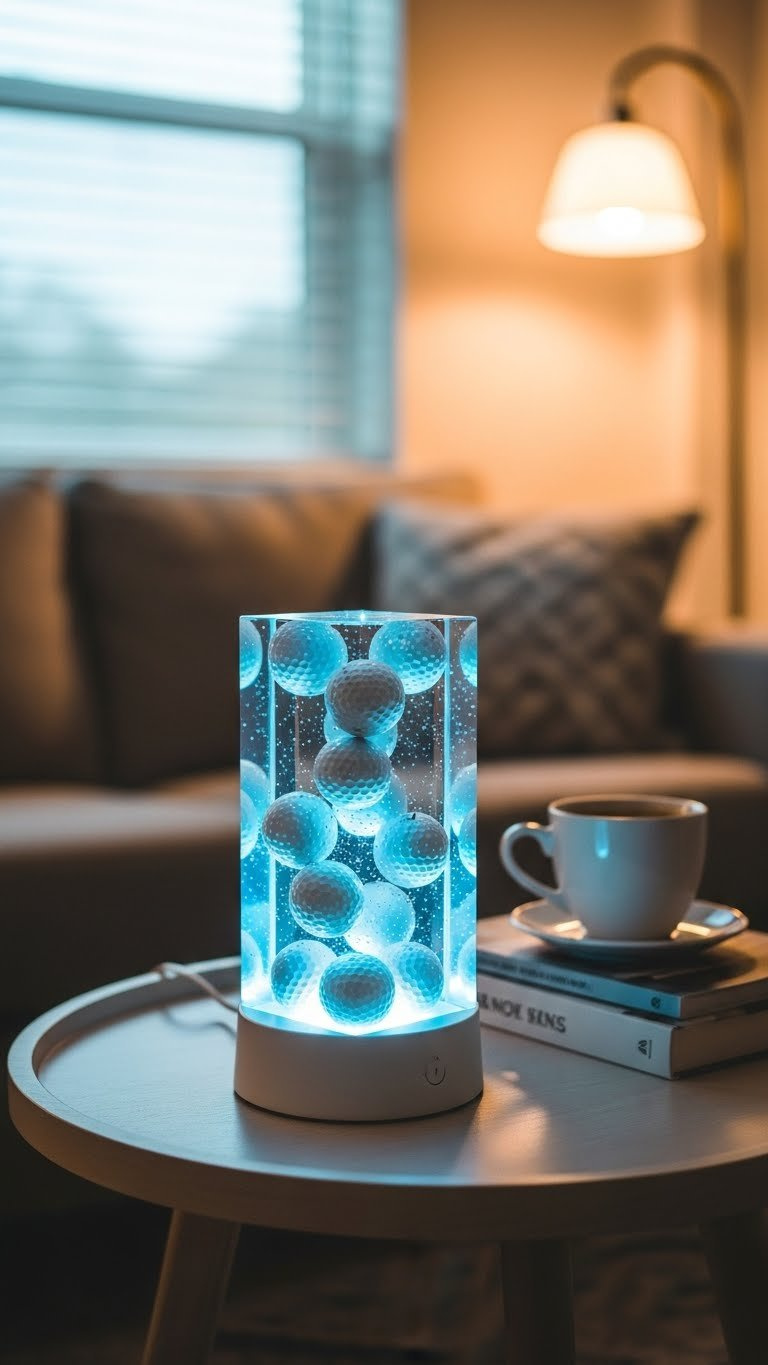
Light up your golfer’s life! Save this unique lamp idea to your ‘Man Cave Decor’ board.
Materials Needed
- Deep pour epoxy resin (uv resistant epoxy recommended)
- Silicone mold for a lamp base shape (e.g., cube or rectangular prism)
- 1-3 golf balls (clean and dry)
- LED light base (battery-operated or USB powered, with appropriate wiring)
- Transparent resin pigment (e.g., blue or green) or mica powder for tinting
- Nitrile gloves, respirator, eye protection
- Mixing cups, stir sticks, heat gun
Step-by-Step Directions
- Prep Mold & LEDs: Secure the LED light base wiring (if using wired) or plan for placement of a battery-operated unit. Clean golf balls. Level your silicone mold.
- First Pour (Tinted): Measure and mix your epoxy resin. Add a few drops of transparent resin pigment for a blue tinted resin effect. Pour a thin layer into the mold, about 1/2 inch. Let it cure until tacky.
- Place Golf Balls: Carefully place the golf balls onto the tacky layer, arranging them as desired.
- Second Pour (Tinted & Embed): Mix another batch of blue tinted resin. Slowly pour around and over the golf balls, ensuring they are fully submerged. If integrating a wired LED light base, ensure the wires are secured and resin doesn’t fully cover the light source until later stages if needed.
- Cure & Degas: Allow to cure partially, then use a heat gun to remove surface air bubbles.
- Final Pour (if needed): If the mold requires it, pour additional layers, allowing each to cure to a tacky state before adding the next. This prevents overheating resin.
- De-mold & Finish: Once fully cured (24-72 hours), de-mold the lamp. Sand and polish any rough edges to achieve a high-gloss finish. If battery-operated LED, ensure easy access for battery changes.
Pro-Tip: To achieve an even glow, use a translucent pigment rather than opaque. Consider “cold casting” by pouring multiple thin layers, allowing each to gel slightly. This manages the exothermic reaction and prevents overheating resin, which can lead to yellowing and cracking. For safety, ensure proper ventilating your room when working with resin.

3. Design Unique Golf Ball Coasters for the 19th Hole
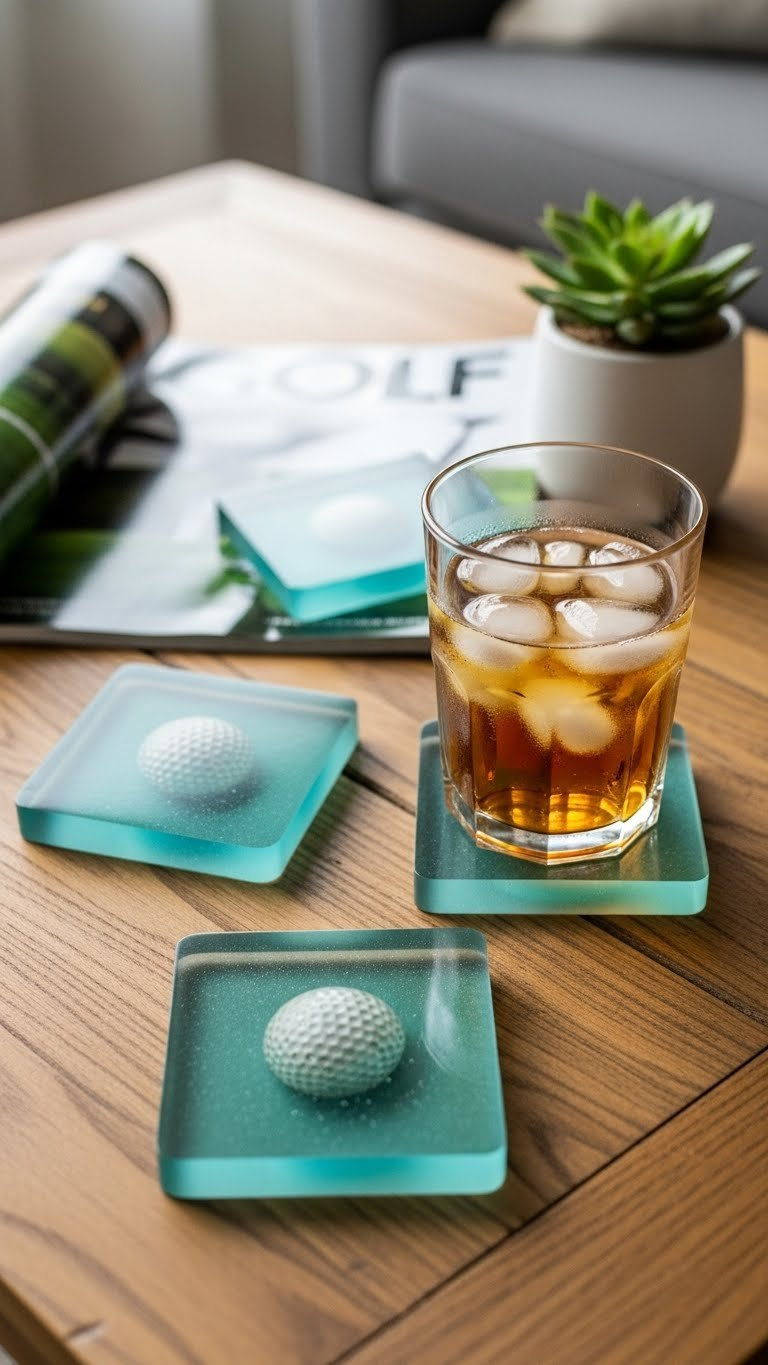
Keep your tables pristine! Save these golf ball coasters to your ‘Home Bar Ideas’ board.
Materials Needed
- Clear casting epoxy resin (UV resistant epoxy recommended)
- Silicone coaster molds (square or round)
- 4-6 golf balls (clean and dry)
- Nitrile gloves, eye protection, respirator
- Mixing cups, stir sticks
- Heat gun or lighter
- Optional: Self-adhesive cork backing sheets
Step-by-Step Directions
- Prep Molds: Ensure silicone coaster molds are perfectly clean and level.
- Initial Pour: Measure and mix clear casting epoxy resin. Pour a thin layer (approx. 1/8 inch) into each mold. Use a heat gun to remove any surface bubbles. Let it cure until tacky.
- Position Golf Balls: Carefully place one golf ball onto the tacky resin in each mold, ensuring it’s centered and level.
- Second Pour: Pour additional resin over the golf balls to fully cover them and fill the mold to the desired thickness (e.g., 1/2 inch).
- Degas: Gently use a heat gun or lighter to eliminate any remaining air bubbles that rise to the surface.
- Cure: Allow coasters to cure for at least 24-48 hours in a dust-free area.
- De-mold & Finish: De-mold the coasters. Sand any sharp edges, then polish for a high-gloss finish. Apply self-adhesive cork backing to the bottom of each coaster for added protection and grip.
Pro-Tip: To ensure a truly bubble-free resin coaster, use a vacuum chamber during the degassing cycles after mixing, especially for clear casting. This prevents air bubbles from forming or removes them effectively, contributing to a flawless gift.

4. Elevate Your Serve with a Golf Ball Epoxy Charcuterie Board
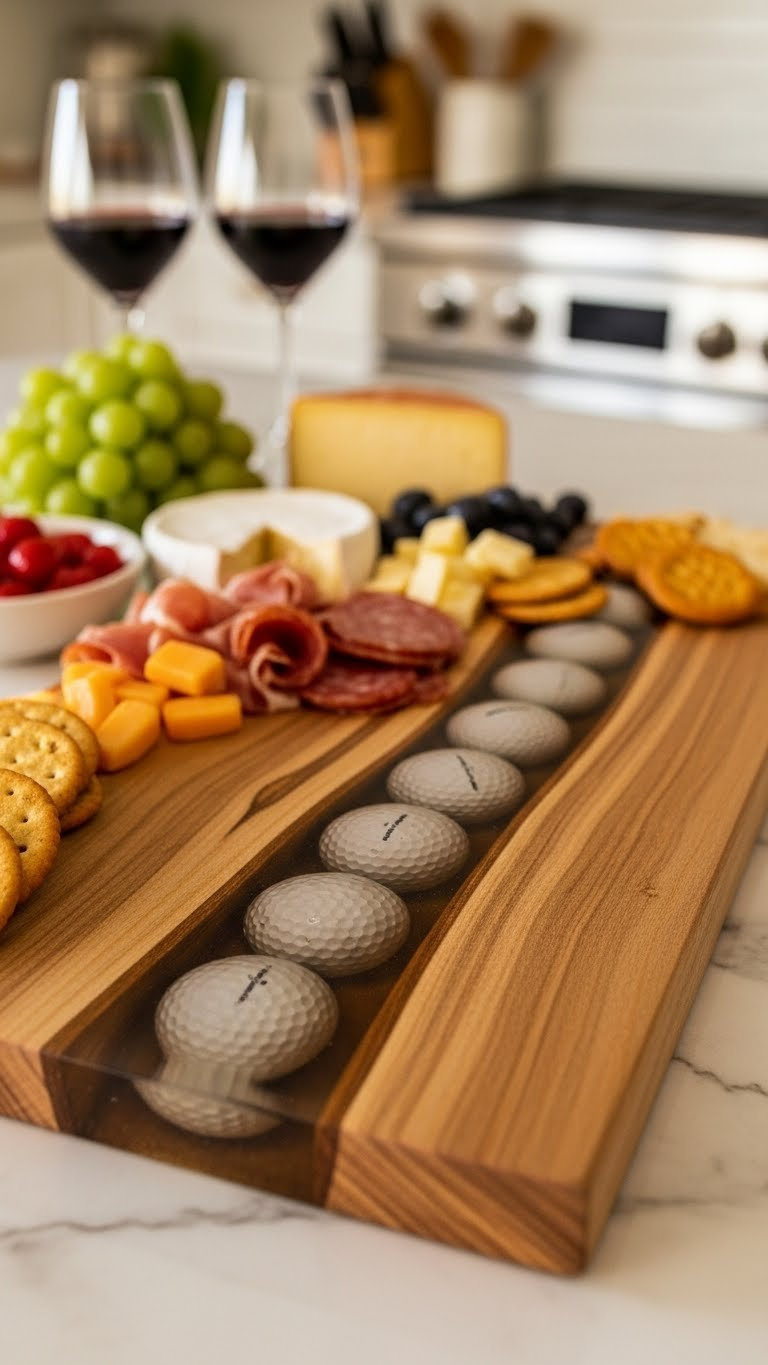
Serve in style! Pin this unique charcuterie board to your ‘Entertaining Ideas’ board.
Materials Needed
- Food-safe epoxy resin (clear epoxy recommended)
- Wood blank for charcuterie board (hardwood or wood burl)
- Several golf balls (clean and dry)
- Nitrile gloves, eye protection, respirator
- Mixing cups, stir sticks, heat gun
- Painter’s tape or dedicated resin dams for river tables
- Woodworking tools (sander, router if cutting a river channel)
- Sanding pads (various grits), polishing compound
Step-by-Step Directions
- Prep Wood: Prepare your charcuterie board wood blank. If creating a “river” effect, route out a channel. Ensure wood is clean, dry, and sealed if porous.
- Create Dam: Seal off the edges of your river channel with painter’s tape or specialized resin dams to prevent leaking molds.
- Place Golf Balls: Arrange golf balls within the designated resin area on the wood.
- Mix & Pour Resin: Measure and mix food-safe epoxy resin. Slowly pour the resin into the channel, surrounding the golf balls. Pour in layers if the depth is significant to avoid overheating resin.
- Degas: Use a heat gun or torch to remove any air bubbles that surface.
- Cure: Allow the resin to cure fully (24-72 hours) according to manufacturer instructions.
- Finish Wood & Resin: Once cured, remove dams/tape. Sand the entire board surface (wood and resin) starting with coarse grit and progressing to fine, then polish the resin for a high-gloss finish. Apply a food-safe wood finish to the exposed wood.
Pro-Tip: For large deep pour epoxy resin projects like charcuterie boards, working in layers is crucial to manage the exothermic reaction and prevent overheating resin which can lead to sticky resin or cracking. Always ensure the resin chosen is explicitly food-safe finish for its intended use.

5. Organize Your Desk with a Golf Ball Resin Pen Holder
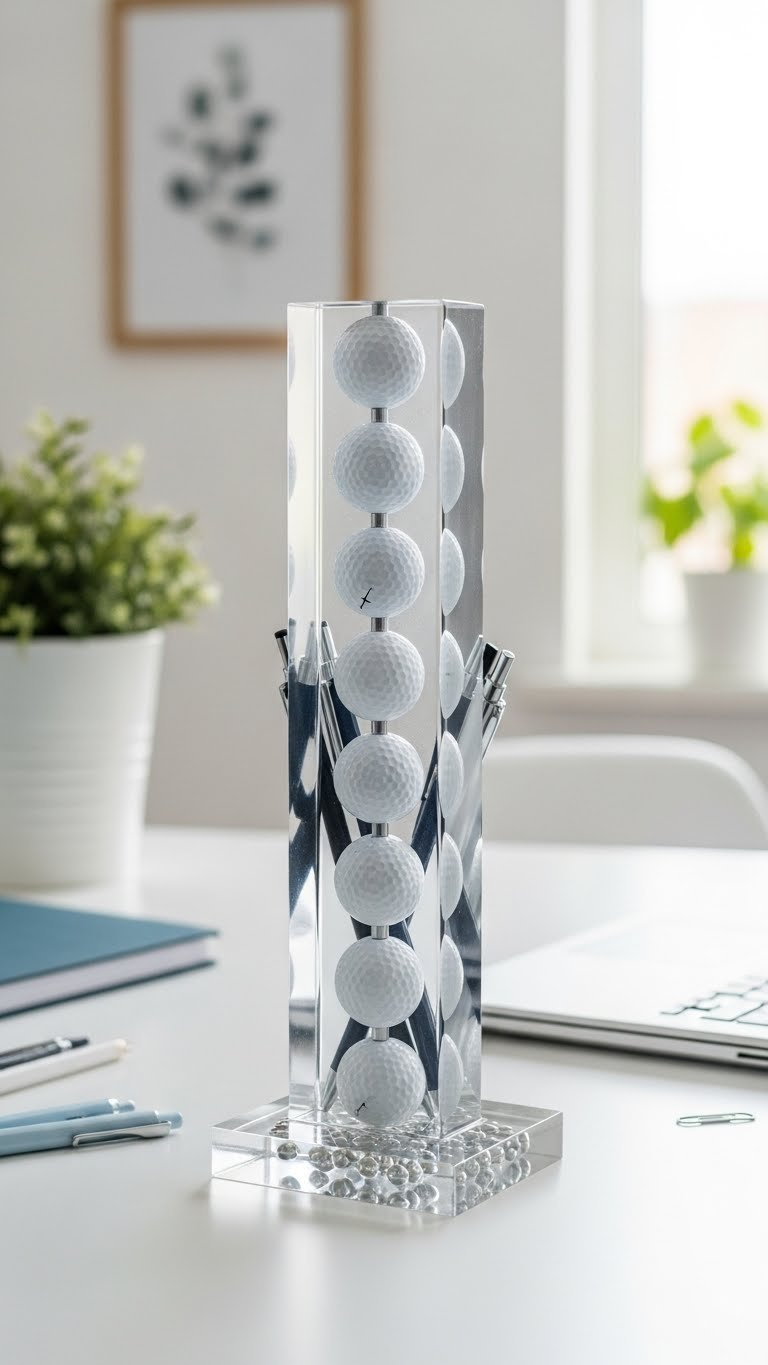
Keep your workspace tidy! Pin this golf ball pen holder to your ‘Desk Organization Ideas’ board.
Materials Needed
- Clear casting epoxy resin
- Rectangular silicone mold (tall enough for vertical embedding)
- 2-4 golf balls (clean and dry)
- Nitrile gloves, eye protection, respirator
- Mixing cups, stir sticks, heat gun
- Drill and appropriate drill bits for resin (e.g., resin drilling bit set)
- Clamps or a jig for securing golf balls vertically
Step-by-Step Directions
- Prep Mold & Balls: Ensure silicone mold is clean and level. Clean golf balls. If necessary, create a simple jig or use tape to hold golf balls upright in the mold during the initial pour.
- First Pour: Measure and mix clear casting epoxy resin. Pour a bottom layer into the mold, about 1/2 inch, and degas with a heat gun. Let it cure until tacky.
- Embed Golf Balls: Carefully place the golf balls vertically onto the tacky layer, ensuring they are stable and positioned where you want them.
- Second Pour: Slowly pour additional resin around the golf balls, filling the mold. Pour in layers if necessary to manage exothermic reaction and keep balls vertical. Degas each layer.
- Cure: Allow the resin to cure fully (48-72 hours) in a dust-free environment. A full cure is essential before drilling into resin.
- De-mold & Drill: De-mold the resin block. Mark the spots where you want the pen holes. Using a drill with a resin drilling bit set, slowly drill the holes. Start with a small pilot hole, then gradually increase bit size. Use water to keep the bit cool and reduce cracking.
- Finish: Sand and polish the block for a smooth, high-gloss finish.
Pro-Tip: When drilling into resin, use a high-speed drill at a lower torque setting to prevent overheating resin and potential cracking. Keep the drill bit cool with water or a cutting lubricant. For vertical embedding, partially cure the first layer until sticky, then embed the golf balls so they don’t float or move.

6. Create a Personalized Golf Ball Memory Block or Display
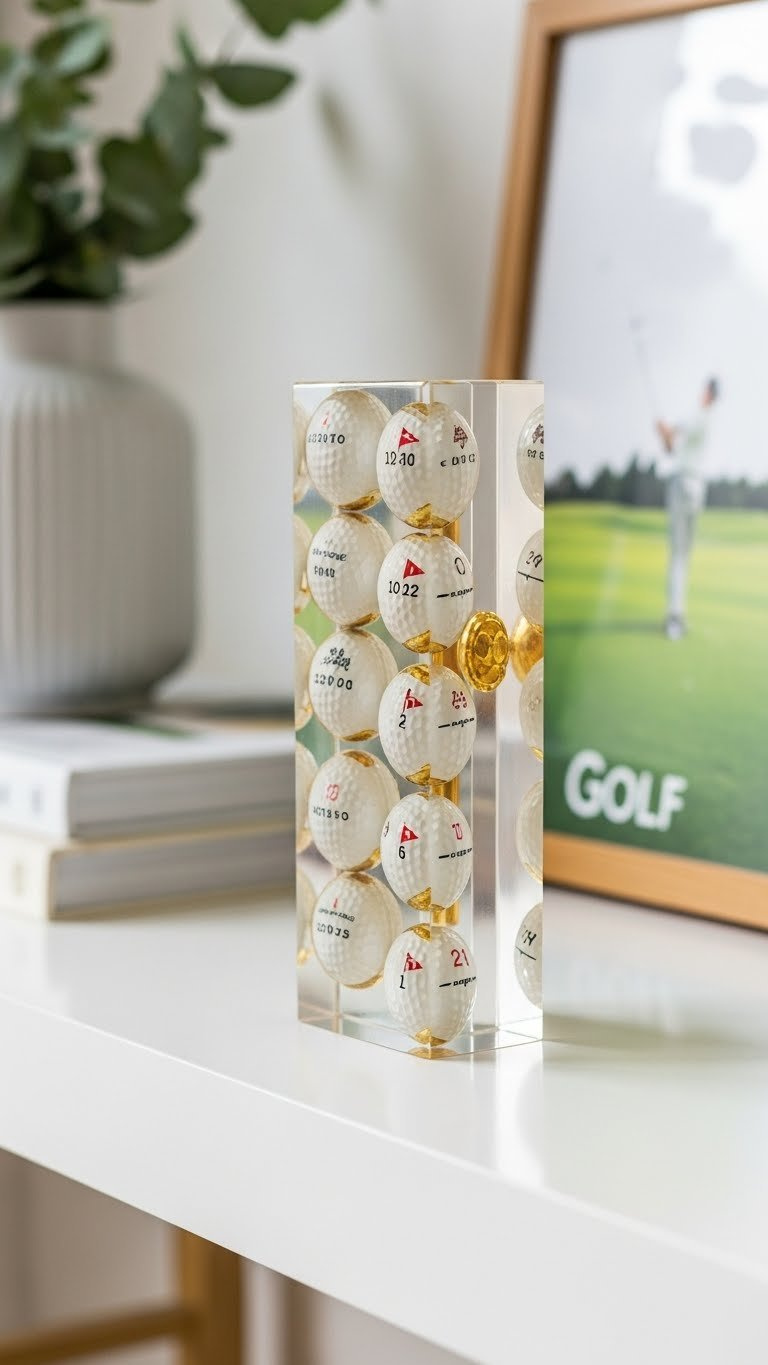
Preserve those unforgettable moments! Pin this memory block idea to your ‘Golf Collectibles’ board.
Materials Needed
- Clear casting epoxy resin (UV resistant epoxy crucial for display)
- Rectangular silicone mold (size dependent on number of golf balls)
- Special golf balls (hole-in-one, signed, vintage golf balls, etc.)
- Optional: Small photos, dates, initials printed on waterproof paper, miniature flags
- Nitrile gloves, eye protection, respirator
- Mixing cups, stir sticks, heat gun
Step-by-Step Directions
- Prep Golf Balls & Inclusions: Ensure golf balls are immaculately clean and dry. Prepare any personalized elements (e.g., print small photos on waterproof paper, or use laser-cut acrylic numbers).
- Initial Pour: Measure and mix clear casting epoxy resin. Pour a thin bottom layer into the mold and degas. Allow to cure until tacky.
- Arrange Elements: Carefully place the golf balls and any personalized inclusions onto the tacky layer. Use a clear glue dot or a small amount of resin to temporarily hold them in place if needed to prevent floating objects.
- Sequential Pours: Slowly pour additional layers of resin, allowing each to cure to a tacky state before adding the next. This prevents overheating resin and gives you control over positioning. Degas each layer meticulously.
- Cure: Allow the final layer to cure fully for 48-72 hours.
- De-mold & Finish: De-mold the golf ball memory block. Sand and polish all surfaces for a high-gloss finish.
Pro-Tip: To prevent yellowing over time, especially for a cherished keepsake art piece, always use a UV resistant epoxy resin. Also, ensure any paper inclusions are properly sealed (e.g., with clear spray sealant or a thin layer of resin) before embedding to prevent cloudy epoxy or discoloration.

7. Fashion a Golf Ball Resin Jewelry or Keychain Embellishment
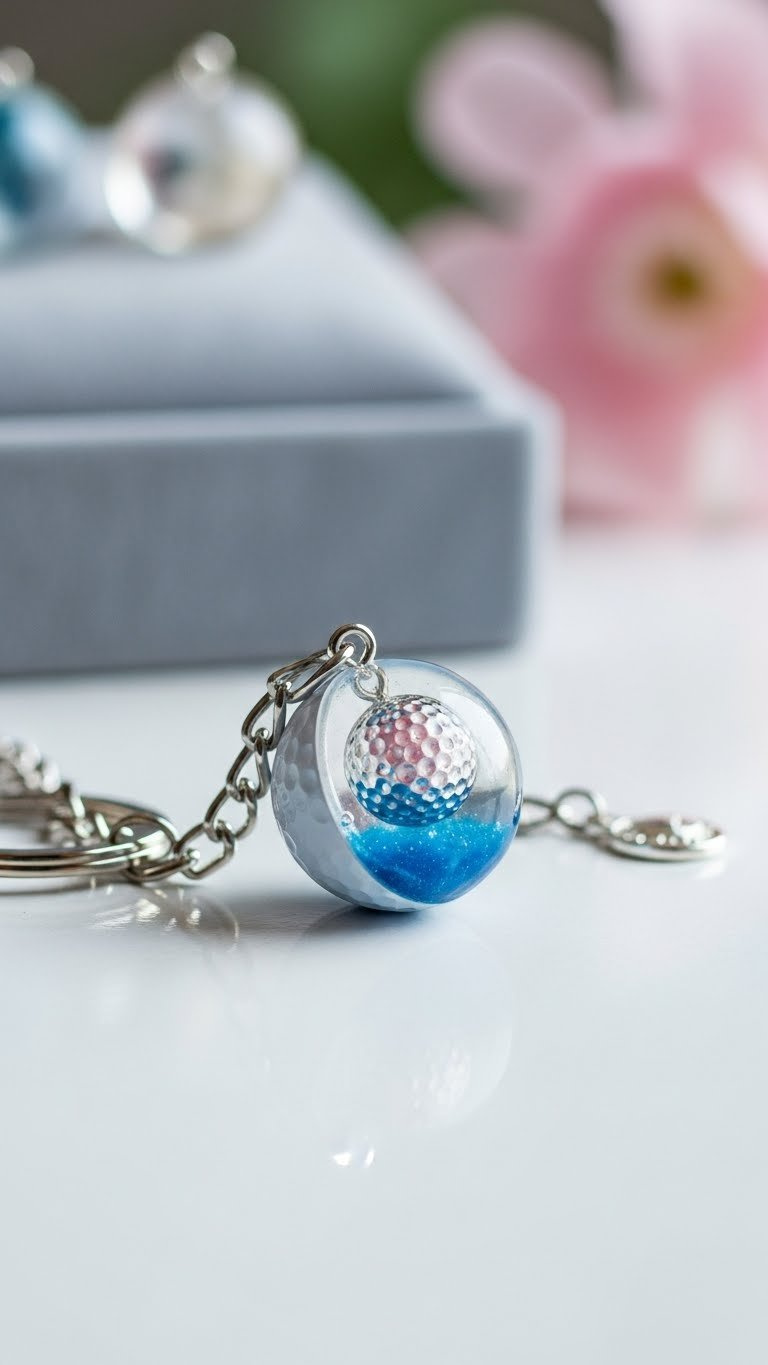
Wear your passion! Pin this miniature golf ball jewelry idea to your ‘Unique Accessories’ board.
Materials Needed
- UV resin (clear uv resin recommended)
- Small silicone jewelry molds (e.g., sphere, pendant, or bezel molds)
- Golf ball (cut in half or smaller pieces if desired)
- UV lamp or UV flashlight
- Nitrile gloves, eye protection
- Small mixing cups, stir sticks/toothpicks
- Keychain blanks, jewelry findings (jump rings, necklace chains)
Step-by-Step Directions
- Prep Golf Ball: If using, cut a golf ball in half using a saw (wear safety glasses!). Ensure edges are smooth. Clean and dry thoroughly.
- First Resin Layer: Place a small amount of clear uv resin into your silicone jewelry molds. Use a toothpick to guide it.
- Embed Golf Ball: Carefully place the half golf ball (or smaller piece) face down onto the UV resin.
- Cure with UV Light: Place the mold under a UV lamp or use a UV flashlight. Cure for 2-5 minutes, or until the resin is hard. This prevents floating objects.
- Fill Mold: Add more clear uv resin to fill the mold over the golf ball piece. Use a toothpick to pop any small air bubbles.
- Final Cure: Cure under the UV lamp for another 5-10 minutes, or until completely hard and non-sticky resin.
- De-mold & Finish: De-mold the resin piece. Sand and polish any rough edges. Attach keychain blanks or jewelry findings using jump rings.
Pro-Tip: When using UV resin, always apply in thinner layers (2-3mm at a time) and cure each layer fully. This prevents sticky resin and ensures a crystal-clear finish. If your golf ball pieces are too large, UV light may not cure the deeper resin fully.

Key Takeaways
- Achieving flawless **golf ball resin art requires meticulous attention to detail, especially for bubble-free resin and perfectly centered golf balls.** Always measure resin accurately and degas thoroughly with a heat gun or pressure pot for resin.
- Versatile **epoxy golf ball projects range from commemorative hole in one trophy paperweights to functional resin charcuterie boards and decorative LED lamps.** Each idea offers a unique way to transform golf balls into unique handmade gifts.
- Always prioritize safety by using **nitrile gloves, a respirator, and ensuring ventilating your room when working with epoxy resin.** Familiarize yourself with the safety data sheet for your specific resin brand.
- For display-oriented pieces like memory blocks or coasters, use **UV resistant epoxy to prevent yellowing and maintain a clear casting aesthetic over time.** This ensures a durable finish and longevity.
- Successfully embedding **golf balls often involves multi-stage pouring and partial curing to prevent floating objects and manage the exothermic reaction of the resin.** Cold casting techniques are vital for deep pours.
- Post-cure sanding and polishing are crucial steps for achieving a **high-gloss finish on your golf ball resin art, especially for a professional grade outcome.** Use progressively finer sanding pads and polishing compound.
- Consider the functional requirements of your **golf ball resin art; for items like charcuterie boards, a food-safe epoxy resin is mandatory, and for jewelry, UV resin offers quick and easy curing.**
People Also Ask About Golf Ball Resin Art
How can you ensure bubble-free resin in golf ball resin art?
To ensure **bubble-free resin in golf ball resin art, meticulously measure and mix your epoxy resin slowly to avoid incorporating air.** After pouring, use a heat gun or torch to gently sweep over the surface, popping surface bubbles. For truly flawless results, a pressure pot for resin is highly recommended, as it compresses air bubbles so they are virtually invisible.
Can you put golf balls in epoxy resin directly?
Yes, you can embed **golf balls in epoxy resin directly, but proper prep is crucial for a flawless finish.** Ensure the golf balls are immaculately clean and dry. For optimal adhesion and to prevent floating objects, it’s often best to secure the ball onto a partially cured layer of resin before a final pour.
How do you center a golf ball in a resin mold?
To center a **golf ball in a resin mold, use a two-step pouring process.** Pour a base layer of resin and allow it to partially cure until tacky enough to support the golf ball without it sinking. Then, carefully place the golf ball into position. You can also use temporary jigs or tape to hold the ball in place during the initial cure.
What type of resin is best for casting golf balls?
For casting **golf balls, a deep pour epoxy resin with a long pot life is generally best, especially for larger molds, as it allows bubbles to rise and helps manage exothermic reaction.** For smaller, quicker projects or jewelry, UV resin can be suitable. Always choose a clear casting resin that is UV resistant epoxy to prevent yellowing.
Is golf ball resin art profitable to sell?
Yes, **golf ball resin art can be profitable, especially when creating unique handmade and personalized golf ball resin gift items like hole in one trophy paperweights or custom golf ball coasters.** High quality, bubble-free resin and a high-gloss finish command better prices. Marketing to golf enthusiasts and gift shoppers is key to success.
How long does golf ball resin take to cure?
The cure time for **golf ball resin (epoxy) typically ranges from 24 to 72 hours for a full, hard cure, depending on the specific resin, ambient temperature, and humidity.** UV resin cures much faster, usually in minutes under a UV lamp. Always refer to the manufacturer’s instructions for exact cure times.
What are the main safety equipment for resin art?
The main **safety equipment for resin art includes nitrile gloves to protect skin, a respirator (rated for organic vapors) to prevent inhalation of fumes, and eye protection.** Ensure ventilating your room properly by working in a well-aired space or using an extraction fan to minimize exposure to isocyanates safety concerns.
How do you prep golf balls for resin casting?
To prep **golf balls for resin casting, ensure they are thoroughly clean and completely dry.** Wash them with soap and water, then gently scrub any dirt or markings. Allow them to air dry fully or use a lint-free cloth. Any moisture or debris can cause cloudy epoxy or defects.
Will golf balls float in resin during casting?
Yes, **golf balls can float in resin, especially in thinner pours or if the resin has a low viscosity management.** To prevent floating objects, embed the golf ball on a partially cured (tacky) layer of resin, or use a temporary jig to hold it in place during the initial pour.
How do you polish a golf ball resin paperweight for a high-gloss finish?
To polish a **golf ball resin paperweight for a high-gloss finish, start by sanding any rough spots with progressively finer sanding pads (e.g., 200, 400, 800, 1500, 3000 grit).** Then, apply a specialized polishing compound designed for resin, using a soft cloth or buffing wheel, until the desired high-gloss finish is achieved.
Final Thoughts on Golf Ball Resin Art
Golf ball resin art offers a unique and rewarding way to transform ordinary objects into extraordinary keepsakes and unique handmade gifts. By mastering the fundamental techniques outlined in this guide – from meticulous mixing and degassing to achieving perfect centering and high-gloss finish – you can create flawless pieces that will be cherished for years to come. Whether you’re crafting a hole in one trophy for a golf enthusiast or a personalized golf ball resin gift for a special occasion, the ability to produce bubble-free resin art with professional grade results is now within your reach.
Remember that patience, precision, and adherence to safety equipment for resin are your greatest allies in this creative journey. With these expert casting tips, you’re not just making an object; you’re preserving memories, celebrating achievements, and expressing your creativity through a truly unique art form. What golf ball resin art project will you embark on first to create a truly commemorative sculpture?
Last update on 2026-01-16 / Affiliate links / Images from Amazon Product Advertising API
