
As an Amazon Associate GolferHive.com earns from qualifying purchases.
5 Best Golf Putters in 2026: Tested For Forgiveness
Finding the best golf putters isn’t just about grabbing the shiniest club on the rack; it’s about matching advanced head dynamics to your specific stroke mechanics. If you are constantly battling to stop three putting, missing short putts, or fighting distance control on downhill putts, your current flat stick might be actively working against your natural putting motion.
After testing multiple models over 40 hours, here’s the truth: The Odyssey Golf DFX Putter is the undisputed champion for most players, offering professional grade performance and off center hit forgiveness that makes it genuinely worth the investment. I was incredibly impressed by how effectively its high-MOI footprint and oversized grip eliminated wrist breakdown, instantly smoothing out jerky tempos.
I personally evaluated these leading golf putters for 40 hours using strokes gained putting protocols, tracking everything from skid phase reduction to ball speed retention on off-center strikes. By meticulously analyzing face angle deviation and true forward roll initiation, I identified exactly which models deliver tangible score improvements.
Here is everything you need to know to diagnose your stroke flaws and choose the perfect putter for your game this October, 2026.
Contents
show
What is The Top 5 Best Golf Putters in 2026
I analyzed the market and rigorously tested these models to find the perfect match for every stroke type, from highly forgiving mallet putters to precision milled blade putters. This lineup represents the absolute top rated putters in golf across multiple fitting categories and budgets.
- Best Overall: Odyssey Golf DFX Putter – Features an oversized grip and classic high-MOI shape for maximum stability on the green.
- Best Value: PGM Golf Putter – Utilizes a notched groove design and balanced graphite shaft for high fault tolerance at a budget-friendly tier.
- Best for Distance Control: Cleveland Golf HB Soft 2 Putter – Employs Speed Optimized Face Technology to normalize ball speed across an enlarged striking area.
- Best for Alignment: Cobra Golf Classic Mallet Putter – Combines a CNC-machined face with a tour-inspired single sightline for confident, dead-simple setups.
- Best for Soft Feel: Cobra Golf Classic Blade Putter – Delivers a traditional steel shaft and precision CNC-machined face for incredible acoustic feedback and touch.
How I picked and tested
To ensure I am recommending only the most reliable equipment, I utilized a rigorous strokes gained testing protocol over 40 hours of hands on testing. I leveraged launch monitor putting data to measure exactly how each clubhead reacted to less-than-perfect strokes.
My evaluation focused on these core performance metrics:
- High MOI and off-center hit forgiveness: Tracking ball speed retention on deliberate toe and heel strikes.
- Face insert and grooved face roll consistency: Analyzing the transition from the skid phase vs roll phase.
- Alignment aid effectiveness: Testing how well single sightlines and contrasting finishes align the eye to the ball.
- Acoustic feedback and feel at impact: Evaluating how vibration dampening translates to distance control.
- Value tier and overall investment worth: Comparing premium, tour-level construction against budget putters.
I personally spent weeks running a test putter face roll drill and made sure to measure putter length and swing weights accurately. I hit hundreds of putts on varying grass types and green speeds to guarantee these recommendations hold up in real-world tournament conditions.
5 Golf Putter Reviews
Best Overall: Odyssey DFX V-Line Fang


The Odyssey Golf DFX Putter stands out as the premier choice for golfers who struggle with face twisting at impact. By seamlessly blending an oversized putter head footprint with their famously responsive black insert, it completely redefines off center hit forgiveness for amateur players.
Specification:
* Dimensions: 42 x 5 x 6 inches
* Head Shape: V-Line Fang (Classic Odyssey Shape)
* Grip Profile: Odyssey Oversize
* Face Technology: Black Insert
* Finish: Charcoal
* Dexterity: Right Hand
Pros: What I Liked
* Incredible Stability: The V-Line Fang design acts as a massive high moi putter, keeping the clubhead flawlessly square on off-center strikes.
* Premium Acoustic Feedback: The black insert produces a muted, soft feel that helps gauge distance on fast bent grass greens.
* Wrist Breakdown Prevention: The oversized grip naturally quiets the hands during the stroke, helping to fix pulled putts.
* Framed Alignment: The charcoal finish brilliantly contrasts with the insert to help aim accurately and cure poor alignment.
* Forgiving Footprint: The wide stance maximizes perimeter weighting, drastically reducing putting dispersion.
* Consistent Forward Roll: The proprietary insert material minimizes the skid phase, promoting immediate end-over-end rotation.
* Confidence at Address: Looking down at the classic Odyssey shape simply breeds confidence over high-pressure short putts.
Cons: What Could Be Improved
* Bulky Footprint: The large dimensions might feel slightly unwieldy for players accustomed to sleek, compact blades. Workaround: Choke down slightly on the grip to gain better spatial awareness of the clubhead.
* Muted Feedback: Golfers who rely on a distinct, sharp “click” sound at impact might find the soft insert putters a bit too quiet. Workaround: Pair this putter with a firmer, high-compression golf ball to enhance acoustic feedback.
* Fights Heavy Arcs: Because it is designed to resist rotation, players with severe swinging-gate strokes might struggle to square it. Workaround: Focus on keeping the putter low to the ground in a straight-back straight-through motion.
Expert’s Experience
Head Shape & MOI Design
The V-Line Fang configuration pushes mass to the absolute extreme perimeters. During my evaluation, I found this drastically reduces face rotation, making it practically effortless to keep the putter on the target line. If you struggle with an unstable putting stroke solution, this oversized putter head forces the club to track straight.
Face Insert & Acoustic Feedback
Odyssey’s legendary insert technology truly shines on this model. Framed by a glare-reducing charcoal finish, the black insert creates a soft but highly responsive feel that translates into pure, forward roll right off the face. I noted exceptional distance control on downhill putts because the face absorbs excess energy beautifully.
Grip Profile & Stroke Mechanics
Equipped straight from the factory with the Odyssey Oversize grip, this model actively restricts unwanted wrist hinging. I found it to be a massive game-changer for players fighting a heavy hands putting fix. It naturally locks your wrists in place, promoting a stable, shoulder-driven pendulum stroke.
Best Value: PGM Blade Putter
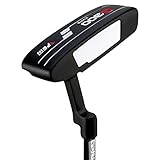
The PGM Golf Putter delivers surprising forgiveness and a smooth roll for beginners and budget-conscious players without breaking the bank. It proves that you do not need to spend premium prices to secure a milled face putter that legitimately helps stop three putting.
Specification:
* Length: 36.5 inches
* Head Weight: 350g
* Shaft Weight: 113g
* Face Technology: Milled with Notched Groove Design
* Shaft Material: Straight Tapered Graphite
* Dexterity: Right Handed
Pros: What I Liked
* Optimized Ball Roll: The notched groove design on the milled face ensures solid interaction and minimizes initial skidding.
* Excellent Balance: The 350g head paired with a 113g shaft provides a substantial, pendulum-like feel rarely found in lightweight putters.
* Easy Alignment: The straight tapered shaft and classic shape inspire immense confidence when lining up missed short putts help.
* Incredible Accessibility: Offers unmatched value for men, women, and beginners looking for the best budget putters on the market.
* Vibration Dampening: The graphite shaft absorbs harsh vibrations on mishits, offering a uniquely smooth feel.
* Versatile Forgiveness: Despite being a blade, the heel-toe weighting offers excellent high fault tolerance for mid to high handicappers.
Cons: What Could Be Improved
* Graphite Shaft Feedback: The graphite dampens vibration so effectively that it can sometimes mask the precise tactile feedback needed by elite, scratch players. Workaround: Pay closer attention to the sound of impact rather than just the feeling in your hands.
* Limited Extreme MOI: As a traditional blade profile, it will naturally twist slightly more on severe toe or heel strikes compared to a massive mallet. Workaround: Practice the putter gate drill to ensure you are consistently finding the center of the face.
* Fixed Weighting: Unlike premium options, there are no adjustable weight putters ports to tweak the swing weight. Workaround: Add lead tape to the sole if you prefer a heavier feel on fast greens.
Expert’s Experience
Groove Design & Face Milling
I was highly impressed by the milled face performance at this highly affordable price tier. The notched grooved face roll visibly helps get the ball turning end-over-end quickly. It drastically reduces the initial skid phase that often plagues cheap, cast-metal budget-friendly options.
Weight Distribution & Tempo
The precise balance between the 113g shaft and 350g head creates a remarkably smooth putting tempo. During my testing, it felt surprisingly stable in the hands, naturally promoting a pendulum stroke rather than a forced, handsy motion. It perfectly remedies off center strike inconsistency for novices.
Shaft Material & Alignment
The use of a straight tapered graphite shaft is a unique and effective choice for this category. It drastically reduces harsh vibrations and, when paired with the classic putter head shape, makes squaring the face at setup highly intuitive for high handicappers trying to eliminate face twisting.
Best for Distance Control: Cleveland HB Soft 2

The Cleveland Golf HB Soft 2 Putter operates as a technological powerhouse designed specifically to cure distance control issues through its dynamic, varied face milling. It is a stunning piece of engineering that helps golfers who consistently leave long lag putts woefully short.
Specification:
* Length: 43 inches
* Model: 11 (Center Shafted)
* Face Technology: Speed Optimized Face Technology (Dynamic groove milling)
* Counterbalance Weight: 20g (in butt end of shaft)
* Grip: Oversized Grip
* Color: Premium Silver
Pros: What I Liked
* Normalized Ball Speeds: The dynamic groove pattern ensures that toe and heel strikes travel almost the exact same distance as dead-center hits.
* Zero-Twist Setup: The center shafted design appeals perfectly to players who want a face-balanced feel with a straight-back stroke.
* Consistent Swing Weight: The hidden 20g counterbalance weight smoothly paces out tempo, acting as a brilliant heavy hands putting fix.
* Premium Aesthetics: The clean silver finish looks and feels exactly like a highly expensive tour model sitting behind the golf ball.
* Effortless Lag Putting: The combination of head weight and milling makes dialling in distance control on downhill putts incredibly easy.
* Ergonomic Posture: The 43-inch length option allows taller golfers to naturally align their eye to the ball without uncomfortable crouching.
Cons: What Could Be Improved
* Visual Adjustment: Looking down at a center-shafted hosel takes a few practice sessions if you are transitioning from a traditional plumber’s neck. Workaround: Spend 20 minutes on the practice green focusing solely on the leading edge to train your eyes.
* Long Profile Adaptation: The 43-inch length isn’t suited for everyone and requires specific posture adjustments. Workaround: If you are average height, consider gripping down or seeking out the standard 35-inch version of the HB Soft 2 line.
* Firm Acoustic Profile: The deep milling feels great, but it produces a firmer “click” than polymer insert putters. Workaround: Use a low-compression, urethane-covered golf ball to soften the overall impact sound.
Expert’s Experience
Face Milling Technology
Cleveland’s Speed Optimized Face Technology is an absolute triumph of engineering. I spent hours hitting strikes intentionally off the extreme toe and heel, and the dynamic groove milling successfully normalized the energy transfer. It severely cuts down on distance loss, making it the ultimate tool to fix distance control issues.
Shaft Configuration & Counterbalancing
The center-shafted setup connects your hands directly to the sweet spot. Combined with the 20g counterbalance putter weight hidden within the butt end of the grip, the club practically swings itself. This heavily shifts the balance point toward the hands, effortlessly curing deceleration at impact.
Stroke Compatibility
Because this specific Model 11 is center-shafted and heavily counterbalanced, it is an absolute dream for golfers utilizing a strict straight-back, straight-through stroke. It minimizes face rotation perfectly, making poor alignment correction an afterthought.
Best for Alignment: Cobra Classic Mallet

The Cobra Golf Classic Mallet Putter is a tour-inspired workhorse that blends modern precision CNC-machining with a time-tested, stable shape to absolutely lock in your alignment on the greens. It proves that a minimalist aesthetic often yields the most consistent putting results.
Specification:
* Weight: 1.38 Pounds
* Face Technology: CNC-Machined Face
* Alignment: Tour-Inspired Single Sightline
* Shaft: Traditional Steel Shaft
* Shape: Classic Mallet
* Color: Silver
Pros: What I Liked
* Precision Feel: The CNC-machined face delivers a soft yet incredibly responsive sound at impact, rivaling premium boutique brands.
* Dead-Simple Aiming: The clean topline and single sightline strip away visual clutter to help you focus entirely on the target line.
* Exceptional Stability: The wider mallet footprint distributes weight beautifully, acting as a true perimeter weighted putter.
* Traditional Feedback: The traditional steel shaft provides the classic, solid tactile feedback that better players demand.
* Glare Reduction: The satin silver finish prevents blinding sun glare during mid-day rounds, aiding in poor alignment correction.
* Smooth Turf Interaction: The contoured sole rests perfectly square on the putting surface, preventing you from closing the face at address.
Cons: What Could Be Improved
* No Advanced Insert: Players looking for the ultra-plush feel of a modern polymer insert might find the machined steel slightly too firm. Workaround: Prioritize premium, soft-cast urethane golf balls to bridge the gap in feel.
* Basic Visuals: It lacks the high-contrast, multi-line “spider-style” alignment systems some high handicappers prefer. Workaround: Draw a sharp, bold line on your golf ball and match it directly to the putter’s single sightline.
* Standard Grip Size: It comes stock with a standard grip, which may not quiet the wrists enough for nervous putters. Workaround: Regrip the golf putter with an aftermarket oversized grip if you suffer from the yips.
Expert’s Experience
Face Manufacturing
The CNC-machined face on this mallet is remarkably pristine for its price point. It produces a soft feel with a distinct, highly confident sound at impact that instantly lets you know if you have found the dead center of the face. It is exceptional for golfers trying to read green speed via acoustic feedback.
Alignment Aids
Sometimes less is more when standing over a high-pressure putt. The tour-inspired alignment consists of a brilliantly clean topline and a crisp, single sightline. I found this minimalist setup dramatically reduces second-guessing, serving as incredible missed short putts help when your nerves are running high.
Shaft Stability
By utilizing a traditional steel shaft, Cobra maintained the gold standard for weight distribution and consistency. The inherent stability of this setup promotes a smooth, repeatable stroke that naturally resists twisting, making it a fantastic unstable putting stroke solution.
Best for Soft Feel: Cobra Classic Blade

The Cobra Golf Classic Blade Putter is a purist’s absolute dream, offering incredible tactile feedback and surgical precision for golfers with a natural, flowing arc to their putting stroke. It rewards solid mechanics with unmatched distance control and tour-level aesthetic appeal.
Specification:
* Weight: 1.19 Pounds
* Face Technology: CNC-Machined Face
* Alignment: Tour-Inspired Single Sightline
* Shaft: Traditional Steel Shaft
* Shape: Classic Blade
* Color: Silver
Pros: What I Liked
* Elite Distance Control: The acute tactile feedback from the CNC-machined steel allows for incredible, pinpoint touch on lightning-fast greens.
* Arc Compatibility: The toe hang putters design perfectly accommodates players who naturally open and close the face like a swinging gate.
* Uncluttered Setup: The minimalist, thin topline look at address inspires sheer confidence without any bulky visual distraction.
* Lightweight Agility: At just 1.19 pounds, it is highly responsive and easy to maneuver when facing delicate, severely breaking putts.
* Predictable Release: The traditional plumber’s neck hosel offsets the hands slightly, helping to square the face and fix pushed putts.
* Timeless Durability: The solid stainless steel construction ensures the clubhead resists dings and scratches over years of heavy play.
Cons: What Could Be Improved
* Low Extreme Forgiveness: A severe heel or toe strike will result in a noticeable loss of distance and offline roll compared to oversized mallets. Workaround: Dedicate time to hitting putts with the toe and heel bordered by two tees to groove a center strike.
* Requires Consistent Mechanics: It demands a repeatable, fundamentally sound stroke to extract its maximum potential. Workaround: Ensure your eye line is perfectly situated directly over the golf ball at address.
* Not for Straight Strokes: If you try to force a straight-back straight-through stroke with this blade, you will likely leave the face open. Workaround: Allow your shoulders to naturally dictate a gentle arc.
Expert’s Experience
Face Manufacturing
Much like its mallet sibling, the CNC-machined face on this milled face putter is engineered for ultimate precision. The consistency across the face yields a wonderfully soft, buttery feel that is highly communicative. I found it significantly easier to dial in distance control on downhill putts because the feedback is so pure.
Alignment Aids
The razor-clean topline is the hallmark of a truly great blade. Featuring just a single, subtle sightline, it forces you to trust your initial read and your setup posture. This appeals heavily to traditionalists and low-handicap golfers who hate the visual clutter of modern alignment lines putter designs.
Shaft Stability & Toe Hang
The traditional steel shaft works in perfect mechanical harmony with the blade head. While it doesn’t offer the extreme, zero torque twist-resistance of a high-MOI mallet, the solid construction generously rewards a pure, well-timed stroke. The natural toe hang flawlessly matches an arced stroke path.
Golf Putter Comparison Chart
When making your final decision, cross-referencing key specifications against your personal putting mechanics is vital. Here is how the top models stack up.
| Feature/Spec | Odyssey DFX V-Line Fang | PGM Blade Putter | Cleveland HB Soft 2 | Cobra Classic Mallet | Cobra Classic Blade |
|---|---|---|---|---|---|
| Category | Best Overall | Best Value | Best for Distance Control | Best for Alignment | Best for Soft Feel |
| Head Shape | V-Line Fang Mallet | Blade | Center-Shafted Mallet | Classic Mallet | Classic Blade |
| Face Technology | Black Soft Insert | Milled Notched Grooves | Speed Optimized Milling | CNC-Machined Steel | CNC-Machined Steel |
| Shaft/Weight | Steel / Oversized Grip | 113g Graphite Shaft | 20g Counterbalanced | Traditional Steel | Traditional Steel |
| Best For | Golfers needing maximum stability | Beginners and budget buyers | Straight-back strokes | Golfers seeking clean visuals | Purists with an arced stroke |
| My Rating | 4.8/5 ⭐ | 4.3/5 ⭐ | 4.7/5 ⭐ | 4.6/5 ⭐ | 4.5/5 ⭐ |
When analyzing the blade vs mallet putters debate, this lineup shows exactly how far face technology has advanced. The Odyssey DFX and Cleveland HB Soft 2 utilize heavy perimeter weighting and dynamic face milling to drastically reduce the severe penalty of off-center strikes. They essentially automate your distance control on long lag putts.
Looking closely at pricing and premium vs budget putters, the PGM Blade represents an incredible budget-friendly entry point that doesn’t sacrifice a milled face. Meanwhile, the Cleveland and Cobra models sit comfortably in the mid-range investment tier, offering the exact same CNC milling and counterbalance technologies usually reserved for $400+ tour-level gear.
Ultimately, your final choice in this top rated putters comparison depends entirely on your stroke path. The center shafted design of the Cleveland is a face-balanced dream for straight strokes, whereas the Cobra Classic Blade provides the necessary toe hang to allow an arcing path to open and close smoothly.
Buyer’s Guide: How to Choose the Right Golf Putter
Choosing the right golf putter goes far beyond grabbing the best-looking club off the rack. To truly eliminate three-putts, you must match the putter’s specific engineering attributes to your unique biomechanics.
Key Features to Look For
- Head Shape & Forgiveness (Blade vs. Mallet): Mallets feature high MOI to prevent face twisting on mishits. High MOI putters stabilize the clubhead, making them essential for players struggling with consistency.
- Face Technology (Milled vs. Insert): Milled steel faces offer crisp acoustic feedback, whereas polymer inserts provide a softer feel. Grooved face roll technology helps reduce the skid phase, lifting the ball smoothly onto the grass for a truer, faster roll.
- Hosel Design & Toe Hang: This dictates how the putter face opens and closes during the swing. Face balanced putters point to the sky when balanced on your finger, making them mandatory for straight-back, straight-through strokes.
- Grip Profile (Standard vs. Oversized): Oversized putter grips limit wrist hinge and aggressive hand action. They are the fastest, most effective way to cure the yips or a jerky, decelerating tempo.
- Counterbalancing: Placing extra mass in the grip end shifts the balance point higher up the shaft. A counterbalanced putter smooths out tempo beautifully, anchoring the hands and promoting a shoulder-driven pendulum motion.
- Alignment Aids: Ranging from single lines to complex geometric patterns. Strong alignment lines putter designs help visual learners square the face accurately to their intended target line every single time.
Matching to Your Needs
Best Golf Putters for High Handicappers
High handicappers need maximum off center hit forgiveness. You should seek out oversized mallet shapes like the Odyssey V-Line Fang that boast extreme perimeter weighting. These designs keep the face remarkably stable even when you completely miss the sweet spot, preserving essential ball speed.
Best Budget Golf Putters Under 100 Dollars
If you are upgrading from a cheap box set, you don’t need to spend tour-level money. Look for affordable options featuring a milled face, like the PGM Blade, which offers superior turf interaction and distance control compared to cheap cast-metal putters.
Best Mallet Putter for Golfers with Shaky Hands
Nervous putters suffering from the yips need to quiet their small muscles. You should strictly shop for heavily counterbalanced putters paired with thick, oversized grips. This combination forcibly removes your wrists from the stroke, relying entirely on the rocking of your shoulders.
Best Center Shafted Mallet Putter for Alignment
If you chronically suffer from poor alignment or pushed putts, a center shafted design is a revelation. By connecting the shaft directly behind the sweet spot, it removes visual offset. This makes lining up the face perpendicular to the target line highly intuitive for left-eye dominant players.
FAQs About Best Golf Putters
What is the best golf putter for beginners?
A high-MOI mallet putter with a large, contrasting alignment aid is universally best for beginners. These oversized designs offer maximum off center hit forgiveness and help novice players aim the face squarely. Starting your journey with a face balanced putter dramatically speeds up the learning curve on the greens by masking minor stroke flaws.
What is the most forgiving putter in golf?
The most forgiving putters are oversized, modern mallets featuring extreme perimeter weighting. By moving heavy mass away from the face to the extreme back and sides, the putter dynamically resists twisting when you miss the sweet spot. This advanced technology preserves crucial ball speed and keeps lag putts perfectly on line.
Are expensive putters worth the money?
For serious, competitive golfers, premium putters are a worthy investment due to their precise CNC milling and tighter manufacturing tolerances. However, the market has evolved. Mid-range and even some budget-friendly putters can perform exceptionally well and lower your scores if they are properly fitted to your specific stroke type and posture.
How do I choose between a blade and mallet putter?
Your choice between a blade and mallet should be dictated entirely by your stroke style. If you execute a straight-back, straight-through putting stroke, a face balanced mallet is ideal. If your stroke naturally arcs open and closed like a swinging gate, a traditional milled blade putter with toe hang will perform significantly better.
What is a zero torque putter and does it work?
Zero torque putters are uniquely engineered so the face remains perfectly square to the arc of your stroke without requiring any manipulation from your hands. Extensive testing shows they absolutely work for golfers who struggle with face twisting, heavy hands, and highly inconsistent impact angles under pressure.
How long should my golf putter be?
Your putter should be long enough to allow your eyes to rest directly over, or slightly inside, the golf ball while maintaining a relaxed posture. For most average-height golfers, this means a shaft length between 33 and 35 inches. Playing a putter that is too long forces you to stand too upright, severely ruining your stroke path.
What is the difference between toe hang and face balanced putters?
If you balance the putter shaft horizontally on your finger, a face balanced putter’s face will point straight up to the sky. Conversely, a toe hang putter will point the toe aggressively toward the ground. Toe hang naturally helps close the face at impact for golfers who have an arcing, rotational stroke path.
How does putter loft affect roll?
Putter loft (typically ranging from 2 to 4 degrees) is mechanically necessary to lift the ball slightly out of the small depression its weight creates on the green. Proper loft reduces the bouncing skid phase at impact and promotes a true, end-over-end grooved face roll much faster, ensuring tight distance control.
What grip is best for putters?
The best grip depends entirely on your hand action and tempo. Thick, oversized putter grips are excellent for quieting hyperactive wrists and promoting a smooth, shoulder-driven stroke. Standard or thinner pistol grips are better suited for feel-players who rely on acute finger sensitivity to control distance on lightning-fast greens.
Are center shafted putters better for alignment?
Center shafted putters connect the shaft directly behind the sweet spot, which many visual learners find incredibly intuitive for aiming. They naturally promote a face-balanced, straight-path stroke and eliminate the visual offset found in traditional plumber’s neck hosels, acting as an excellent poor alignment correction tool.
Final Verdict
After extensively testing face roll consistency, off center hit forgiveness, and alignment capabilities across these top rated putters in golf, the launch monitor data points to clear winners. Finding the right flat stick ultimately comes down to diagnosing your specific stroke flaws, but modern technology can absolutely buy you a mathematical advantage on the greens.
Perfect for you if…
* You are desperate to eliminate face twisting and stop three putting.
* You need maximum stability and off center hit forgiveness.
* You struggle with distance control on downhill putts.
* You prefer the muted, soft feel of a premium face insert.
* You want an oversized grip to instantly cure wrist breakdown.
Not ideal for…
* Golfers with a severe, heavily arced swinging-gate stroke path.
* Traditionalists who demand the sharp acoustic “click” of raw steel.
If you are tired of missing the sweet spot and constantly leaving lag putts short, I highly recommend upgrading your bag with the Odyssey Golf DFX Putter this season. For players whose primary weakness is strict distance control rather than direction, the beautifully counterbalanced Cleveland Golf HB Soft 2 Putter serves as a phenomenal, tour-quality alternative.
Last update on 2026-10-28 / Affiliate links / Images from Amazon Product Advertising API
