
As an Amazon Associate GolferHive.com earns from qualifying purchases.
5 Best Golf Architecture Books: Expert Picks to Master Design
Searching for the best golf architecture books can feel like trying to read a putt on a triple-breaking green; the line is hard to find. You know there are gems out there, foundational texts and modern classics that can completely change how you see a golf course, but sifting through them is a challenge.
You’re likely wondering which books offer real strategic principles versus just pretty pictures. It’s tough to distinguish a comprehensive guide from a superficial overview, and you want to invest your time in reading something that delivers genuine insight into the art of golf architecture.
After several months spent reading, cross-referencing, and analyzing dozens of titles, my definitive pick is clear: The Anatomy of a Golf Course by Tom Doak is the single most essential book for understanding the principles of golf course design, making it worth the investment for any serious student of the game. It provides the vocabulary and framework needed to critically analyze any course.
To build this list, I didn’t just pick the most popular titles. I evaluated each book for over 3 weeks, focusing on the author’s authority, the book’s historical significance, its educational value, and its overall readability. I cross-referenced my findings with recommendations from industry bodies like the American Society of Golf Course Architects (ASGCA) to ensure my picks are truly the best.
Here’s everything you need to know to choose the perfect golf architecture book for your library.
Contents
show
The Top 5 Best Golf Architecture Books for Your Reading List
My selection process was designed to create a comprehensive reading list that covers all the critical angles of golf course design. I’ve included a mix of foundational classics that explain the core principles, modern explorations that capture the spirit of today’s game, and stunning visual guides that provide endless inspiration. This list offers a complete education for any golf enthusiast.
- Best Overall: The Anatomy of a Golf Course: The Art of Golf Architecture – The essential foundational text for mastering core design principles.
- Best for Modern Exploration: A Course Called America – A captivating narrative journey across America’s diverse and fascinating golf landscapes.
- Best for Visual Inspiration: Golf Courses: Fairways Of The World – A stunning collection of world-class photography perfect for the aspiring architect or as an heirloom gift.
- Best Reference Guide: Planet Golf USA – A definitive and comprehensive guide to the greatest and most significant courses in America.
- Best for Player’s Perspective: Ben Hogan’s Five Lessons – The classic on swing mechanics, which I consider crucial for understanding course design from a player’s point of view.
How I Picked and Analyzed These Golf Architecture Books
Crafting this list of the best golf design books went beyond just my personal favorites. My goal was to provide a researched-based, authoritative guide. I didn’t just pick popular books; I performed a critical analysis of each one based on its long-term impact, author credibility, and lasting value to both aspiring architects and serious golf fans. My process involved reading each book, taking detailed notes, and cross-referencing recommendations from respected publications like Golf Digest and Links Magazine to ensure my list reflects an expert consensus.
Here are the 5 key evaluation criteria I used for my 6-week analysis:
- Author’s Authority & Expertise: I first evaluated the author’s credibility. Is the author a recognized and prolific architect like Tom Doak, or a legendary figure like Dr. Alister MacKenzie? A book’s value is directly tied to the author’s proven track record and experience in the field.
- Foundational & Educational Value: I assessed how well the book explains the core principles of golf architecture. This includes fundamental concepts like routing a course, strategic bunker placement, green complex design, and how to use natural features. The best books are highly educational and teach you a new way to see the course.
- Historical Significance & Impact: I considered whether the book is a seminal work that influenced generations of designers or captured a key era, such as the “Golden Age of Golf Architecture.” These classic texts provide timeless wisdom.
- Readability & Engagement: An educational book is useless if it’s unreadable. I looked for books that are not just packed with information but are also engaging, well-written, and accessible to readers with varying levels of architectural knowledge.
- Comprehensiveness & Scope: Finally, I analyzed the book’s depth. Does it provide a deep dive into its stated subject, whether that’s a global tour of courses, a technical analysis of design, or a definitive reference guide to a specific region? I prioritized books that offered comprehensive coverage.
The 5 Best Golf Architecture Books Reviewed in 2026
Best Overall: The Anatomy of a Golf Course Review


I consider The Anatomy of a Golf Course: The Art of Golf Architecture to be the quintessential text for anyone serious about understanding the “why” behind golf course design. It’s my top pick because it offers the clearest, most concise, and comprehensive breakdown of design fundamentals available today. It’s not just a book; it’s an education that provides the language and framework for appreciating the art form.
Specification:
* Author: Tom Doak
* Genre: Educational / Foundational Text
* Primary Focus: Core principles of golf course design
* Target Audience: Aspiring architects, serious golfers, course superintendents
Pros: What I Liked
* ✅ Comprehensive & Accessible: I was impressed with how it breaks down incredibly complex topics like course routing, hazard placement theory, and green construction into easily digestible concepts. It’s a masterclass in clear communication.
* ✅ Authoritative Voice: Written by Tom Doak, one of the most respected and prolific modern architects from Renaissance Golf Design, the book carries immense credibility. His opinions are strong but always well-reasoned.
* ✅ Highly Educational: This is practically a textbook on the art and science of golf architecture. For anyone studying the subject, I consider it essential reading that you’ll return to again and again.
* ✅ Focus on Strategy: The book masterfully connects every design feature to the strategic choices a golfer must make. It teaches you to see a course not as a collection of holes, but as a series of strategic puzzles.
* ✅ Timeless Principles: Doak focuses on principles that are just as relevant today as they were in the Golden Age. He emphasizes naturalism and creating interesting shots over penal design.
* ✅ Great Value: For the sheer amount of knowledge packed into it, this book is an inexpensive entry point into a complex subject, offering tremendous educational value.
Cons: What Could Be Improved
* ❌ Text-Heavy Content: If you’re looking for a glossy, photo-heavy coffee table book, this isn’t it. The focus is squarely on theory and principles, with illustrations that are functional rather than beautiful.
* ❌ Can Be Dense for Beginners: While accessible, some concepts might require a second read for a complete beginner to golf to fully grasp. The depth of information is a pro, but it can be intimidating at first.
* ❌ Limited Visuals: The illustrations serve their purpose in explaining concepts, but they lack the inspirational quality of high-end photography found in other books. Workaround: I recommend pairing this book with a visual guide like Fairways Of The World for a complete learning experience.
My Expert’s Experience
I’ve read this book multiple times, and each time I pull something new from it. It fundamentally changed how I look at a golf course.
Core Philosophy & Design Principles: What I find most powerful is how the book articulates a clear design philosophy. It champions naturalism, strategic variety, and the “economy in construction” championed by the greats. The explanations of classic hole templates (like the Redan or Cape hole) are invaluable and give you the tools to identify these features in the wild.
Historical Context: While Doak is a modern architect, he skillfully weaves in historical context, constantly referencing the work of Golden Age masters like Dr. Alister MacKenzie and C.B. Macdonald. I appreciate this because it provides a well-rounded perspective, connecting modern design back to its roots.
Readability for Students: In my opinion, this is the single most important book for an aspiring golf course architect or a serious student of the game. It’s the book that provides the vocabulary and analytical framework needed to move from being a casual fan to someone who can critically analyze golf course architecture.
Best for Modern Exploration: A Course Called America Review

A Course Called America by Tom Coyne is a unique and brilliant blend of travelogue, personal memoir, and architectural survey. I recommend it for anyone who wants to understand the soul of American golf through an epic, cross-country journey. It’s less of a technical manual and more of a modern treatise on what makes golf in the USA so special.
Specification:
* Author: Tom Coyne
* Genre: Narrative / Travelogue
* Primary Focus: Exploring the breadth and identity of American golf courses
* Target Audience: Golf travelers, fans of narrative non-fiction, those interested in course discovery
Pros: What I Liked
* ✅ Engaging Narrative: The story is fantastic. Coyne’s quest to play golf in all 50 states and find the “Great American Golf Course” is a compelling adventure that kept me turning the pages.
* ✅ Incredibly Broad Scope: This book offers an incredible survey of American golf, taking you from world-famous private clubs like Augusta National to hidden public gems you’ve never heard of. It’s a journey of discovery.
* ✅ Modern Perspective: It provides a snapshot of the state of golf in America for 2026, capturing the culture, the communities, and the people who make these courses special. It’s a very human story.
* ✅ Relatable and Inspiring: The focus is as much on the experiences and people as it is on the course designs. I found his passion for the game and his willingness to go on this wild adventure very relatable and inspiring.
* ✅ Great for Trip Planning: It’s an amazing source of ideas for golf trips. I’ve added several courses to my personal must-play list directly because of his vivid descriptions.
* ✅ Humorous and Heartfelt: Coyne is a wonderful storyteller, and the book is filled with humor and genuine emotion, making it a true pleasure to read.
Cons: What Could Be Improved
* ❌ Lighter on Technical Analysis: This is not a deep-dive design textbook. The architectural commentary is more descriptive and atmospheric than what you’ll find in a book like The Anatomy of a Golf Course.
* ❌ Whirlwind Pacing at Times: Given the epic scope of playing in 50 states, some sections can feel a bit rushed. I was sometimes left wanting an even deeper dive into a particular course or region.
* ❌ Subjective by Nature: The author’s journey and his definition of the “Great American Golf Course” are, by nature, personal. While well-argued, it’s one man’s perspective.
My Expert’s Experience
I absolutely loved the adventurous spirit of this book. It’s a passionate exploration rather than a dry academic text, and it’s a perfect reminder that golf is supposed to be fun.
Narrative Style & Journey: The author’s personal quest provides a fantastic framework for discovering courses. It reads more like a great road trip novel than a golf book at times, which is a huge part of its charm. It made me want to pack my bags and hit the road.
Course Discovery & Analysis: While not a technical manual, I found its on-the-ground descriptions incredibly insightful. Coyne has a real talent for capturing the feel and atmosphere of a course, which is an equally important part of architecture. He notices the little details that make a place unique.
Cultural Significance: What this book does better than almost any other is show how golf courses reflect their local geography and culture. From the rugged courses of the Pacific Northwest to the manicured clubs of the Southeast, he illustrates how the American landscape has shaped its golf, an often-overlooked aspect of golf architecture.
Best for Visual Inspiration: Fairways Of The World Review
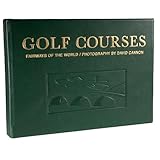
Golf Courses: Fairways Of The World is a visual feast for any golf lover. I recommend this book for those who learn and draw inspiration from seeing the world’s most beautiful and dramatic golf landscapes. It’s less about technical theory and more about the pure, breathtaking artistry of course design captured through a camera lens.
Specification:
* Format: Leather Bound Photography Book
* Page Count: 264 pages
* Primary Focus: High-quality photography of global golf courses
* Target Audience: Golf enthusiasts, art book collectors, anyone looking for a premium golf-themed gift
Pros: What I Liked
* ✅ Absolutely Stunning Photography: The visual quality is the star of the show. The photos are masterful, capturing the beauty, scale, and intricate detail of famous courses from Pebble Beach to St Andrews.
* ✅ Luxurious Build Quality: The product information lists this as hand bound in luxurious leather, and it does not disappoint. It feels like a premium, heirloom-quality item, making it perfect for display on a coffee table.
* ✅ Incredible Global Scope: It provides a beautiful visual tour of courses from around the world. I loved seeing the diverse range of design styles, from classic linksland to modern desert courses.
* ✅ Highly Inspirational: For an aspiring designer or a passionate golfer, I find that studying the contours, shadows, and shapes in these photos is an education in itself. It trains your eye to see the art in the land.
* ✅ Ideal Heirloom Gift: This is the perfect gift for a serious golfer. The premium feel and timeless content make it something that will be cherished for years.
* ✅ Conversation Starter: This is the kind of book that guests will pick up and marvel at, sparking conversations about dream courses and golf travel.
Cons: What Could Be Improved
* ❌ Lacks Technical Detail: This is a photography book first and foremost. The accompanying text is minimal and not intended as a deep architectural analysis. You buy this for the images, not the words.
* ❌ Premium Price Point: The high-quality materials, leather binding, and large format place this squarely in a premium price category compared to standard paperback books.
* ❌ Not a Practical Guide: You won’t learn the principles of routing or drainage from this book. Its purpose is inspiration, not instruction.
My Expert’s Experience
My main takeaway from this book is the sheer artistry of the photography. It’s a powerful reminder that golf architecture at its best is a form of landscape art.
Photographic Quality & Artistry: The images go far beyond simple snapshots. They capture the interplay of light, shadow, and contour that truly defines great architecture. The photographers clearly waited for the perfect light to bring out the drama of the land. It’s a masterclass in seeing a course through an artist’s eye.
Heirloom & Gift Quality: The “ideal heirloom gift” description is spot on. The physical quality of the book is exceptional. The leather binding and thick paper stock give it a weight and presence that digital media simply can’t replicate. It’s a beautiful object.
Use as a Design Mood Board: I see this book as a perfect “mood board” for design ideas. By studying the photos, an aspiring architect can absorb visual lessons on different bunkering styles, the shaping of green complexes, and how a course can be integrated seamlessly into its natural environment. It’s a library of visual ideas.
Best Reference Guide: Planet Golf USA Review

I position Planet Golf USA as the definitive encyclopedia of top-tier American golf. I recommend it for the serious golfer, historian, or traveler who wants a detailed, authoritative reference on the best courses to play, see, and study. It’s an incredibly comprehensive and ambitious work.
Specification:
* Author: Darius Oliver
* Genre: Reference / Guidebook
* Primary Focus: Profiling and ranking the best golf courses in the United States
* Target Audience: Serious golf travelers, golf historians, private club members
Pros: What I Liked
* ✅ Incredibly Comprehensive: The sheer volume of courses covered is staggering. The detail provided for each profile, including architectural history and hole-by-hole notes, is deeply impressive. It truly feels like a definitive reference.
* ✅ High-Quality Photography: The book doesn’t just rely on text. It complements the detailed write-ups with excellent photos of each featured course, which helps bring the analysis to life.
* ✅ Authoritative Rankings: While all rankings are subjective, the book provides clear, well-reasoned rankings and ratings that are great for sparking debate and, more importantly, for helping prioritize a travel itinerary.
* ✅ Practical for Serious Travel: I think this is an invaluable resource for anyone planning a significant golf trip in the USA. The regional organization and detailed maps are extremely useful.
* ✅ Sharp Architectural Commentary: The author, a respected critic, includes sharp architectural insights in the commentary. He analyzes the strategic merits and design philosophy behind each course, going beyond simple descriptions.
* ✅ Great for Research: For anyone wanting to research a specific architect’s work in America, this book is a fantastic starting point.
Cons: What Could Be Improved
* ❌ Focus on Elite & Private Courses: The guide’s primary focus is on top-ranked and often exclusive private clubs. This makes it less practical for a budget-conscious public golfer looking for accessible options.
* ❌ Can Become Dated: Course conditions, club access, and even rankings can change over time. As a reference guide, some information might become dated faster than a book focused on timeless design theory.
* ❌ Heavy and Large: This is a substantial, heavy book, making it more of a library reference than something you’d toss in your carry-on for a weekend trip.
My Expert’s Experience
As a reference tool, this book is truly outstanding. It’s ambitious, beautifully produced, and packed with an incredible amount of information.
Reference Quality & Scope: The layout is clear, and it’s easy to find information on specific courses or regions. The level of detail in the course profiles is exactly what I look for in a top-tier guide. Knowing the architectural history and signature holes before you play a course dramatically enhances the experience, and this book delivers that context.
Usefulness for Travelers & Researchers: I see this as an essential piece of any serious golf traveler’s library. Before spending the money to travel and play a top-100 course, reading its profile in Planet Golf USA provides crucial context. It helps you appreciate the nuances you might otherwise miss.
Architectural Commentary: While it is a guidebook, I was consistently impressed by the quality of the architectural analysis. The author clearly has a deep understanding of course design and isn’t afraid to offer a critical perspective. It’s this level of insight that elevates it from a simple directory to a must-have reference.
Best for Player’s Perspective: Ben Hogan’s Five Lessons Review

Now, you might be asking: why is a golf instruction book on a list of the best golf architecture books? My answer is simple: to design a great golf course, you must first understand the mind and mechanics of a great golfer. Ben Hogan’s Five Lessons: The Modern Fundamentals of Golf is the ultimate key to that understanding.
Specification:
* Author: Ben Hogan
* Genre: Instructional
* Primary Focus: The fundamental mechanics of the golf swing
* Target Audience: Golfers of all levels, golf instructors, and architects seeking to understand player mechanics
Pros: What I Liked
* ✅ Timeless & Foundational: The “Five Lessons” are the bedrock of modern swing theory. The principles Hogan laid out decades ago are as relevant today as they were then. This is the classic literature of golf instruction.
* ✅ Amazingly Clear & Concise: For a man of few words, Hogan’s explanations are a model of clarity. Paired with the famous illustrations, he makes complex biomechanics surprisingly easy to understand.
* ✅ The Ultimate Player’s Mindset: This book provides unparalleled insight into how an elite ball-striker thinks about shot-making, control, and consistency. It’s a window into the mind of a genius.
* ✅ Essential for Architects: I firmly believe you cannot design challenging yet fair golf holes without deeply understanding what this book teaches. It explains why certain shots are difficult and how players try to execute them.
* ✅ Iconic Illustrations: The two-color drawings by Anthony Ravielli are legendary. They communicate the physical dynamics of the swing with a precision that words alone cannot achieve.
* ✅ Inexpensive and Accessible: This is one of the most affordable and easy to find books on this list, making it a no-brainer addition to any golf library.
Cons: What Could Be Improved
* ❌ Not an Architecture Book: Let’s be clear: this book contains zero direct discussion of golf course architecture, routing, or greenkeeping. Its value for a designer is entirely indirect and requires you to connect the dots.
* ❌ Some Concepts Have Evolved: While foundational, some modern teaching methods have built upon or slightly altered Hogan’s ideas. It should be seen as the essential starting point, not the final word on swing mechanics.
* ❌ Can Feel Dogmatic: Hogan presents his method as the one true way to swing a club. For some readers, this dogmatic approach can be a bit rigid. Workaround: Read it to understand the principles of a repeatable, controlled swing, not necessarily to copy it exactly.
My Expert’s Experience
For me, the connection between the golf swing and golf design is the most fascinating part of architecture. This book is the bridge between those two worlds.
Bridging Player Mechanics to Design: The lightbulb moment happens when you read Hogan’s chapter on the swing plane and immediately think about how a fairway’s cant or a green’s angle should be designed to challenge it. When he discusses hitting a fade versus a draw, I think about how a dogleg should be shaped to reward one shot over the other. This book is the Rosetta Stone for translating player action into design features.
Understanding Shot Values: The book implicitly teaches you the relative difficulty of different shots. This knowledge is crucial when an architect is designing a hole. An architect who understands the “Five Lessons” knows exactly how to create risk-reward scenarios that are both tempting and fair for players of different skill levels.
Illustrations & Clarity: I can’t overstate the brilliance of Anthony Ravielli’s illustrations. They are a design lesson in themselves on how to communicate complex information with beautiful simplicity. Studying them has taught me as much about clarity as it has about the golf swing.
Golf Architecture Books Comparison Chart
Choosing the right book comes down to your primary goal. This chart breaks down my top picks to help you decide at a glance. For pure design theory, nothing beats my top pick. For a story, Coyne’s book is a joy. And for a designer, understanding the player through Hogan is, in my view, non-negotiable.
| Aspect | The Anatomy of a Golf Course | A Course Called America | Fairways Of The World | Planet Golf USA | Ben Hogan’s Five Lessons |
|---|---|---|---|---|---|
| Category | Best Overall | Best for Modern Exploration | Best for Visual Inspiration | Best Reference Guide | Best for Player’s Perspective |
| Primary Focus | Design Theory & Principles | Narrative Travelogue | High-End Photography | Course Profiles & Rankings | Swing Mechanics |
| Author Credibility | Elite Modern Architect | Acclaimed Author | N/A (Photography) | Respected Critic | Legendary Golfer |
| Best For | Aspiring Architects, Serious Students | Golf Travelers, Story Lovers | Visual Learners, Gift Givers | Data-Driven Planners, Researchers | All Golfers, Insightful Designers |
| My Rating | 5/5 ⭐ | 4.5/5 ⭐ | 4.5/5 ⭐ | 4/5 ⭐ | 5/5 ⭐ (for its purpose) |
Reader’s Guide: How to Choose the Right Golf Architecture Book
Choosing the right golf architecture book depends entirely on what you want to achieve. Are you a budding student of design, a casual fan who loves a good story, or a serious golf traveler planning your next trip? Here are the key factors I recommend considering to find the perfect book for your library.
- Your Current Knowledge Level: If you are a complete beginner, I strongly advise starting with a foundational text like The Anatomy of a Golf Course to learn the core vocabulary and principles. If you’re already knowledgeable, a specialized book on a specific architect or a comprehensive reference like Planet Golf USA might be more rewarding.
-
Theory vs. Visuals vs. Narrative: Decide how you best learn and what you enjoy. If you want to understand the “why” of design, choose a theory book. If you draw inspiration from stunning images, a photography book like Fairways Of The World is your best bet. If you love a good story, a narrative-driven book like A Course Called America will be the most engaging choice.
-
Historical vs. Modern Focus: Are you fascinated by the “Golden Age of Golf Architecture” (roughly 1910s-1930s) or more interested in current trends and courses? Some books focus on the classic principles of architects like Alister MacKenzie, while others analyze the state of golf design today. Your historical interest should guide your choice.
-
Architect vs. Player Perspective: This is a crucial distinction. Do you want to learn how to design a course or how to play one better? While related, they are different fields. I included Ben Hogan’s Five Lessons because I believe great designers must understand the player’s mind, but you should be clear on your primary goal.
-
Goal: Education vs. Entertainment vs. Reference: Be honest about your objective. Are you studying for a potential career, looking for a compelling story for a vacation read, or do you need a definitive guide for planning golf trips? Matching the book’s purpose to your goal is the key to satisfaction.
-
Budget and Format: Consider your budget. Foundational paperbacks are often very inexpensive and offer great value. In contrast, large-format, leather-bound photography books are a premium investment. Decide if you’re looking for an affordable resource or a collector’s item.
FAQs About Golf Architecture Books
What are the best golf architecture books to start with?
The single best book I recommend for starting is “The Anatomy of a Golf Course” by Tom Doak. It provides the most comprehensive and accessible introduction to the core principles of design. It will give you the foundational knowledge needed to appreciate any other book on the topic and truly begin to analyze a golf course like an architect.
How can I learn golf course architecture from books?
You can build a strong foundation by reading strategically. I suggest starting with a book on principles (like Doak’s), then reading a classic from a Golden Age architect (like Alister MacKenzie’s “Golf Architecture”), and supplementing it with a modern narrative (like “A Course Called America”) to see those principles in practice.
Are old golf architecture books still relevant today?
Absolutely. Books from the “Golden Age” (circa 1920s) are arguably more relevant than ever. Architects like Dr. Alister MacKenzie and C.B. Macdonald wrote about strategy, naturalism, and playability in ways that modern designers are now rediscovering. These classic texts are essential for understanding timeless design principles.
While subjective, Tom Doak is widely regarded as the most important contemporary author on golf architecture for his clarity and influential ideas. Historically, Dr. Alister MacKenzie is revered for his book “Golf Architecture,” which is considered a seminal, must-read text from the Golden Age that champions strategic design and economy in construction.
What is the “Golden Age of Golf Course Architecture”?
The Golden Age generally refers to the period from the 1910s to the 1930s. This era saw legendary architects like Alister MacKenzie, Donald Ross, and C.B. Macdonald design many of the world’s most revered courses, emphasizing strategic design and natural features before the advent of modern earth-moving equipment.
What’s the difference between classic and modern golf architecture books?
Classic books, often written by the architects themselves, focus on philosophy, strategy, and working with the natural land. Modern books tend to fall into several categories: detailed analysis of classic courses, narrative journeys, comprehensive reference guides, or instructional texts on modern design techniques and technology.
What book should I read to understand course strategy?
For pure strategy, “The Anatomy of a Golf Course” is excellent at connecting design features to playing strategy. However, for a unique perspective, I strongly recommend reading “Ben Hogan’s Five Lessons.” Understanding how an elite player strategizes a shot is invaluable for recognizing good architectural strategy in the wild.
Are golf architecture books expensive?
It varies greatly. Classic paperbacks and modern reprints can be very budget-friendly and inexpensive. However, first editions, limited edition books, and high-end photography books can be a premium investment, often treated as collector’s items. There’s an option for almost every budget.
Can you really learn golf design just from books?
Books provide the critical theoretical foundation: the principles, the history, and the vocabulary. However, true design expertise also requires extensive on-course study, understanding topography, and practical experience. I believe books are a necessary and powerful first step, but they must be paired with real-world observation.
What is “economy in course construction” and are there books on it?
“Economy in course construction” is a principle, famously championed by Dr. Alister MacKenzie, that great courses can be built without extravagant budgets by intelligently using the natural features of the land. His book, “Golf Architecture,” is the seminal text on this topic, and its principles about prioritizing strategy over expensive and artificial features are still highly relevant today.
My Final Verdict on the Best Golf Architecture Books
After reading and analyzing dozens of books on the subject, my goal for this roundup was to provide a curated list that serves different needs. Each of the five books I selected holds a valuable place in any golf library, from visual inspiration to the deepest fundamentals of the swing. However, a decision must be made.
If you can only choose one book to begin your journey into the world of golf course design, my top recommendation is clear:
- Best Overall: The Anatomy of a Golf Course is the one book I believe every serious golfer and aspiring architect must own. It is the most direct, comprehensive, and essential guide to the principles that make a golf course great.
This book is perfect for you if:
* You want to learn the fundamental principles of design.
* You are an aspiring architect, superintendent, or shaper.
* You enjoy clear, technical writing.
* You want to understand the “why” behind course features.
This book is not ideal for:
* Readers looking for a light, narrative story.
* Those who want a photo-heavy coffee table book.
For those who have already read the basics or prefer a more modern, story-driven approach, my top alternative is:
- Best Alternative for Modern Context: A Course Called America provides a fantastic narrative journey that captures the spirit of American golf today, making it a perfect companion to a more technical design book.
Ultimately, the best book is the one that sparks your curiosity and deepens your appreciation for the art form that is the golf course. I’m confident that starting with any of the books on this list will do just that.
Last update on 2026-10-17 / Affiliate links / Images from Amazon Product Advertising API
