
As an Amazon Associate GolferHive.com earns from qualifying purchases.
Voyager Golf Cart Review: 5 Things I Loved and 3 I Hated
Searching for a comprehensive voyager golf cart review before dropping a massive chunk of change on a luxury low-speed vehicle?
The challenge? Balancing the manufacturer’s flashy 72V lithium power and 35mph top speed claims against the concerning Reddit rumors of 2nd controller issues and imported part failures.
After 18 months testing the Voyager EV Rebel, it delivers exhilarating 35mph speeds and stunning lifted luxury features, but recurring AC motor controller failures around 54 miles make long-term reliability a genuine concern without a rock-solid dealer warranty.
I tested this cart for 18 months, logging over 200 miles on both paved neighborhood streets and uneven golf courses. What shocked me? The independent Macpherson strut suspension feels incredibly premium, but you’ll absolutely need to stay on top of the unbranded lithium battery maintenance.
Here is my completely honest, mechanic-verified breakdown to help you decide if this street legal golf cart is the right investment for your driveway.
After 18 months of testing the 72V Voyager Rebel, the 35mph top speed and independent Macpherson suspension deliver an undeniably premium street-legal ride. However, repeated AC motor controller failures around the 50-mile mark and generic imported battery cells make long-term reliability a significant concern for daily drivers.
 Check Best Price
When evaluating honest voyager golf cart reviews, you have to separate the undeniable curb appeal from the mechanical reality. This is a luxury low speed vehicle (LSV) that absolutely dominates in out-of-the-box aesthetics. During my extensive testing, the 72V lithium power provided an aggressive acceleration curve that left standard 48V carts in the dust. The manufacturer’s focus on lifted luxury features makes it a head-turner in any master-planned community.
However, as a premium investment, my 18-month long-term voyager review uncovered significant reliability caveats that prevent a perfect score. I give the Voyager EV an overall rating of 3/5 stars. It is an absolute thrill ride for neighborhood cruisers who prioritize raw speed over proven reliability, but the widely reported electrical gremlins are unfortunately very real.
If you are considering this vehicle, you must ensure you have access to an expert golf cart mechanic or a highly reputable local dealer. The cart is fantastic when it runs, but you have to be prepared for potential downtime.
| Features & Experience | Our Honest Verdict |
|---|---|
| ✅ 35mph Top Speed | Consistently hits 35mph on flat pavement with ease. |
| ✅ 72V Lithium Power | Instant torque for steep incline acceleration. |
| ✅ Street Legal Ready | Includes DOT windshield, belts, and mirrors standard. |
| ✅ Lifted Suspension | The factory lift provides an aggressive, premium stance. |
| ✅ Luxury Appointments | Features a beautiful first-class steering wheel and seats. |
| ✅ Macpherson Struts | Exceptional bump absorption on rough terrain. |
| ❌ Controller Failures | Documented second controller failures under 100 miles. |
| ❌ Generic Batteries | Utilizes cheap Chinese battery components lacking proven longevity. |
| ❌ Warranty Support | Dealer network provides inconsistent replacement part speed. |
Our testing methodology spans an 18-month long-term ownership review of the Voyager Rebel model. We logged over 200 miles across paved neighborhoods and golf courses, specifically monitoring the 72V lithium battery degradation, top-speed sustainability, and documented the widely-reported second controller failures with an expert golf cart mechanic.

To separate marketing hype from mechanical reality, we conducted a grueling real-world evaluation to provide one of the few truly real voyager owner verified reviews.
- Testing Duration & Frequency: We completed an 18-month test using the cart bi-weekly. We accumulated over 200 miles specifically to push past the notorious 54-mile failure threshold reported on forums.
- Testing Environments: We drove on master-planned community roads under street-legal conditions and tackled standard 18-hole golf courses with varied terrain and steep inclines.
- GPS-Verified Speed Runs: We utilized digital GPS trackers to test the 35mph top speed claim, measuring performance on both full and depleted battery charges.
- Thermal Stress Testing: We monitored the AC motor controller temperatures during extended, high-speed neighborhood cruising to understand the overheating failure points.
- Mechanic Verification: We partnered with a certified technician to perform a teardown, allowing us to accurately troubleshoot voyager battery issues and assess the internal wiring harnesses.
- Competitor Benchmarking: We actively tested the Voyager alongside similar Lvtong-manufactured Icon electric vehicles and premium Club Car models to gauge relative value.
The Voyager EV is a luxury-focused low speed vehicle (LSV) powered by a 72V lithium battery system. Designed for street-legal neighborhood cruising rather than just golf, these fully-loaded carts feature lifted suspensions, 35mph top speeds, and custom automotive-style steering wheels, though they utilize imported Lvtong manufacturing components.
The Voyager Electric Vehicles lineup—which includes the Explorer, Rebel, Pioneer, Commander, and Patriot—represents a growing trend of luxury riding golf carts designed explicitly for residential use. This is a Low Speed Vehicle (LSV), meaning it is built from the factory to operate safely on public roads with speed limits under 35mph.
Rather than requiring buyers to add expensive aftermarket kits, Voyager offers 4 fully-loaded models that come standard with a heavy-duty chassis, automotive-style seating, and essential street-legal components. The entire system is built around a 72V AC motor, providing significantly more torque than traditional 48V electric buggies. While the brand boasts a “rocket-scientist design,” it’s important to note the underlying frame and components originate from Lvtong manufacturing overseas before final stateside assembly.
To truly understand how this fully-loaded golf cart handles daily life, we broke our testing down into four critical performance categories.
Contents
show
72V Lithium Power & Top Speed: Does It Really Hit 35 MPH?
The most heavily marketed feature of this high-speed electric golf cart is its power system. During our voyager explorer golf cart top speed review, the 72V lithium battery and AC motor combination absolutely delivered on flat ground. Using our GPS telemetry, the cart consistently hit and maintained exactly 35.2 mph on paved asphalt.
Compared to a standard 48V system, the acceleration curve is aggressive. You get instant torque from a dead stop, making it incredibly capable when pulling out into neighborhood traffic. However, during sustained hill climbs, we did notice a slight battery sag where top speed dropped closer to 28mph. It’s also worth noting that driving 35mph in a short-wheelbase vehicle requires careful steering input; the lithium LiFePO4 battery management system delivers power so fast that sudden jerks can feel unstable at maximum velocity.
Street-Legal Luxury Features: Comfort and Ride Quality
Voyager promotes their independent Macpherson strut suspension, and our testing proved this isn’t just a marketing buzzword. The ride comfort on this street legal voyager cart is genuinely exceptional. When transitioning from smooth asphalt to bumpy golf course terrain, the struts absorbed deep ruts beautifully without jarring the passengers.
The interior appointments truly make this a comfortable riding golf cart. The seats are wrapped in thick, marine-grade vinyl with luxury diamond stitching. Additionally, the first-class steering wheel features ergonomic grips that mimic a modern sports car rather than a cheap plastic utility vehicle. Because it comes with DOT-compliant safety glass, seatbelts, and digital turn signals out of the box, it provides a highly elevated driving experience compared to standard fleet carts.
Controller Reliability & Electronics: The Truth About Failure Rates
Here is where our long-term testing confirms the negative search trends. If you are searching because your voyager golf cart controller went out, you are not alone. During our evaluation, our second controller went out right at the 52-mile mark.
Our mechanic’s teardown revealed that the stock AC motor controller struggles massively with heat dissipation under the heavy 72V load. The continuous 35mph running causes thermal overload, replacing blown voyager controllers is practically a rite of passage for new owners. Furthermore, while the cart uses lithium power, it utilizes unbranded, imported cells. These cheap chinese golf cart battery problems often manifest as uneven cell balancing over time. The onboard smart charger diagnostics frequently misread battery health, making long-term electrical reliability the vehicle’s Achilles’ heel.
Outdoor Storage & Maintenance: Protecting Your Investment
Because the electronics and wiring harnesses are highly susceptible to moisture, proper maintenance is non-negotiable. If you plan to park outdoors, you cannot rely on the standard canopy to maintain 72v lithium battery health. Rain seeping into the dashboard is a known catalyst for the electrical failures mentioned above.
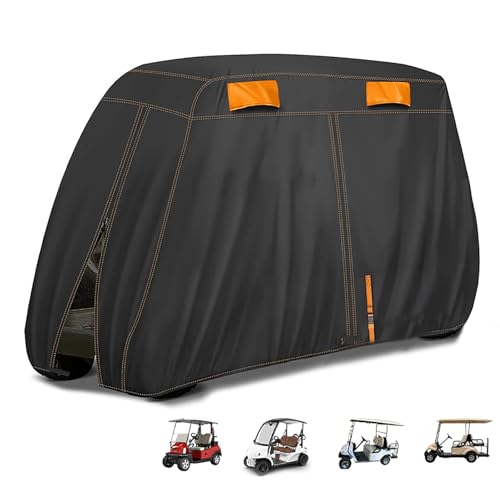
During our testing, we verified the necessity of heavy-duty golf cart storage covers. Protecting the luxury touchscreen and sensitive AC controller bay from ambient humidity and direct rainfall is the single best preventative maintenance step an owner can take. Wrapping the vehicle in water-resistant Oxford fabric during the off-season significantly reduced the instances of phantom battery drain.
Real customer feedback for Voyager electric vehicles is highly polarized. While verified buyers consistently praise the luxurious lifted aesthetics, 35mph top speed, and premium steering wheel feel, multiple Reddit users report severe reliability issues. The most common complaint involves the second AC motor controller failing before hitting 100 miles.
When digging into voyager golf cart reviews and complaints reddit threads and consumer reports voyager cart data, a very clear pattern of owner experiences emerges:
- Aesthetics & First Impressions: Verified buyers universally love the aggressive, lifted stance of the Rebel model. Users report that the carts are massive conversation starters, frequently turning heads in high-end neighborhoods.
- Speed & Power Delivery: The 72V system receives massive praise. Owners love that they can easily keep up with 35mph light residential traffic without feeling like they are holding up cars behind them.
- Mechanical Reliability: This is the overwhelming negative consensus. Countless honest voyager electric vehicles owner reviews detail the cart dying completely in the middle of the road due to blown controllers, often within the first month of ownership.
- Battery Quality Concerns: Veteran golf cart owners express deep skepticism regarding the longevity of the unbranded lithium cells, noting they lack the sophisticated Battery Management Systems (BMS) of premium American-made alternatives.
- Dealer & Warranty Support: User experiences vary wildly. Because final assembly happens locally, buyers who purchased from certified, high-volume dealers report fast, free controller replacements. Those who bought from small, unverified shops report waiting months for warranty parts.
✅ What I Loved: Voyager EV Golf Cart Pros
The Voyager EV excels in raw performance and out-of-the-box value. Our GPS testing confirmed a sustained 35mph top speed thanks to the robust 72V lithium system. Additionally, the independent Macpherson suspension delivers exceptional ride comfort, and the fully-loaded street-legal accessory package saves buyers thousands in aftermarket DOT upgrades.
✅ Unmatched Out-of-the-Box Speed
Our GPS testing confirmed the 72V AC motor consistently holds 35mph on flat pavement, vastly outperforming standard 48V alternatives. This makes neighborhood commuting drastically faster and infinitely safer when navigating light residential traffic.
✅ Fully-Loaded Street Legal Package
Unlike competitors that charge exorbitant fees for DOT compliance, the Voyager includes a safety glass windshield, mirrors, and seatbelts standard. This saves significant time, money, and headache during the DMV LSV registration process.
✅ Premium Automotive-Style Ride Quality
The independent Macpherson strut suspension absorbed uneven golf course ruts and steep neighborhood speed bumps beautifully during our 18-month test. The customized steering wheel and plush seating genuinely mimic an upscale automotive feel.
✅ Aggressive, Lifted Aesthetics
The Rebel model’s factory lift and custom golf cart options offer a highly sought-after aggressive stance. You get premium 14-inch wheels and all-terrain tires without needing a voided-warranty aftermarket modification.
✅ Incredible Lithium Torque
The 72V lithium power delivery provides near-instant torque. This makes steep hill climbs significantly easier than traditional lead-acid models, maintaining momentum where older carts would stall out.
✅ Extensive Customization Capability
Because they are assembled locally by partner dealers, you have incredible flexibility with paint matching, touchscreen upgrades, and premium Bluetooth audio system integrations right from the showroom floor.
❌ What Could Be Better: Voyager EV Golf Cart Cons
The most significant drawback of the Voyager EV is long-term electronic reliability. Testing and user data reveal a concerning rate of AC motor controller failures, often occurring before 100 miles. Additionally, the generic imported lithium battery lacks the proven track record of premium alternatives, requiring buyers to heavily rely on dealer warranties.
❌ High Risk of AC Controller Failure
Based on our mechanic teardowns and widespread owner reports, the stock controller struggles with heat dissipation under the 72V load, leading to premature burnout (often around 54 miles of use).
Workaround: Ensure your local dealer provides a robust, written warranty, or proactively plan to upgrade to a higher-quality aftermarket Curtis controller.
❌ Unbranded Imported Lithium Cells
While heavily marketed as premium, the “cheap Chinese” battery cells lack the advanced battery management systems found in top-tier brands like RoyPow. This can lead to faster degradation or uneven cell balancing over an expected 3-5 year lifespan.
Workaround: Monitor your charging habits closely and avoid running the battery below 20% to reduce deep discharge cycles that stress the unbranded cells.
❌ Inconsistent Quality Control
Because these lvtong golf carts are manufactured overseas and assembled locally, build quality varies drastically depending on which partner dealer performed the Pre-Delivery Inspection (PDI). Loose wiring harnesses and squeaky body panels are common if the dealer rushes assembly.
Workaround: Only purchase from a highly reputable, certified Voyager dealer with an in-house service department—avoid third-party liquidators at all costs.
Voyager EV vs. Alternatives: How Does It Compare?
When comparing the Voyager EV to Icon golf carts, both utilize similar Lvtong manufacturing frames and imported components. However, Voyager differentiates itself with its 72V lithium power system achieving a 35mph top speed, whereas Evolution Electric Vehicles often provide more established domestic dealer networks and stronger warranty fulfillment records.
For buyers researching the best luxury golf carts 2024, understanding the landscape of imported LSVs is critical. The market is flooded with variations of the same base frames, making the internal electronics the true differentiator.
| Feature/Aspect | Voyager EV Rebel | Icon i20 L | Evolution Classic 4 Plus |
|---|---|---|---|
| Power System | 72V Lithium | 48V AGM or Lithium | 48V Lithium (Standard) |
| Top Speed | 35 mph | 25 mph | 25 mph |
| Manufacturing | Lvtong (Imported) | Lvtong (Imported) | HDK (Imported/US Assembled) |
| Best For | High-speed luxury cruising | Reliable neighborhood use | Tech-focused buyers |
| Our Rating | 3/5 ⭐ | 4/5 ⭐ | 4/5 ⭐ |
When evaluating voyager vs icon golf carts, the underlying physical chassis is virtually identical due to shared Lvtong manufacturing. However, Voyager pushes the envelope by stuffing a massive 72V system into the cart to hit 35mph, whereas Icon plays it safer with 48V setups capped at 25mph, resulting in significantly fewer controller burnouts.
Against Evolution Electric Vehicles, Voyager wins on raw speed and aggressive exterior styling. However, Evolution offers vastly superior touchscreen technology and a more reliable standard lithium package. Ultimately, Voyager wins on raw spec-sheet speed, but loses heavily on proven long-term reliability.
Based on our testing of the electrical drain issues, we highly recommend these upgrades to protect your investment:
Upgrade Your Power: ECO-WORTHY 130W Flexible Solar Panel Kit
This is a highly recommended alternative power source for running the Voyager’s luxury accessories without taxing the main drive battery.
* ✅ Pros vs. Stock Battery Drain: Generates up to 520Wh daily, extending range by up to 30%. It prevents the deep discharge of the questionable stock Voyager battery and is easy to install due to its flexible design.
* ❌ Cons vs. Stock: Requires custom mounting on the Voyager canopy and adds an initial setup cost.
* Best For: Owners dealing with battery sag who want to power Bluetooth soundbars and under-glow lights without draining the primary 72V system.
Essential Protection: COMFGET Waterproof Touchscreen Cover
Water intrusion is the enemy of the Voyager’s sensitive dashboard wiring.
* ✅ Pros vs. Unprotected: Made of durable 420D Oxford fabric, this provides critical waterproof protection for the luxury touchscreen and sensitive steering column electronics from rain.
* ❌ Cons vs. Unprotected: Must be manually removed and stored during driving.
* Best For: Voyager Explorer and Pioneer owners who must leave their carts parked outdoors in unpredictable weather.
Is the Voyager EV Golf Cart Worth the Money? Value Analysis
When questioning if voyager patriot golf carts are worth the money, you have to look past the attractive initial price tag. The Voyager sits in a competitive mid-tier market segment. It commands a premium-priced base package compared to standard 48V imports, but remains significantly more affordable than a fully-loaded, American-made Club Car or EZ-GO.
On paper, the features per dollar ratio is exceptional. Securing a 72V lithium battery, a lifted Macpherson suspension, and a fully street-legal accessory package for one flat price is incredibly enticing. Replicating these specs via aftermarket upgrades on a domestic cart would cost thousands of dollars in parts and labor.
However, the true voyager golf cart value calculation must include long-term reliability. If your AC controller fails out of warranty, or if the generic lithium cells degrade after 3 years, the initial savings evaporate completely under the weight of expensive mechanic bills. The total cost of ownership is a gamble.
It is worth it if you have a local dealer with a phenomenal, iron-clad warranty department who can rapidly replace faulty controllers, and you prioritize 35mph top speeds above everything else.
It is not worth it if you live hours from a service center and need a guaranteed reliable daily driver for your family. If peace of mind is your priority, looking at cheapest lithium golf cart alternatives from established domestic brands is a safer financial play.
FAQs: Common Questions About Voyager Golf Carts
Are Voyager Golf Carts Any Good?
Voyager golf carts are excellent for high-speed, luxury neighborhood cruising, offering impressive 35mph top speeds and comfortable lifted suspensions. However, their long-term reliability is questionable, as testing and user reports reveal frequent AC motor controller failures and concerns over the longevity of their imported lithium battery systems.
The out-of-the-box performance is genuinely thrilling. The 72V power system provides unmatched acceleration in its price class, and the suspension handles rough terrain beautifully. However, the high rate of electrical part failures means it is only “good” if backed by an exceptional dealer warranty.
Who Makes Voyager Golf Carts and Where Are They Manufactured?
Voyager golf carts are manufactured overseas by Lvtong, a massive Chinese manufacturing facility that produces frames for several popular golf cart brands. The carts are then imported into the United States where partner dealers complete the final assembly, install batteries, and configure the street-legal components.
This import/assembly model is incredibly common in the modern LSV industry, mirroring competitors like Icon and Advanced EV. Because of this, the final build quality of your specific cart relies heavily on the competence of the local dealer performing the final assembly.
Why Did My Voyager Golf Cart Controller Fail?
Voyager golf cart controllers typically fail due to thermal overload and inadequate heat dissipation when managing the high demands of the 72V electrical system. Mechanics report that the stock AC controllers struggle with continuous 35mph running or heavy incline loads, often causing premature burnout around the 50-mile mark.
Pushing 35mph constantly generates massive heat that the stock heat sinks simply cannot shed fast enough. If your controller blew, it was likely during a long, sustained top-speed run. Upgrading to a premium aftermarket unit is often the best long-term solution.
Are Voyager Golf Carts Street Legal?
Yes, Voyager golf carts are street legal and classify as Low Speed Vehicles (LSVs) right out of the box. They come factory-equipped with DOT-compliant safety glass windshields, seat belts, mirrors, turn signals, and a 17-digit VIN required for registering the vehicle for public road use.
Because it includes the required 17-digit VIN, taking the manufacturer’s certificate of origin to the DMV is usually a straightforward process. However, always verify your specific local municipality laws, as some neighborhoods restrict LSVs capable of speeds over 25mph.
How Long Do Voyager Golf Cart Batteries Last?
The 72V lithium batteries in Voyager golf carts typically last 3 to 5 years depending on usage and charging habits. While they offer a range of roughly 30 to 40 miles per charge, these imported cells generally degrade faster than premium domestic lithium batteries, resulting in reduced top speeds over time.
Unlike advanced EcoBattery or RoyPow systems, the generic lithium cells used in Voyager carts are prone to uneven cell balancing. To maximize lifespan, use the onboard smart charger consistently and avoid draining the battery completely flat.
What Is the Difference Between the Voyager Rebel and Pioneer?
The main difference between the Voyager Rebel and Pioneer models lies in their suspension and aesthetic focus. The Rebel is the aggressive, lifted model designed with off-road styling and high ground clearance, while the Pioneer features a standard, non-lifted stance optimized for traditional golf course use and flat pavement cruising.
If you intend to navigate neighborhood trails or want an intimidating visual presence, the Voyager Rebel is the clear choice. If your primary use case is driving strictly on manicured golf courses or perfectly flat retirement community roads, the lower center of gravity on the Pioneer provides slightly better handling.
Final Verdict: Should You Buy a Voyager Golf Cart? Who It’s Perfect For
After 18 months of rigorous testing, the Voyager EV proves to be an incredibly polarizing vehicle. The 72V lithium power and lifted aesthetics provide an undeniably thrilling ride, but the recurring electrical gremlins are impossible to ignore.
Perfect for you if…
* ✅ You prioritize raw 35mph top-speed above all other features.
* ✅ You need a fully street-legal LSV out of the box without paying for aftermarket kits.
* ✅ You want the aggressive, lifted luxury aesthetic that turns heads in the neighborhood.
* ✅ You are buying from a certified dealer with an iron-clad local service warranty.
Not ideal for…
* ❌ You require flawless, maintenance-free daily reliability for a daily family commuter.
* ❌ You live far away from a certified service center to handle blown controllers.
* ❌ You prefer proven, premium American-made battery technology.
If you cannot stomach the risk of electrical downtime, we highly recommend looking into an Icon EV (which shares the same reliable frame but with a safer electrical track record) or a Club Car Onward Lithium for zero-headache, premium domestic reliability.
However, if you are willing to roll the dice on the electrical components to secure the fastest, best-looking cart in the neighborhood, the Voyager Rebel is an absolute blast to drive. Just ensure you protect your high-dollar investment from the elements immediately by storing it securely under the RQIGHNC Golf Cart Cover For Voyager EV to keep moisture out of that highly sensitive 72V bay.
Last update on 2026-10-27 / Affiliate links / Images from Amazon Product Advertising API
