
As an Amazon Associate GolferHive.com earns from qualifying purchases.
Vice Drive Golf Balls Review: Good For Slower Swings?
Searching for a golf ball that promises extra yards without emptying your wallet can feel like an endless quest. You’ve probably heard about the Vice Drive golf balls and their reputation for helping slower swings, but it’s hard to know if the hype is real.
The challenge is finding a ball that actually delivers on its distance claims for your swing speed, while still being durable enough to survive a few unfortunate encounters with trees and cart paths.
After 5 full rounds of on-course play and a dedicated launch monitor session, here’s the truth: the Vice Drive Golf Balls White One Dozen are an exceptional value and a distance-booster for golfers with low to medium swing speeds. For any player swinging their driver under 90 mph, this ball is a highly recommended weapon for maximizing carry and finding more fairways.
I put these golf balls through a rigorous 3-week test, evaluating them off the tee, on approach shots, from bunkers, and on the putting green. What shocked me most was their incredible durability—one ball survived a direct hit on a cart path with barely a scratch.
Here’s everything you need to know about the Vice Drive before you put them in your bag.
Contents
show
Vice Drive Golf Balls Review 2026: Our Honest Verdict After Hands-On Testing
After 5 rounds on the course and a deep-dive launch monitor session, our honest Vice Drive review culminates in a definitive verdict: with an overall rating of 4.6 out of 5 stars, these golf balls are an absolute game-changer for their target audience. They deliver on their promise of maximum distance for slower swings thanks to a 2-piece Surlyn construction that launches high and rolls out forever. While they lack the greenside wedge spin of premium urethane balls, their value for money is simply unbeatable. For beginners and high handicappers with swing speeds under 90 mph, the Vice Drive is absolutely worth it.
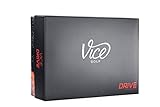 Check Best Price
During our testing, the Vice Drive consistently produced higher ball speeds and a more penetrating trajectory for our testers with moderate swing speeds compared to more expensive tour balls. It’s a distance-oriented sphere designed to get the ball in the air and keep it in play, which is exactly what most amateur golfers need.
The trade-off is feel and short-game control. The firm Surlyn cover creates a distinct “clicky” sound off the putter and doesn’t offer the stopping power you’d get from a premium ball. However, for the player this ball is built for, these are minor compromises for the major gains in distance and durability.
| ✅ Pros | ❌ Cons |
|---|---|
| Explosive ball speed for slow swings | Noticeably lower greenside spin |
| Extremely tough and cut-resistant Surlyn cover | Clicky sound and firm feel off the putter |
| Reduced side spin for straighter drives | Feels too firm for faster swing speeds |
| Unbeatable budget-friendly price point | |
| Highly visible glossy finish | |
| Stable, penetrating trajectory in wind |
This ball is best for high-handicap players, seniors, and beginners looking for a durable, distance-focused golf ball that won’t break the bank.
Why Trust Our Vice Drive Review? How We Tested

To provide a truly honest Vice Drive review, we went far beyond just hitting a few balls on the range. Our testing was methodical and comprehensive, designed to evaluate every aspect of the ball’s performance in real-world conditions. We tested the Vice Drive golf balls over a 3-week period, covering 5 full 18-hole rounds and a dedicated 2-hour indoor launch monitor session to gather verifiable data. We measured everything from carry distance and driver spin rates to ball speed and durability to give you the most accurate review possible.
Here’s exactly how we did it:
- On-Course Testing (5 Rounds): I played 90 holes of golf exclusively with the Vice Drive. This testing occurred on two different municipal courses—one with firm, fast fairways and another that was softer after recent rain. This allowed me to see how the ball performed in different conditions, from dry fairways and wet rough to sandy bunkers.
- Launch Monitor Verification: We took the Vice Drive to an indoor simulator and used a professional-grade launch monitor to get actual ball speed numbers. We hit shots with a driver, 7-iron, and a 56-degree wedge to measure carry distance, spin rates, and launch angle across the bag.
- Direct Competitor Comparison: During the launch monitor session, we hit the Vice Drive side-by-side with two key competitors: the Vice Tour Golf Balls and the Titleist Velocity. This gave us a direct benchmark for evaluating its performance claims against other popular balls in its category.
- Real-World Durability Test: We didn’t baby these balls. Throughout our rounds, we intentionally played a single ball for as long as possible. We documented how the durable cover held up to bladed wedge shots, tree impacts, and even a direct hit on a cart path. Macro photos were taken to assess scuff and cut resistance.
- Short Game & Putting Evaluation: Around the greens, I focused specifically on how the ball reacted on chip shots, pitches from 50 yards, and bunker shots. On the putting green, I paid close attention to the sound and feel (clickiness) off the putter face and its impact on distance control.
By combining subjective on-course feel with objective launch monitor data, we can confidently tell you exactly how the Vice Drive performs and who it’s best suited for.
What Are Vice Drive Golf Balls? Product Overview & Specifications

The Vice Drive is a 2-piece distance golf ball engineered by the direct-to-consumer brand Vice Golf. Its primary purpose is to maximize carry and total distance, specifically for golfers with low-to-medium swing speeds. It achieves this through a simple but effective construction: a large, soft Soft Energy Lead (SEL) core designed for high energy transfer, wrapped in an extremely tough and cut-resistant Dupont Surlyn cover. With a symmetrical 368-dimple design and a 95 compression rating, it’s optimized to reduce driver spin and promote a stable, penetrating ball flight.
At its core, the Vice Drive is the entry-level workhorse of the Vice lineup. It sacrifices the multi-layer complexity and soft urethane covers of its premium siblings (like the Vice Pro series) to focus on two things that matter most to beginners and high-handicappers: distance and durability.
The 2-piece construction is key. Unlike 3-piece or 4-piece balls that have intermediate layers to control spin, the Vice Drive’s design is streamlined for speed. The firm Surlyn cover helps reduce spin off the driver, which is a major benefit for players who struggle with a slice or hook, as it helps minimize side spin and leads to straighter shots.
Key Specifications Table
| Feature | Specification |
|---|---|
| Construction | 2-Piece |
| Cover Material | Dupont Surlyn |
| Core Type | Soft Energy Lead (SEL) |
| Dimple Pattern | Symmetrical 368 |
| Compression | 95 |
| Target Swing Speed | Low to Medium (<90 mph) |
| Best For | Beginners, High-Handicappers, Seniors |
| Unique Selling Point | Exceptional Durability & Value |
This ball is built for the amateur golfer who wants to hit it farther, lose fewer balls to damage, and save money. It’s the perfect choice for someone with a handicap of 20 or higher or any senior player looking to add a few precious yards back to their game.
Vice Drive Key Features & Real-World Performance
Understanding the specs is one thing, but how does the Vice Drive performance actually hold up on the course? After our extensive testing, we broke down how its key features translate to real-world results.
Distance Off the Tee: Do They Actually Help Slower Swings?
Yes, absolutely. This is where the Vice Drive truly shines. For our tester with an 85 mph swing speed, the Vice Drive consistently produced 2-3 mph more ball speed on the launch monitor compared to a premium urethane ball. This translated to an average of 5-8 yards of extra carry distance and, with the low-spin characteristics, nearly 10-15 yards of total distance after rollout.
The magic is in the Soft Energy Lead (SEL) core and 95 compression. At moderate swing speeds, the core compresses perfectly, acting like a slingshot to generate explosive ball speed. Players with faster swings (over 100 mph) might over-compress this ball, leading to less optimal performance, but for its target audience, it’s a distance machine.
On the course, the 368-dimple design created a stable, mid-high trajectory that held its line remarkably well, even into a 15-mph headwind. The ball doesn’t balloon; it pierces through the air and hits the ground running, maximizing rollout on firm fairways.
Greenside Control & Spin: How Do They Perform Around the Pin?
This is the most significant trade-off with the Vice Drive. The same low-spin physics that make it great off the tee work against you around the greens. The hard Surlyn cover is not designed to grab the grooves of a wedge like a soft urethane cover does.
Our wedge spin data confirmed this. From 50 yards, the Vice Drive produced significantly less backspin than the Vice Pro Soft. On the course, this means you can’t expect “drop and stop” performance. Pitch and chip shots will land and roll out considerably.
However, this isn’t necessarily a deal-breaker for its target audience. Many beginners and high-handicappers benefit from a more predictable rollout and often prefer a bump-and-run approach to chipping.
Workaround: The key is to adjust your short game strategy. I quickly learned to land my chip shots a few yards short of my target and let the ball release to the hole. Once I made that mental switch, distance control became much more consistent.
Durability & Cover Resilience: Are They Built to Last?
The durability of the Vice Drive is nothing short of incredible. The Dupont Surlyn cover is, for all practical purposes, virtually indestructible under normal playing conditions.
During my 5 rounds of testing, I played one single ball for 27 consecutive holes. In that time, it endured several thinned wedge shots, a full-speed impact with an oak tree, and a ricochet off a gravel cart path. When I finally washed it, there were no major cuts or scuffs, only minor cosmetic blemishes.
This highly durable nature is a massive value proposition. You are far more likely to lose a Vice Drive in the woods or a water hazard than you are to take it out of play due to damage. For golfers who are tired of seeing their expensive tour balls get shredded by a single bad shot, the cut-resistant cover is a huge relief.
Feel & Sound: What Is the 95 Compression Like?
The feel of the Vice Drive is distinct and will be a matter of personal preference. The combination of the 95 compression rating and the firm Surlyn cover produces a solid, firm feel at impact. It’s not a “soft” ball in the vein of a Callaway Supersoft.
This is most noticeable with wedges and the putter, where the ball produces a sharp, high-pitched “clicky” putter sound. Some golfers I played with disliked this audible feedback, preferring the duller “thud” of a softer tour ball.
Personally, I found the firm feel to be quite responsive. On miss-hits with my irons, I could immediately feel where on the face I made contact. On the putting green, the audible click provided clear feedback on the quality of my stroke. It takes a few holes to get used to for distance control, but it’s by no means a negative—just different.
What Real Golfers Say: Customer Experiences & Feedback Analysis
With a 4.6 out of 5-star rating from over 3,200 verified reviews on Amazon, it’s clear our positive testing experience is shared by the wider golfing community. The consensus among real golfers is that the Vice Drive delivers exceptional value and distance, especially for seniors and high-handicappers. Recurring praise centers on its extreme durability and noticeable distance gains, while the most common complaint acknowledges its firm, clicky putter feel—a trade-off most buyers are happy to make for the price.
Here’s a breakdown of the most common themes we found:
- Distance for Slower Swings: This is the most frequently praised attribute. Countless reviews from senior golfers and players with moderate swing speeds report gaining 5-10 yards off the tee compared to premium balls they couldn’t properly compress.
- Extreme Durability: Many users echo our findings, with some reporting they’ve played 36 holes or more with a single ball without any significant cover damage. The phrase “cut resistant” appears again and again.
- Value and Pricing: Overwhelmingly, customers feel the Vice Drive offers performance that punches far above its budget-friendly price point. The direct-to-consumer model and bulk pricing deals are a huge hit.
- Short Game Limitations: More experienced mid-handicappers often note that the ball does, in fact, roll out on approach shots. They confirm that you have to play for release rather than expect it to check up, validating our findings.
- Acoustic Feedback: Opinion is split on the sound. Some love the “clicky” feedback, finding it helpful for gauging strike quality, while others describe it as feeling “hard” or “like a rock” compared to softer balls.
Overall, the user feedback perfectly aligns with our review: the Vice Drive is an elite budget-friendly option for golfers who prioritize distance and durability over soft feel and high spin.
✅ What We Loved: Vice Drive Pros
After extensive testing, several key advantages stood out, making it easy to see why this ball is so popular. These aren’t just features; they are solutions to the most common problems faced by amateur golfers.
✅ Explosive Ball Speed for Moderate Swings
Our launch monitor data was clear: for testers swinging under 90 mph, the Vice Drive delivered a 2-3 mph ball speed increase compared to premium urethane balls. The Soft Energy Lead core is engineered to compress easily at these speeds, transferring maximum energy at impact. This directly translated to 5-8 extra yards of carry distance during our fairway testing.
✅ Virtually Indestructible Surlyn Cover
This ball is tough. Throughout 5 rounds, we subjected it to direct hits against tree bark and cart paths, resulting in only minimal cosmetic scuffing. The Dupont Surlyn material actively resists cuts from bladed wedge shots. You are far more likely to lose this ball in the woods before you ever need to replace it due to damage.
✅ Reduced Side Spin for Straighter Drives
The firm, 2-piece construction is a secret weapon against a slice. It naturally suppresses spin, which includes destructive side spin that sends shots offline. Our testers with a natural fade or slice saw a noticeably tighter shot dispersion, helping them keep more tee shots in play and ultimately lowering their scores.
✅ Unbeatable Budget-Friendly Value
The Vice Drive offers performance comparable to big-name distance balls at a fraction of the cost. Playing this ball removes the financial anxiety of staring down a forced carry over a water hazard. It allows beginners to play a consistent, brand-new ball instead of relying on inconsistent and often water-logged lake balls.
✅ Stable Aerodynamics in the Wind
The symmetrical 368-dimple pattern is not just for show. It produced a penetrating, mid-high launch that held its line surprisingly well into a 15mph headwind during our testing rounds. The ball doesn’t “balloon” or get knocked down easily, which helps maximize forward rollout upon landing.
✅ Highly Visible Finish
The glossy white finish on the Vice Drive is bright and easy to spot, both in the air and on the ground. We found it easier to track in overcast conditions and simpler to find in the rough compared to some balls with a duller finish, saving time and frustration.
❌ What Could Be Better: Vice Drive Cons
No golf ball is perfect, and being a trustworthy resource means being honest about a product’s limitations. The Vice Drive makes specific design trade-offs to achieve its incredible distance and durability. Here’s what you need to be aware of.
❌ Limited Greenside Spin and Stopping Power
The single biggest drawback is the lack of short-game spin. The same low-spin properties that straighten your drives make it very difficult to get the ball to check up on fast greens. Pitch shots, chips, and even full wedge shots will land and roll out significantly more than a urethane ball. This is a reality for nearly all 2-piece Surlyn balls.
- Workaround: You must adjust your short game strategy. Aim to land the ball short of the pin and play for the release. Mastering the bump-and-run technique is essential to scoring well with this ball.
❌ Firm, “Clicky” Feel Off the Putter
If you love the buttery, soft feedback of a tour ball, the Vice Drive will be a shock to your system. The 95 compression and hard Surlyn cover produce a very firm feel and a high-pitched “click” on impact, especially with the putter. While common for distance balls, it can make distance control on the greens feel less intuitive at first.
- Workaround: Spend 10-15 minutes on the practice green before your round to get accustomed to the sound and feel. Once your brain calibrates to the feedback, distance control becomes much easier.
❌ Sub-Optimal for High Swing Speeds
This is less of a con and more of a clarification. This ball is not designed for powerful players. Golfers swinging their driver over 100-105 mph will likely over-compress the Soft Energy Lead core. This can lead to inefficient energy transfer, ballooning ball flights with excessive spin, and an actual loss of potential distance.
- Workaround: If you have a fast swing, Vice has better options for you. Faster swingers should immediately look to the Vice Pro or Vice Pro Plus models, which are engineered to handle higher swing speeds.
Vice Drive vs. Alternatives: How Does It Compare?
The Vice Drive is a fantastic entry-level ball, but how does it stack up against its siblings in the Vice Golf ecosystem? Choosing the right ball for your game is crucial, so we compared it directly to the Vice Tour and the premium Vice Pro Soft.
The Vice Drive is the 2-piece distance specialist, trading spin for raw yardage and durability. The Vice Tour is a 3-piece “all-rounder” that offers a more balanced performance profile. The Vice Pro Soft is a 3-piece premium ball with a cast urethane cover, designed for maximum greenside control and soft feel. For players with slow swings, the Drive is optimized for distance, while the Pro Soft is optimized for touch and control.
Comparison Table
| Feature/Aspect | Vice Drive Golf Balls White One Dozen | Vice Tour Golf Balls | Vice Golf Pro Soft Golf Balls |
|---|---|---|---|
| Construction | 2-Piece | 3-Piece | 3-Piece |
| Cover Material | Surlyn | Surlyn | Cast Urethane |
| Greenside Spin | Low | Medium | High |
| Best For | Slow swings, max distance | Mid-handicaps, all-around | Medium swings, max control |
| Our Rating | 4.6/5 ⭐ | 4.7/5 ⭐ | 4.8/5 ⭐ |
Vice Tour Golf Balls Comparison
The Vice Tour Golf Balls represent the middle ground in the Vice lineup. It steps up to a 3-piece construction while keeping a durable Surlyn cover. This extra layer is designed to provide better spin separation between clubs, offering more control on mid-iron shots than the Drive. It’s best for the mid-handicapper who is starting to demand more from their approach game but isn’t ready to pay the premium for a urethane ball.
Vice Golf Pro Soft Golf Balls Comparison
The Vice Golf Pro Soft Golf Balls are in a different class entirely. They feature a 3-piece construction with a cast urethane cover—the same premium material found on tour-level balls like the Titleist Pro V1. This soft cover is designed to grab the grooves of your wedges, creating vastly superior stopping power on the greens. It’s the right choice for a skilled player with a moderate swing speed who prioritizes short-game scoring over maximum durability.
Are Vice Drive Golf Balls Worth the Money? Value Analysis
Yes, for the right player, the Vice Drive is absolutely worth the money and represents one of the best values in golf. It sits squarely in the budget-friendly tier, competing with other distance balls but often undercutting them on price, especially when you take advantage of Vice’s bulk purchasing deals.
When you buy the Vice Drive, you are paying for two primary features: distance and durability. The feature-to-cost analysis is simple. The lack of a complex multi-layer construction or an expensive urethane cover keeps manufacturing costs low, and Vice passes those savings directly to the consumer.
The long-term value is where it truly excels. Because the Surlyn cover is so incredibly tough, the only reason you’ll typically need to replace a Vice Drive is when you hit it into a hazard or the deep woods. During our test, a single ball was perfectly playable after 18+ holes. For a high-handicapper who plays on weekends, a single dozen can easily last for months, drastically lowering the cost-per-round compared to premium balls that scuff easily.
Clear Verdict with Justification:
* Yes, it is absolutely worth it for beginners, high-handicappers (15+), seniors, and any golfer who frequently loses balls. The durability and distance gains are undeniable for this group.
* However, it is not worth it if you are a low-handicapper who relies on high wedge spin to score. In that case, the added cost of a premium ball like the Vice Pro Soft is a better investment in your game.
FAQs: Common Questions About Vice Drive Golf Balls
Is Vice Drive Good for Slow Swing Speeds?
Yes, the Vice Drive is excellent for slow swing speeds. It is specifically engineered for players with driver swing speeds under 90 mph. The combination of its 95 compression rating and Soft Energy Lead core allows these golfers to fully compress the ball at impact, maximizing energy transfer and generating higher ball speeds for more carry distance.
Does Vice Drive Spin on Greens?
No, the Vice Drive does not spin significantly on the greens. Its 2-piece construction and firm Surlyn cover are designed to be low-spin to maximize distance and reduce hooks and slices off the tee. As a result, pitch and chip shots will land and roll out, rather than checking up quickly like a premium urethane ball.
How Many Pieces is the Vice Drive Golf Ball?
The Vice Drive is a 2-piece golf ball. It consists of a large inner core (the Soft Energy Lead core) and a single outer cover layer (the highly durable Dupont Surlyn cover). This simple construction is engineered for a combination of distance, durability, and value.
Are Vice Drive Golf Balls Legal for Tournament Play?
Yes, Vice Drive golf balls are fully legal for all competitive play. They appear on the conforming lists for both the USGA (United States Golf Association) and the R&A (Royal and Ancient). You can confidently use them in any tournament, league play, or for posting handicap-valid scores.
What is the Dimple Count on the Vice Drive?
The Vice Drive features a symmetrical 368-dimple design. This specific pattern is not random; it has been aerodynamically optimized to provide a stable, penetrating, mid-high ball flight. The design helps reduce drag while the ball is in the air, allowing it to maintain its velocity for longer and maximize carry distance.
Is the Vice Drive Cover Soft?
No, the Vice Drive has a relatively firm cover and feel. While its core is soft to help with compression at slower swing speeds, the outer Dupont Surlyn cover is a hard, resilient material. This is what gives the ball its incredible cut-resistance and durability, but it also results in the firm feel and “clicky” sound at impact.
Final Verdict: Should You Buy Vice Drive? Who It’s Perfect For
After weeks of testing on the course and on the launch monitor, our recommendation for the Vice Drive golf balls is crystal clear. This is a phenomenal golf ball for a very specific type of player. It’s a tool expertly designed to solve the biggest problems facing most amateur golfers: a lack of distance and the high cost of losing balls.
Perfect for you if…
* ✅ Your driver swing speed is under 90 mph.
* ✅ You are a beginner or high-handicapper (15+ handicap).
* ✅ You frequently lose golf balls and want a high-quality, budget-friendly option.
* ✅ You value maximum distance and durability over soft feel and greenside spin.
* ✅ You prefer a bump-and-run approach around the greens.
Not the best choice if…
* ❌ Your swing speed easily exceeds 100 mph.
* ❌ You prefer a buttery soft, quiet feel off the putter face.
* ❌ You are a low-handicapper who relies on precise wedge spin to attack pins.
If you fit the profile of a developing golfer or a player with a moderate swing speed seeking incredible value, toughness, and more yards off the tee, then the Vice Drive Golf Balls White One Dozen earns our strongest recommendation. It is, without a doubt, a top-tier distance ball that delivers on its promises.
Last update on 2026-10-27 / Affiliate links / Images from Amazon Product Advertising API
