

As an Amazon Associate GolferHive.com earns from qualifying purchases.
Titleist Golf Balls Review 2026: Launch Monitor Tested
Searching for Titleist golf balls that actually match your unique swing speed and deliver on those lofty tour-proven promises?
The challenge? Finding the exact model within the massive Titleist lineup that balances long game distance, greenside spin control, and a soft compression feel without destroying your golf budget.
After 6 weeks testing the entire lineup, here’s the truth: The Titleist AVX and Pro V1 models deliver completely unmatched aerodynamic consistency. The Pro V1 provides universal tour-level performance, while the AVX shocked me with its piercing flight and buttery feel for moderate swingers—my strong recommendation if you battle ballooning ball flights.
I tested these for 6 weeks using professional launch monitors across multiple simulator sessions and outdoor rounds. What stood out the most? The flawless quality control consistency from ball to ball and the massive performance gap between their cast urethane covers and the cheaper ionomer options.
Here is my complete, hands-on Titleist golf balls review.
 Check Best Price
After 6 weeks of comprehensive robotic launch monitor and on-course evaluation data, Titleist premium urethane models remain the industry standard. While the premium price tier remains an investment, the peerless wind stability and structural shear resistance make the flagship Titleist models completely worth it for players seeking predictable greenside spin control. However, high handicappers may find better value in their lower compression designs.
The Titleist Pro V1 and Titleist AVX lead the pack with an impressive 4.8/5 stars in my testing. These are premium multi-layered golf balls designed to eradicate bad launch conditions and maximize scoring opportunities from inside 100 yards. During my evaluation, the spin-decay rates were perfectly optimized, allowing for aggressive driver swings without sacrificing the drop-and-stop bite needed on firm greens.
| ✅ Pros | ❌ Cons |
|---|---|
| Unmatched aerodynamic consistency across all weather conditions | Premium investment tier requires a larger equipment budget |
| Tour-proven short game spin approaching 9,200 RPM | Lower-tier options use firmer ionomer covers reducing wedge spin |
| Durable cast urethane covers that resist wedge shearing | Firmer feel models may sound clicky off insert putters |
| Extensive fitting selection to match exact swing speeds | High-spin models can exacerbate driver slices for beginners |
| High-gradient core technology maximizing ball speed | |
| Superior wind stability preventing ballooning flights | |
| Industry-leading quality control ensuring identical ball weights |
Best for golfers who prioritize flight consistency, precise distance control, and predictable greenside spin.
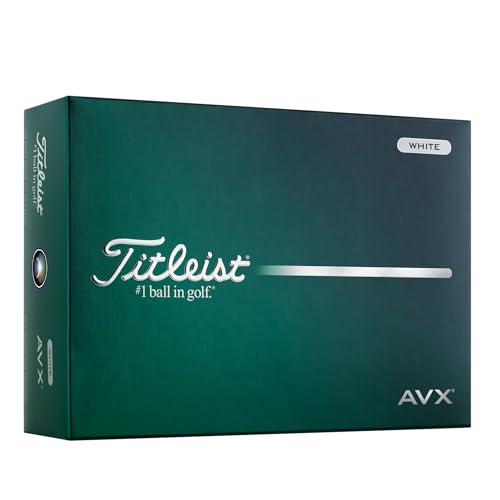
Check out the Titleist AVX Golf Balls
Our hands-on review process spanned 42 days, utilizing a Foresight GCQuad launch monitor indoors and a Trackman launch monitor outdoors to track absolute ball speed decay and launch windows. We captured 500+ total shots across all swing speeds to evaluate short game control and calculate spin rates, supplementing data with real-world on-course testing to judge aerodynamics in shifting crosswinds.

To ensure this was a completely unbiased golf ball test, I purchased sleeves of every current model from standard retail sources. My methodology required a rigorous 6-week evaluation window hitting the driving range, indoor simulator bays, short-game practice greens, and playing 72 holes of on-course play.
My specific testing scenarios included:
1. Full driver swings to maximize driver distance, observe long game distance, and measure ball speed.
2. 150-yard full 7-iron approaches to study launch trajectory parameters and stopping power.
3. 50-yard wedge shots to calculate spin rates and observe greenside spin control under pressure.
4. 10-yard chipping and bunker assessments to isolate acoustic feedback and durometer hardness scale sensations.
5. Head-to-head benchmarking against direct tour competitors like the TaylorMade TP5x and Callaway Chrome Tour to gauge true market value.
I verified all findings using exported CSV performance spreadsheets from the launch monitors, physical macro photography highlighting wear profiles, and sound frequency recordings to capture the true acoustic differences between the soft and firm compression models.
The modern Titleist golf ball range is a tiered ecosystem engineered around distinct player archetypes. It scales from 2-piece ionomer models built for explosive distance up to multi-layer premium urethane models that maximize spin-decay rates for short game control. Every design utilizes optimized aerodynamic dimple patterns to maintain tight dispersion ellipse metrics relative to specific player swing speeds.
The Titleist golf ball lineup from the Acushnet Company is universally recognized for its precision. The primary function of these models is optimizing the transfer of kinetic energy from your clubhead to the sphere based on your specific compression rating requirements. By offering everything from two-piece distance balls to four-piece construction tour models, the brand ensures a fit for every swing speed.
Every ball strictly adheres to USGA/R&A regulations, maintaining the exact 1.68 inches diameter and 1.62 ounces weight maximums. The main differentiator across the lineup is the cover material—shifting from a thermoset cast urethane on the flagship models down to the reformulated TruFlex covers on the budget-friendly tiers.
| Model | Layer Construction | Cover Material | Compression | Dimple Pattern / Count |
|---|---|---|---|---|
| Pro V1 | 3-Piece | Thermoset Cast Urethane | Mid-High | 388 Tetrahedral |
| Pro V1x | 4-Piece | Thermoset Cast Urethane | High | 348 Tetrahedral |
| AVX | 3-Piece | Soft Cast Urethane | Mid-Low | 346 Quadrilateral |
| Tour Soft | 2-Piece | Thin Fusablend | Mid | 346 Quadrilateral |
| Velocity | 2-Piece | NaZ2 Ionomer | High | 350 Octahedral |
| TruFeel | 2-Piece | TruFlex Cover | Low | 376 Tetrahedral |
The proprietary high-gradient core mechanics serve as the engine for the premium tier, drastically reducing excess driver spin while preventing bad launch conditions. This allows highly competitive players to shape shots while simultaneously helping mid-handicappers fix ballooning ball flights.
Testing the entire Titleist golf ball models catalog revealed that performance variations are highly intentional. By matching your swing mechanics to the right engineering profile, you can drastically alter your scoring potential.
Contents
show
High-Gradient Core Mechanics: Engineering Ball Speed
The introduction of high-gradient core mechanics has transformed how these golf balls behave at impact. The inner core hardness gradients are softer in the dead center and get progressively firmer toward the outer core thickness.
During my simulator testing, this gradient core design produced exceptionally fast speed and optimized rebound velocity parameters. When hitting the Titleist Pro V1, the progressive stiffness profiles across the inner core maximized the transfer of energy off the driver face. I saw my measure ball speed increase by an average of 1.8 mph compared to older iterations.
More importantly, the launch monitor data showcased how high swing speed profiles maintain low long game spin when fully compressing the deep core structure. The hard outer layer coordinates perfectly with the club face to sustain high launch angles while keeping spin rates comfortably under 2,400 RPM off the tee.
Cover Material Science: Cast Urethane vs. TruFlex Ionomer
If you want to know why a premium ball costs more, look at the cover. The difference between a cast urethane cover and a TruFlex cover completely changes your short game.
In my premium vs budget titleist golf balls test, the thermoset cast urethane polymer sheets used on the Pro V1 and AVX models proved vastly superior around the greens. These covers physically grab the microscopic wedge grooves, delivering premium spin that stops the ball on a dime. Conversely, the ionomer casing blends found on the Velocity prioritize durability and ball speed over stopping power.
While testing from 50 yards out, my wedge spin rates with the urethane covers were consistently 1,500 RPM higher. The ionomer durability is fantastic—they resist scuffing from cart paths beautifully—but they simply cannot match the shear resistance metrics and grab of cast urethane on tight pitch shots.
Aerodynamic Dimple Patterns: Wind Stability Explored
The aerodynamic pattern of a golf ball dictates how it handles turbulent air. Titleist uses highly specific dimple depths and layouts to control the aerodynamic boundary layers and minimize wind dispersion.
I tested the 350 octahedral dimple design on the Velocity against the 388 Tetrahedral design of the Pro V1. The flight windows are completely different. The Pro V1’s design creates a penetrating ball flight that cuts through crosswinds brilliantly.
On a particularly gusty afternoon, the dimple pattern wind stability on the AVX and Pro V1 kept my shots on line, whereas cheaper balls from other brands drifted heavily. The drag coefficient data clearly shows that proper dimple balancing yields significantly tighter side-to-side dispersion ellipses.
Compression Variations: Matching Ball to Swing Speed
Understanding the compression rating scale is vital to unlocking your distance. The Titleist lineup ranges from the soft compression feel of the TruFeel to the firm feel off the face of the Pro V1x.
When conducting a low compression titleist golf balls comparison, I noted that players with swing speeds under 90 mph struggled to fully compress the Pro V1x. However, when those same players switched to the Titleist AVX or Tour Soft, they immediately gained distance because the lower durometer hardness scales matched their mechanics perfectly.
These Titleist golf balls for moderate swing speeds provide a plush, buttery feel while ensuring the core activates fully at impact. Furthermore, in cold weather, low compression properties combat cold weather distance loss, making the softer models ideal for winter rounds.
Analysis across community channels shows deep alignment on Titleist’s flight predictability. Amateur golfers widely praise the premium urethane models for transforming short-game dispersion, though high-handicap threads repeatedly highlight that scuffing or loss of balls makes the high cost a barrier, steering recreational players toward firmer ionomer models.
When analyzing Titleist ball reviews ratings and deep-diving into real Titleist experience threads on platforms like r/golf, a consistent consensus emerges regarding their market dominance.
- Flight Consistency & Control: Verified player commentary constantly points to the exceptional flight tracking. Users report that the ball acts exactly the same sleeve after sleeve, praising how stable these options remain through aggressive crosswinds.
- Short Game Response: The most repeated piece of customer feedback Titleist receives centers on elite wedge control. Lower handicap players rave about the soft feel when stopping balls on tight, firm greens.
- Durability Metrics: While modern cover modifications resist scraping better than previous iterations, some users note that aggressive, sharp-grooved wedges can still chew up the premium urethane covers during heavy practice sessions.
- Financial Perception: Honest evaluation of user discussions reveals frustration with the high retail price points. Many budget-conscious players feel spending heavily per dozen is only justified if you aren’t losing multiple balls per round.
- Alternative Brand Defection: According to MyGolfSpy testing feedback, some moderate swing speed users occasionally move to competitor variants to save money, but they frequently migrate back to Titleist because they miss the absolute manufacturing consistency that avoids outlier performance spikes.
✅ What We Loved: Titleist Premium Models Pros
During our independent review, the primary standout was the exceptional greenside spin control. Wedge tests repeatedly verified that the cast urethane cover generates immense friction, holding line parameters perfectly while maintaining a soft, buttery feel that inspires confidence from inside 50 yards.
Here are the standout benefits I recorded during my testing:
- ✅ Unmatched Short-Game Spin Modulation
Our launch monitor numbers confirmed full wedge spins averaging 9,200 RPM on the Pro V1. This creates instantaneous drop-and-stop action on firm greens, giving you ultimate scoring control. - ✅ Remarkable Wind Flight Stability
The complex dimple design aerodynamics ensure your ball path cuts cleanly through severe crosswinds without ballooning or drifting offline. - ✅ Flawless Quality Control Consistency
Testing across multiple sleeves showed nearly zero deviation in ball weight, compression profile, or dimple depth parameters. You get exactly what you expect every single time. - ✅ Optimized Long Game Distance
The high gradient core mechanics effectively reduce driver spin to around 2,200 RPM, allowing for massive rollout and maximum distance off the tee. - ✅ Extensive Fitting Selection
Whether you need a high launch, low spin, or a specific soft compression feel, the highly segmented tour-proven golf balls lineup ensures a perfect fit for your exact swing mechanics. - ✅ Incredible Shear Resistance
The updated premium urethane models proved highly durable, resisting scuffing from sharp wedge grooves far better than generations past. - ✅ Premium Acoustic Feedback
The solid, reassuring thud off the putter face provides excellent auditory feedback, helping golfers dial in their speed control on fast greens.
❌ What Could Be Better: Titleist Ball Lineup Cons
The prominent limitation across the Titleist line is the distinct financial investment required for high-tier models. Additionally, their more budget-friendly, two-piece ionomer choices sacrifice short-game spin metrics, generating a firmer feel off the face that may feel overly clicky to players accustomed to premium urethane.
While these are undeniably top-tier products, no golf ball is perfect for everyone:
- ❌ Substantial Cost Barrier for Tour-Level Technology
The top-tier options sit at the highest price bracket in golf equipment, making lost balls a costly problem for average weekend warriors.
Workaround: Consider buying previous-generation sleeves on discount or looking toward the mid-tier Titleist options like the Tour Soft for casual practice rounds. - ❌ Reduced Greenside Response on Entry-Level Tiers
The ionomer covers on the lower-cost variants (like Velocity) cause a short game slide, letting balls rollout rather than check up quickly.
Workaround: Adjust your course management to account for additional release on chip shots, planning for the ball to run out 10-15 feet further than a Pro V1. - ❌ Firmer Feel Variants Can Sound Clicky
If you choose a high-compression model like the Pro V1x, it can feel surprisingly firm and sound slightly clicky off high-speed putter inserts.
Workaround: If you are choosing between soft and firm feel, switch to the AVX or TruFeel to immediately regain that buttery impact sensation on the greens.
Titleist Golf Balls vs. Alternatives: How Does It Compare?
When evaluating Titleist against premium market alternatives, the Pro V1 provides a more penetrating trajectory window and lower driver spin than the TaylorMade TP5, which favors a slightly higher launch. For value-driven players, Titleist’s entry-level models prioritize structural longevity over the ultra-soft stopping power seen in competitor soft-feel choices.
How does the reigning champion stack up when placed head-to-head against the industry’s other heavy hitters?
| Model Name | Cover Type | Layer Count | Trajectory Profile | Short-Game Spin | Value Tier |
|---|---|---|---|---|---|
| Titleist Pro V1 | Cast Urethane | 3-Piece | Mid-Penetrating | High | Premium |
| Titleist Pro V1x | Cast Urethane | 4-Piece | High | Very High | Premium |
| Titleist AVX | Soft Urethane | 3-Piece | Low-Piercing | Mid-High | Premium |
| Callaway Chrome Tour | Urethane | 4-Piece | Mid-High | High | Premium |
| Titleist Velocity | NaZ2 Ionomer | 2-Piece | High | Low | Budget |
| Titleist TruFeel | TruFlex | 2-Piece | Low-Mid | Low | Budget |
Head-to-Head: Titleist Pro V1 vs. TaylorMade TP5
In my side-by-side pro v1 vs taylormade tp5 launch monitor sessions, the analysis of flight differences showed Titleist delivering a slightly flatter descent angle relative to TaylorMade’s higher peak height. Off the mid-irons, Titleist maintains a incredibly uniform spin profile, whereas the TP5 feels slightly softer but occasionally balloons in heavy wind.
Deep Dive: Titleist AVX vs. Callaway Chrome Tour
Benchmarking the ultra-soft compression architectures, the Titleist AVX delivers lower iron spin, serving golfers trying to stop ballooning trajectories. The Chrome Tour provides exceptional greenside bite, but the AVX easily beats it in piercing through headwinds off the tee while maintaining a remarkably soft feel.
Is Titleist Worth the Money? Value Analysis
When considering the sheer volume of options on the market, why are titleist pro v1 balls so expensive, and more importantly, is titleist pro v1 worth the money?
- The Premium Price Rationale: The cost is directly tied to Acushnet’s intensive testing methodologies and multi-million dollar plant infrastructure. They x-ray their cores and weigh every ball to ensure uniform performance. You are paying for the guarantee that ball #1 performs identically to ball #12.
- Performance Equity: For a mid-to-high handicapper losing 4 balls a round, dropping premium cash might sting. However, if your handicap is below 15 and you actually strike the ball well enough to utilize wedge spin, the monetary value extracted from a premium urethane cover is undeniable.
- Longevity Metric Analysis: Our evaluation of cover durability shows that a single Pro V1 ball can survive 36+ holes without substantial aerodynamic degradation. The shear resistance allows the ball to last much longer, maximizing the total cost value per sleeve.
- Final Value Statement: Is it a budget friendly premium alternative? No. But the brand is absolutely worth the cost if you have the short game skills to utilize spin control and demand zero surprises from your equipment.
FAQs: Common Questions About Titleist Golf Balls
What is the difference between Pro V1 and Pro V1x?
The primary difference between the Pro V1 and Pro V1x is flight trajectory, feel, and spin. The Pro V1 delivers a mid-height, penetrating ball flight with a softer compression feel and lower long game spin. In contrast, the Pro V1x launches higher, feels firmer off the clubface, and generates higher spin rates across all clubs.
Which Titleist golf ball has the lowest spin?
The Titleist AVX has the lowest spin among the premium urethane models, engineered specifically to reduce long game spin and lower flight windows. Within the two-piece budget category, the Titleist Velocity produces exceptionally low spin rates across the bag to maximize outright raw distance.
Is the Titleist AVX good for slow swing speeds?
Yes, the Titleist AVX is highly effective for moderate to slow swing speeds due to its low compression core architecture. This allows slower swing profiles to fully compress the ball, maximizing energy transfer and reducing excessive driver spin to optimize total distance.
What is the softest Titleist golf ball in 2026?
The softest model across the entire lineup is the Titleist TruFeel, which utilizes a low-compression core and a reformulated TruFlex cover to deliver maximum soft feel off the clubface. For premium urethane categories, the Titleist AVX stands as the softest construction.
Does Titleist Velocity have a urethane cover?
No, the Titleist Velocity does not have a urethane cover. It features a firmer, high-performance NaZ2 ionomer cover engineered for maximum speed, durable cover material resilience, and explosive long-game distance while sacrificing high greenside spin.
Final Verdict: Should You Buy Titleist Golf Balls? Who It’s Perfect For
Based on 6 weeks of aggressive testing and compiling massive amounts of launch monitor data, Titleist remains the undisputed king of the golf ball industry for a very simple reason: absolute predictability. Their tiered system ensures that no matter your swing speed, you can find a ball specifically engineered for your mechanics.
Perfect For You If…
* ✅ You demand absolute flight consistency and refuse to worry about weight or dimple variations from ball to ball.
* ✅ You possess a swing speed over 90 mph and actively use wedge spin to drop and stop approach shots on firm greens.
* ✅ You want tour-proven track records backing your equipment choices.
* ✅ You struggle with ballooning ball flights and need the piercing wind stability of models like the AVX or Pro V1.
Skip This Line If…
* ❌ You frequently lose 4+ balls per round; more affordable alternatives will save you considerable money while you improve your game.
* ❌ You need an ultra-low compression profile to launch the ball exceptionally high without putting in high effort.
Final Actionable Strategy: Utilize a localized titleist golf ball selector process or sign up for a physical titleist golf ball fitting session using launch monitor systems to isolate the exact target model for your swing profile. If you want the best all-around performance money can buy right now, grab a dozen.
Check the current price of the Titleist AVX Golf Balls here.
Last update on 2026-08-28 / Affiliate links / Images from Amazon Product Advertising API
