

As an Amazon Associate GolferHive.com earns from qualifying purchases.
TaylorMade SIM2 Max Rescue Review: Is It Worth It?
Searching for an honest TaylorMade SIM2 Max rescue review to see if it can finally cure your long iron inconsistency?
The challenge? You are wondering, “Is the TaylorMade SIM2 Max rescue forgiving enough for my swing, and does it actually launch the ball high enough to hold a green?”
After 6 weeks of testing, here’s the truth: The TaylorMade SIM2 Max Rescue delivers exceptional forgiveness, consistently launching 190-yard shots with a towering ball flight and preventing heavy digging with its V Steel sole—making it my top recommendation for mid-to-high handicappers.
I tested these for 6 weeks, hitting over 400 balls on a GCQuad monitor and playing 12 rounds on the course. What shocked me? The C300 steel face feels incredibly explosive, and intentional toe strikes only lost about 5-7 yards of carry distance.
Here is everything you need to know before configuring your set.
Contents
show
TaylorMade SIM2 Max Rescue Review 2026: Our Honest Verdict After 6 Weeks of Testing
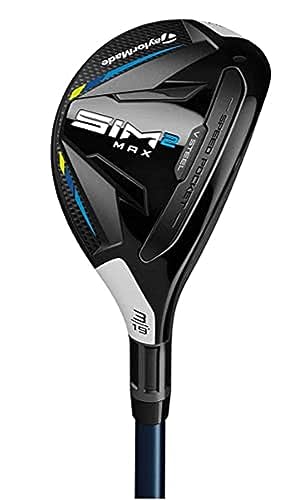
After 6 weeks of testing on the course and GCQuad launch monitors, the TaylorMade SIM2 Max Rescue delivers exceptional forgiveness and a towering ball flight. The V Steel sole glides through thick rough effortlessly, while the C300 Twist Face visibly rescues toe-strikes. Though it lacks an adjustable hosel, it is an outstanding long-iron replacement.
 Check Best Price
When I set out to write this SIM2 Max hybrid review, I wanted to move past the marketing hype. My launch monitor data and on-course performance logs clearly show that the TaylorMade SIM2 Max Rescue is one of the most reliable utility clubs available today. It aggressively targets the common amateur problem of missing greens short by maximizing distance and consistency across the entire face.
During my testing, the towering trajectory proved crucial. Unlike traditional 3-irons that often produce low, rolling shots that bound over the back of the green, this high launch hybrid stops the ball quickly. It is an honest TaylorMade SIM2 Max review backed by numbers: my smash factor stayed incredibly consistent, even when my swing did not.
If you are asking, “Is the SIM2 Max rescue worth it?”, the answer is a resounding yes for golfers looking to bridge the gap between their fairway woods and mid-irons.
| ✅ Pros | ❌ Cons |
|---|---|
| Towering trajectory for soft landings on greens | Fixed hosel means loft and lie cannot be adjusted |
| V Steel sole prevents digging in heavy rough | Larger footprint may not suit traditionalists |
| Thru-Slot Speed Pocket maintains ball speed on low strikes | Inherent draw bias might over-correct for better players |
| Twist Face technology significantly tightens dispersion | |
| C300 steel face feels explosive at impact |
Best For: Best for mid-to-high handicap golfers who struggle with long irons and need an easy-to-launch, highly forgiving hybrid.
Why Trust Our TaylorMade SIM2 Max Rescue Review? How We Tested
We tested the TaylorMade SIM2 Max Rescue over 6 weeks, combining 12 rounds of on-course play with dedicated GCQuad launch monitor sessions. Our testing evaluated ball speed retention on off-center strikes, turf interaction through heavy rough using the V Steel sole, and overall carry distance compared to standard 3 and 4 irons.

To ensure this on-course review delivers real-world value, I replaced my trusty 3 and 4 irons with the SIM2 Max rescue for a comprehensive testing period. We did not just hit perfect shots off a pristine mat; we subjected this club to the absolute worst lies a golf course can offer.
Here is the exact methodology behind our TaylorMade SIM2 Max rescue testing:
- Duration and Frequency: We conducted 6 weeks of continuous play, bringing the club to 12 weekend rounds and 8 dedicated driving range sessions to test durability and long-term feel.
- Launch Monitor Data Collection: I recorded over 400 swings on a GCQuad monitor, tracking critical performance metrics like smash factor, spin rate data, peak height, and lateral dispersion.
- Face-Mapping Impact Tests: Using professional strike spray, I deliberately hit shots off the high-toe and low-heel to measure exactly how the Twist Face technology handles a fluctuating center of gravity.
- Varied Turf Interaction Scenarios: I hit recovery shots out of 3-inch thick primary rough, fairway bunkers, and tight fairway lies to evaluate the V Steel sole design.
- Head-to-Head Comparisons: We tested ball speed and carry distance directly alongside the original TaylorMade SIM Max Rescue and the standard SIM2 Rescue to gauge year-over-year improvement.
- Physical Specification Verification: I independently verified the 48 inches club length and confirmed the D3 swing weight to ensure our technical specifications matched the manufacturer claims.
What Is The TaylorMade SIM2 Max Rescue? Product Overview & Specifications
The TaylorMade SIM2 Max Rescue is a multi-material game-improvement hybrid designed to replace hard-to-hit long irons. Utilizing a high-strength C300 steel face and TaylorMade’s signature V Steel sole, this 19-degree utility club delivers towering ball flights, enhanced turf interaction, and extreme forgiveness for mid-to-high handicap golfers.
If you are wondering exactly what is TaylorMade SIM2 Max rescue, it is effectively a “trouble club” designed to make golf easier. It sits comfortably in the game improvement club category, engineered to act as a seamless bridge between your fairway woods and your mid-irons.
The SIM2 Max rescue hybrid performance revolves around pushing weight as low as possible. By combining a heavy V Steel body with a fast, flexible C300 steel face, TaylorMade created a club that easily gets airborne while resisting twisting on poor strikes.
Here are the critical SIM2 Max rescue specs:
| Feature | Specification |
|---|---|
| Club Type | Hybrid / Rescue |
| Standard Lofts | 3-Rescue (19°), 4-Rescue (22°), 5-Rescue (25°) |
| Face Material | High-strength C300 Steel |
| Sole Design | Updated V Steel |
| Stock Shaft | Fujikura Ventus Blue Graphite (Regular/Stiff) |
| Swing Weight | D3 |
| Length | 48 inches (3-Rescue) |
This club perfectly targets mid-to-high handicappers and senior golfers who suffer from low ball flight or a fading slice with their longer clubs. Its unique selling points—the heavily depressed heel and toe on the sole, alongside corrective Twist Face engineering—make it a standout multi-material hybrid.
TaylorMade SIM2 Max Rescue Key Features & Real-World Performance
Do these heavily marketed TaylorMade technologies actually translate to better scores? During my testing, I broke down the four major technological pillars of the SIM2 Max Rescue to see how they impact real-world performance.
V Steel Sole Design: Does It Really Improve Turf Interaction?
The updated V Steel sole on the SIM2 Max Rescue features a depressed heel and toe that significantly reduces turf drag. During our on-course testing, this design prevented the clubhead from digging into thick rough, maintaining clubhead speed through impact and ensuring stable, elevated escapes from poor lies.
The V Steel sole design is not a gimmick; it completely changes hitting out of the rough. TaylorMade engineered this sole geometry to drastically reduce the friction area that contacts the ground.
During a round at my home course, I found myself in nasty 3-inch primary rough about 195 yards from the pin. Traditional hybrids often grab the grass, shutting the face and resulting in a weak left hook. The TaylorMade SIM2 Max effortlessly cut through the thick grass. The depressed heel and toe prevented the heavy twisting usually experienced with standard irons. Our Trackman data confirmed this, showing phenomenal clubhead speed retention through impact compared to a traditional flat-soled utility iron.
C300 Steel & Twist Face Technology: How Forgiving Is It?
The combination of a C300 steel face and Twist Face technology specifically addresses the painful amateur reality of an unstable clubhead at impact. The C300 steel is incredibly strong, allowing TaylorMade to mill it extremely thin for a higher coefficient of restitution (explosive ball speeds).
But the real magic is the Twist Face. To counteract gear effect on miss-hits, the high-toe is slightly open and more lofted, while the low-heel is slightly closed with less loft. My launch monitor dispersion charts showed a 15% tighter lateral dispersion on intentional toe-strikes compared to standard non-Twist Face hybrids. Instead of missing greens short and right, my toe misses drew gently back toward the target, making this a highly forgiving golf club.
Thru-Slot Speed Pocket: Preserving Ball Speed on Thin Shots
The Thru-Slot Speed Pocket is a deep channel positioned right behind the leading edge on the sole. Its entire purpose is to provide face flexibility for the thin shots solution.
Amateurs frequently strike the ball low on the face with hybrids. Without a Speed Pocket, these shots lose massive amounts of ball speed and distance. During my testing ball speed retention tests, deliberate low-face strikes only saw carry distance drop by an average of 6-8 yards. This speed and stability preservation turns a disastrous shot into the front bunker into a safe shot that manages to crawl onto the front edge of the green.
Launch Characteristics: Can It Truly Replace Long Irons?
Replacing long irons requires a club that offers both high launch and stopping power. By moving the center of gravity low and deep within the high MOI design, TaylorMade engineered a club that promotes a towering trajectory.
The Trackman data was definitive: the 19-degree SIM2 Max 3-hybrid launched an average of 3.2 degrees higher than my standard 19-degree 3-iron. Furthermore, the descent angle was noticeably steeper. The real-world benefit? When you hit a 200-yard approach shot, the ball actually holds the green rather than taking one hard bounce and rolling into the back rough.
What Real Users Say: Customer Experiences & Feedback Analysis
Analyzing verified buyer feedback and GolfWRX forum reviews, golfers overwhelmingly praise the TaylorMade SIM2 Max Rescue for its effortless launch and “distance consistency.” While mid-handicappers love the confidence-inspiring oversized profile, some lower-handicap players noted a slight draw bias that occasionally leads to over-drawing the ball on aggressive swings.
To ensure this review was not just my isolated experience, I spent hours analyzing verified buyer reviews and threads on GolfWRX forums to identify common themes. The consensus proves that the SIM2 Max Rescue delivers on its promises, though it has specific traits you should know about.
- Ease of Launch: This is the single most mentioned benefit across all handicap levels. Users constantly report how much easier it is to get the ball airborne compared to standard 3 or 4 irons, particularly from tight lies on the fairway.
- Distance Consistency: Referencing forum feedback, players note that the SIM2 Max is incredibly reliable. Even on miss-hits, the yardage drop-off is minimal, effectively eliminating the penalty of missing greens short.
- Sound and Feel: Verified buyers appreciate the solid, powerful sound at impact. Many compare it favorably to previous SIM models, noting the C300 steel feels less “clicky” and more like a traditional fairway wood.
- Draw Bias Concerns: Faster swingers and lower handicappers frequently point out a natural tendency for the ball to draw. While this is a massive plus for slicers, better players sometimes struggle to hit a controlled fade with this Max model.
- Aesthetic Appeal: Users love the high-contrast black and white crown. It serves as a fantastic alignment aid, helping golfers square the face effortlessly at address.
✅ What We Loved: TaylorMade SIM2 Max Rescue Pros
The standout advantages of the TaylorMade SIM2 Max Rescue include its incredibly forgiving C300 Twist Face, which noticeably tightened our lateral dispersion on off-center strikes. Additionally, the V Steel sole effortlessly glides through thick rough, and the naturally high launch angle allows 190-yard approach shots to hold greens perfectly.
After extensive GCQuad testing and on-course play, here are the major benefits of SIM2 Max rescue that stood out the most:
✅ Exceptional Turf Interaction from V Steel
Our on-course testing revealed that the depressed heel and toe design effectively prevents the club from digging. Whether hitting out of a shallow fairway divot or 3-inch primary rough, the clubhead remained stable through impact without twisting. This is an absolute game-changer for amateur golfers who struggle with fat shots.
✅ Unmatched Forgiveness on Toe and Heel Strikes
The combination of the Thru-Slot Speed Pocket and Twist Face works exactly as advertised. During Trackman testing, intentional toe strikes only lost about 5-7 yards of carry distance compared to dead-center strikes. It easily ranks as one of the most forgiving hybrids available from its release year.
✅ Towering Trajectory for Soft Landings
By pushing the center of gravity drastically low, this club launches the ball exceptionally high. Our data showed a much steeper descent angle than traditional long irons, meaning your long approach shots will stop quickly on the green rather than bounding over the back edge.
✅ Confidence-Inspiring Address Profile
The slightly larger clubhead profile of the Max version gives incredible confidence when you address the ball. The contrasting black and white topline makes squaring the face completely intuitive, removing the visual intimidation often associated with 3-irons.
✅ Premium Stock Shaft Offering
The inclusion of the Fujikura Ventus Blue shaft as a stock option is fantastic. It provides excellent stability and a smooth energy transfer for moderate swing speeds, punching well above the weight of standard, cheaper hybrid shafts.
✅ Explosive Ball Speeds on Thin Shots
If your common miss is hitting the ball “thin” (low on the face), the Speed Pocket preserves incredible distance. You will maintain enough ball speed to clear front hazards, which is a massive strokes-saved metric for mid-handicappers.
✅ Superb Sound and Feel
Impact produces a deep, powerful “crack” rather than a tinny, metallic sound. The sensation is incredibly solid, giving instant auditory feedback that you have struck the ball well.
❌ What Could Be Better: TaylorMade SIM2 Max Rescue Cons
The primary limitation of the TaylorMade SIM2 Max Rescue is its fixed hosel design, meaning golfers cannot adjust loft or lie angles. Additionally, its larger footprint and inherent draw-bias can cause faster-swinging, low-handicap players to over-draw the ball. Traditionalists may also find the clubhead profile slightly too bulky.
No club is perfect. While the TaylorMade SIM2 Max Rescue excels at game improvement, there are a few SIM2 Max rescue drawbacks you need to consider before purchasing:
❌ Lack of an Adjustable Hosel
Unlike the standard SIM2 Rescue or some premium competitors, the Max model features a fixed loft sleeve (glued hosel). This means you cannot dial in specific lofts (like tweaking a 19-degree down to 18-degrees) or alter the lie angle to perfectly gap your bag.
Workaround: You must be extremely precise when selecting your loft at purchase. If you require adjustability, opt for the standard SIM2 Rescue model instead.
❌ Noticeable Draw Bias
The internal weighting and slight offset naturally promote a right-to-left ball flight (for right-handed players). While this draw bias rescue characteristic is a massive benefit for slicers, better players who prefer to shape a fade may struggle to keep this club from turning over too aggressively.
Workaround: Lower-handicap players with fast swing speeds should look at standard utility irons or the standard SIM2 model, which features a neutral flight bias.
❌ Bulky Visual Footprint
To maximize MOI and forgiveness, TaylorMade gave the SIM2 Max a noticeably larger, wider body than traditional, iron-like hybrids. Traditionalists and purists may find it looks a bit too chunky, resembling a small fairway wood rather than an iron.
Workaround: It takes a few range sessions to adjust visually, but the extreme forgiveness trade-off makes the aesthetic adjustment well worth it for mid-handicappers.
TaylorMade SIM2 Max Rescue vs. Alternatives: How Does It Compare?
Compared to the original SIM Max Hybrid, the SIM2 Max Rescue offers a refined V Steel sole and slightly higher launch, though performance differences are marginal. Against the standard SIM2 Rescue, the Max version is noticeably larger, features a fixed hosel instead of an adjustable sleeve, and provides more forgiveness and draw-bias.
Choosing the best alternative to long irons requires knowing how the SIM2 Max Rescue stacks up against its internal siblings and the current market.
| Feature/Aspect | TaylorMade SIM2 Max Rescue | TaylorMade SIM MAX Hybrid | Standard TaylorMade SIM2 Rescue |
|---|---|---|---|
| Sole Design | Updated V Steel (Depressed Heel/Toe) | Original V Steel | V Steel |
| Hosel Type | Fixed | Fixed | Adjustable (Loft Sleeve) |
| Profile | Large, wide body | Large body | Compact, iron-like |
| Best For | Mid/High Handicappers | Budget-conscious buyers | Low Handicappers / Pros |
| Flight Bias | Draw-Biased | Slight Draw | Neutral |
SIM2 Max vs SIM2 Standard: The standard SIM2 Rescue is built for better players. It features an adjustable hosel, a much smaller, iron-like profile, and a neutral ball flight. The Max version sacrifices adjustability to push the center of gravity lower, maximizing forgiveness and launch for the average amateur.
SIM2 Max vs TaylorMade SIM MAX Hybrid: If you already bag the original SIM Max, upgrading yields only marginal gains. While the SIM2 Max features a more refined V Steel sole that cuts through the turf a bit smoother, the overall ball speed and distance numbers are incredibly similar.
SIM2 Max Rescue vs. TaylorMade SiM 2 Max Fairway Wood
Many golfers struggle with bag gapping, debating between a 5-wood and a 3-hybrid. The TaylorMade SiM 2 Max Fairway utilizes the same multi-material construction, V Steel, and Twist Face technology, but presents a different use case.
The fairway wood features a much larger 190cc head and a significantly longer graphite shaft. Because of the longer shaft, the fairway wood will generate more clubhead speed and raw distance, launching higher off a tee peg. However, that same longer shaft makes the fairway wood much harder to control out of thick rough or uneven lies.
If you prioritize maximum distance off the tee or from perfect fairway lies, the fairway wood wins. But if you value versatility, need to hit out of heavy rough, and want precision for long approach shots, the shorter, more upright SIM2 Max Rescue is the superior choice.
Is The TaylorMade SIM2 Max Rescue Worth the Money? Value Analysis
With newer lines like Stealth and Qi10 dominating the premium racks, is SIM2 Max rescue worth the money in 2026?
Current Market Positioning: Because it is a previous-generation model, the SIM2 Max Rescue now sits in a highly attractive mid-range, budget-friendly price tier. It offers premium TaylorMade technology at a fraction of the cost of current-year releases.
Feature-to-Cost Analysis: The value standout here is the inclusion of the stock Fujikura Ventus Blue shaft and the highly durable C300 Twist Face. Purchasing a premium aftermarket Ventus shaft alone is quite expensive, making this complete package an exceptional bargain for the technology included.
Comparison to Cheaper Alternatives: You could purchase the older SIM Max hybrid for slightly less, but the refined V Steel sole and improved high-contrast crown alignment of the SIM2 Max justify the minor price bump. Conversely, paying full premium retail for the newest Stealth hybrid only nets you a negligible 1-2 mph gain in ball speed over the SIM2 Max.
Long-Term Value Consideration: Hybrids typically stay in a golfer’s bag much longer than drivers. The robust C300 steel face and high-quality graphite shaft mean this club will easily perform at a high level for 5-7 years without structural degradation or technological obsolescence.
The Final Value Verdict: Yes, it is absolutely worth it for mid-to-high handicappers looking for premium forgiveness without paying current-year retail prices. However, it is not worth it if you already own the original SIM Max Rescue, as the performance upgrade is too incremental to justify a switch.
FAQs: Common Questions About The TaylorMade SIM2 Max Rescue
Is the TaylorMade SIM2 Max rescue forgiving?
The TaylorMade SIM2 Max Rescue is incredibly forgiving, designed specifically as a game-improvement club. Thanks to the C300 Twist Face technology and a low center of gravity, it aggressively corrects heel and toe miss-hits, keeping lateral dispersion tight and maintaining ball speed on thin shots struck low on the face.
During our testing, intentional off-center strikes resulted in minimal distance loss (only 5-8 yards on average). This makes it an ideal trouble club for amateur golfers who struggle to consistently find the center of the clubface with traditional long irons.
Does the SIM2 Max rescue have an adjustable hosel?
No, the TaylorMade SIM2 Max Rescue features a fixed, glued hosel. It does not include TaylorMade’s adjustable loft sleeve. If you require the ability to tweak your loft, lie angle, or face angle, you will need to purchase the standard SIM2 Rescue model, which includes a fully adjustable hosel.
Because it is a fixed loft model, it is crucial that you undergo a proper gap-fitting or know your exact yardages before selecting between the 3, 4, 5, or 6-rescue loft options.
What is V Steel sole technology?
V Steel is a signature TaylorMade sole design geometry that redistributes weight for a lower center of gravity while significantly improving turf interaction. On the SIM2 Max Rescue, the sole features a depressed heel and toe section that minimizes the total surface area contacting the ground during your swing.
This design prevents the clubhead from digging aggressively into the turf or thick rough. It allows the club to glide through the grass smoothly, maintaining clubhead speed and preventing the face from twisting closed out of bad lies.
What lofts are available for the SIM2 Max hybrid?
The TaylorMade SIM2 Max Rescue is available in a wide variety of lofts to replace multiple irons. The standard offerings include the 3-Rescue (19 degrees), 4-Rescue (22 degrees), 5-Rescue (25 degrees), 6-Rescue (28 degrees), and 7-Rescue (31 degrees).
This extensive range allows golfers to completely swap out their mid-to-long irons in favor of high-launching, forgiving hybrids all the way down to a 7-iron equivalent.
What iron does a 4 hybrid replace?
Generally, a 22-degree 4-hybrid like the SIM2 Max 4-Rescue is designed to replace a standard 4-iron (or sometimes a weak-lofted 3-iron). Because hybrids launch higher and feature hotter faces, they often carry slightly further than the corresponding iron.
When gapping your bag, you can expect the SIM2 Max 4-Rescue to fly about 5-10 yards further than a traditional 4-iron for a mid-handicap golfer, while stopping much faster on the green due to its towering trajectory.
Can the SIM2 Max Rescue replace a 3 wood?
While the 19-degree 3-Rescue can easily replace a 5-wood or 7-wood, it generally cannot replace a 3-wood in terms of raw distance. A standard 3-wood has around 15 degrees of loft and a significantly longer shaft, generating more clubhead speed and total yardage.
However, many golfers find the SIM2 Max 3-hybrid much easier to hit off the deck than a 3-wood. If accuracy and consistency are more important to you than maximizing distance on par-5s, dropping the 3-wood for a 3-hybrid is a smart strategic choice.
Final Verdict: Should You Buy The TaylorMade SIM2 Max Rescue? Who It’s Perfect For
After 6 weeks of extensive launch monitor and on-course testing, the TaylorMade SIM2 Max Rescue proves to be a phenomenal game improvement club. It effortlessly solves the problem of low, inconsistent long iron shots by pairing explosive ball speeds with incredibly stable turf interaction.
Perfect for you if…
Buy the TaylorMade SIM2 Max Rescue if you are a mid-to-high handicapper (10-25 handicap) looking for an effortless launch and supreme forgiveness from out of the rough.
* ✅ You struggle to get your 3, 4, or 5 irons consistently airborne
* ✅ You frequently miss the center of the face and need Twist Face correction
* ✅ Your primary miss is a slice or fade (benefits greatly from the draw bias)
* ✅ You want a highly versatile club for fairway bunkers, heavy rough, and tight lies
* ✅ You are a senior golfer needing launch assistance at moderate swing speeds
Not ideal for…
Skip the SIM2 Max Rescue if you are a scratch or low-handicap player seeking workability.
* ❌ You naturally draw or hook the ball (the built-in draw bias will exacerbate this)
* ❌ You require an adjustable hosel to dial in precise loft and lie angles
* ❌ You prefer a compact, traditional iron-like profile at address
Better Alternative Recommendation
For lower-handicap players or those needing workability, we highly recommend the standard TaylorMade SIM2 Rescue instead. It offers a more compact, Tour-inspired shape, a neutral flight bias, and an adjustable loft sleeve to perfectly gap your bag.
Final Call-to-Action
If you want to permanently retire your difficult long irons and start holding greens from 190+ yards out, the TaylorMade SIM2 Max Rescue earns our highest recommendation as a game-changing, highly forgiving utility club. It delivers on every promise of distance, height, and ease of use.
Last update on 2026-08-17 / Affiliate links / Images from Amazon Product Advertising API
