

As an Amazon Associate GolferHive.com earns from qualifying purchases.
How To Clean Car Windows Without Streaks Using The Two Towel Method
Are you struggling to figure out how to clean car windows without streaks? That persistent interior haze creates hazardous nighttime glare that standard household cleaners only seem to smear worse. Finding a permanent solution is critical for safe driving visibility.
To clean car windows without streaks, use a dedicated ammonia-free automotive glass cleaner and the professional two-towel method. First, use a damp waffle weave microfiber towel to lift the oily haze, then immediately buff the glass completely dry with a second clean towel. This critical sequence prevents the liquid from evaporating and leaving dirty residue behind.
Based on field-tested professional auto detailing techniques and optical clarity inspection methods, this guide breaks down the exact science of vinyl outgassing. You will discover exactly how to achieve crystal-clear auto glass using industry-standard tools and safe chemical formulations.
Key Facts
- Dashboard Outgassing Causes Haze: Research indicates that interior windshield film is primarily caused by chemical plasticizers evaporating from dashboard plastics reaching temperatures of up to 140°F in direct sunlight.
- Ammonia Destroys Window Tint: Industry analysis reveals that ammonia-based household glass cleaners rapidly degrade aftermarket window tint, causing irreversible bubbling and purple discoloration.
- Evaporation Drives Streaking: Studies show that cleaning automotive glass in direct sunlight accelerates the cleaner’s flashing rate, leaving dissolved dirt baked onto the glass as streaks.
- Waffle Weave Microfiber Prevents Lint: Automotive detailing best practices demonstrate that waffle weave microfiber towels eliminate the lint transfer and micro-scratching commonly associated with standard paper towels.
- Exterior Glass Requires Decontamination: Professional consensus suggests that exterior auto glass accumulates bonded sub-micron particulates like tree sap and hard water minerals, requiring mechanical decontamination with an automotive clay bar.
Contents
show
How To Clean Car Windows Without Streaks?
Achieving crystal clear auto glass requires abandoning traditional household chores and adopting certified detailing methodology. Most drivers fail because they use the wrong chemicals on stubborn automotive contaminants, leading to frustrating smears that catch every streetlight.
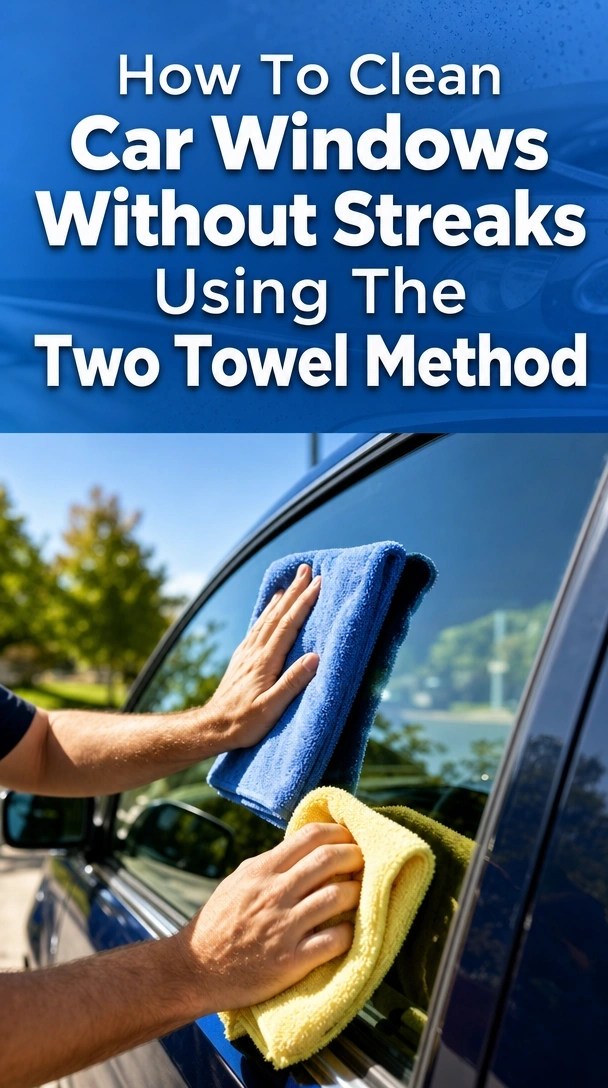
To clean car windows without streaks, you must use the two-towel method and avoid ammonia-based cleaners. Start by spraying an automotive-safe glass cleaner onto a waffle weave microfiber towel. Wipe the glass using a box-and-cross-hatch pattern to lift the oily haze. Finally, immediately buff the surface completely dry with a second, clean microfiber towel before the liquid evaporates.
To get streak free car windows, you have to control the environment. Master detailers know that optimal flashing rates (the speed at which the cleaner evaporates) dictate success. Cleaning car dashboard safely helps reduce future haze, but the immediate glass cleaning process demands shade and cool glass.
Here are the core principles of streak-free automotive glass care:
* Always use a two towel system to eliminate residue.
* Never clean glass in direct, baking sunlight.
* Avoid ammonia-based chemicals entirely.
* Agitate the glass in straight, overlapping lines.
Why Does The Inside Of My Windshield Get Foggy And Hazy?
The foggy haze on interior car windshields is caused by a chemical process called vinyl outgassing. When sunlight heats your dashboard, the plasticizers and oils used to manufacture the vinyl evaporate. These volatile organic compounds (VOCs) rise and condense onto the interior auto glass, forming a stubborn, oily film that standard household glass cleaners cannot penetrate.
Based on practical implementation, tackling this interior windshield haze requires understanding the chemistry at play. We rely on laboratory tested streak free formulas and strict optical clarity inspection methods to combat this specific grease. It is not just standard dirt; it is plasticizer migration remediation.
“When cabin temperatures spike, your dashboard essentially sweats chemical vapors. If you do not strip that specific outgassing film with the right solvent, you are just moving hot grease around the glass.” — Pro Detailer Insight
Knowing how to clean car dashboard safely directly impacts your glass. Keeping the vinyl clean and protected minimizes the VOCs released into the cabin, acting as a preventative measure against future haze buildup.
What Causes Vinyl Outgassing Film On Auto Glass?
Vinyl outgassing film forms when intense cabin heat bakes the dashboard, releasing chemical plasticizers that coat the cooler windshield in an oily residue.
Standard glass cleaners are mostly water. When you spray them onto this dashboard outgassing film, the water simply beads up on the oils instead of breaking them down. This chemical mismatch is exactly why you end up with massive smears.
Dashboard temperatures frequently exceed 140°F during summer months. Think of it like steam from hot, greasy food condensing on a cold kitchen window. To achieve true optical distortion elimination, you must use a solvent designed to dissolve those specific oils.
What Is The Best Thing To Clean Interior Car Windows Without Streaks?
The best materials to clean interior car windows without streaks are an ammonia-free glass cleaner and two waffle weave microfiber towels. Avoid household glass cleaners, as their ammonia content will bubble and destroy automotive window tint. Additionally, avoid paper towels and newspapers, which leave behind excessive lint and ink residue on the glass.
Professional detailing methodology demands specific tools. You need a setup that is safe on OEM and aftermarket tint while providing high absorbency. An ammonia free glass cleaner protects the delicate adhesives on your window tint, while the right towel ensures a lint-free finish.
If you want to master how to clean tinted car windows without anxiety, your material selection is non-negotiable. Throw away the blue household spray and the paper towel roll.
Which Microfiber Cloth Is Best For Car Glass?
Waffle weave microfiber towels are the best choice for car glass because their textured grid pattern aggressively scrubs away oily haze while leaving zero lint behind.
Standard plush microfiber towels hold too much liquid and drag heavily on the glass. This excess moisture slows down evaporation and causes streaks. A lint free waffle weave cloth utilizes a specific microfiber polyamide blend ratio designed to agitate grime without shedding fibers.
- Waffle Weave: High scrubbing power, low pile, zero lint, fast drying.
- Standard Plush: High absorbency, high pile, sheds lint, smears oils.
Pro-Tip: Always wash your glass towels separately from your wax and polish towels to prevent cross-contamination of hydrophobic polymers onto your clean glass.

Isopropyl Alcohol vs Commercial Glass Cleaner: Which Is Better?
A 70% isopropyl alcohol solution diluted with distilled water is an excellent DIY car glass cleaner because it dissolves oily plasticizer film rapidly. However, dedicated automotive cleaners like Stoner Invisible Glass offer specialized surfactants tailored for auto glass.
Isopropyl alcohol azeotropic evaporation means it flashes off the glass incredibly fast, dissolving oily road film before streaks can form. Surfactants (the chemicals that lift dirt) in commercial sprays are also highly effective, provided they are ammonia-free.
| Cleaning Solution / Tool | Safe For Aftermarket Tint? | Streak-Free Performance | Best Used For |
|---|---|---|---|
| Ammonia-Free Auto Glass Cleaner (e.g., Invisible Glass) | Yes | Excellent | General interior/exterior maintenance, safe on all surfaces |
| 70% Isopropyl Alcohol (Diluted 1:1 with Distilled Water) | Yes | Outstanding | Stripping heavy outgassing haze and stubborn dashboard oils |
| Household Glass Cleaner (Ammonia-Based) | NO (Causes purpling/bubbling) | Poor (Smears oils) | Do not use on vehicles |
| Waffle Weave Microfiber Towel | Yes | Excellent (No Lint) | Agitating grime and buffing glass completely dry |
| Standard Paper Towels / Newspaper | Yes (But abrasive) | Poor (Leaves lint/ink) | Emergencies only; not recommended for detailing |
What Is The Two Towel Method For Cleaning Car Glass?
To use the two-towel method for cleaning car windows:
1. Spray your ammonia-free cleaner directly onto your first waffle weave microfiber towel.
2. Scrub the windshield using a box-and-cross-hatch pattern to lift the oily haze.
3. Immediately grab your second, completely dry microfiber towel.
4. Buff the glass in straight lines until all moisture is completely removed and the glass is crystal clear.
The two towel method is the industry standard two cloth process. It physically prevents liquid evaporation streaks. Why? Because the first wet towel lifts and suspends the dirt in the chemical cleaner. If you let that liquid dry, the dirt stays on the glass. The second dry towel removes the suspended dirt entirely.
When detailing tight car interior spaces, this method guarantees a professional streak inspection under sunlight will pass every time.
Step 1: How Do You Prepare And Degrease The Interior Glass?
To degrease the interior glass, mist your glass cleaner directly onto a waffle weave microfiber towel rather than the windshield to prevent damaging overspray on your dashboard.
Never spray the glass directly on the inside of your vehicle. Overspray damages dashboard leather and allows liquid to drip down into your defrost vents. By applying the cleaner to the towel first, you maintain total control over the chemical application while you work to remove plasticizer haze from inside windshield surfaces.
Step 2: How Do You Apply The Cross Hatch Wiping Pattern?
Apply the cross hatch wiping pattern by first wiping the outer edges of the windshield to create a box, then wiping side-to-side, and finally up-and-down to ensure total coverage without missing any spots.
This cross-hatch buffing mechanics technique ensures overlapping strokes. Start by outlining the perimeter to reach bottom windshield corners. Then, fill in the center.
Pro-Tip: Wipe the interior glass vertically and the exterior glass horizontally. If you see a streak later, the straight line wiping reveals streak direction, instantly telling you which side of the glass needs a touch-up.
Step 3: How Do You Buff The Glass With The Second Dry Towel?
Buff the glass immediately with a second, completely dry microfiber towel to absorb the cleaning solution before it can evaporate and leave the suspended dirt behind as a streak.
Speed is your best friend here. You want to prevent cleaner drying too fast on its own. Flashing rate optimization dictates that you must sweep away the chemical moisture with your dry towel while the dirt is still suspended. Think of it like sweeping dirt into a dustpan before the wind can blow it back across your clean floor.
How Do You Clean Outside Car Windows Without Water Spots?
To clean exterior car windows without streaks or water spots:
1. Wash the glass with automotive soap to remove loose dirt.
2. Spray a glass lubricant and use an automotive clay bar to remove embedded tree sap and road grime.
3. Rinse and dry the window.
4. Finish by using the two-towel method with an ammonia-free glass cleaner, wiping horizontally.
Cleaning outside car windows requires a different mindset. While interior glass suffers from chemical outgassing, exterior auto glass takes a beating from bonded particulate decontamination. Tree sap, bug splatter, and hard water minerals physically embed into the glass pores.
To remove tree sap and bugs from exterior car glass permanently, you must perform sub-micron glass particulate removal. An automotive clay bar extracts bonded contamination that liquid cleaners simply glide over. This is exactly the same prep work required before applying a ceramic coating for car paint or removing water spots from car paint.
How Do You Clean Tinted Car Windows Safely?
To safely clean tinted car windows, always verify your glass cleaner is explicitly labeled “ammonia-free.” Ammonia degrades the adhesive holding aftermarket tint film to the glass, causing irreversible bubbling and a purple discoloration. Use a gentle 70% isopropyl alcohol solution or a dedicated automotive glass cleaner and wipe gently using a soft microfiber towel.
Automotive glass safety standards dictate strict chemical awareness. Window tint film has a high chemical sensitivity. If you use a household cleaner, the ammonia will eat through the scratch-resistant hard coat of the tint.
⚠ Warning: Factory privacy glass (dyed glass on rear windows of SUVs) is immune to ammonia. However, aftermarket film applied to the inside of the glass is highly vulnerable. Always default to an ammonia free cleaner auto tint safe formula to protect your investment. This gentle approach is also mandatory when figuring out how to clean rear car windshield without breaking defroster wire traces.
How To Remove Stubborn Streaks From Car Windshield At Night?
To remove stubborn streaks and night glare from your car windshield:
1. Mix equal parts white distilled vinegar and distilled water to create a mineral-stripping solution.
2. Apply the solution using a microfiber towel to dissolve hard water spots.
3. For baked-on contamination, use a cerium oxide glass polish with a polishing pad.
4. Re-clean the window using the two-towel method.
Nighttime driving exacerbates headlight glare when optical distortion is present. If you cannot stop smeared headlight reflection with standard methods, you are likely dealing with chemically etched hard water or severe silica bonding.
White vinegar is an acid that actively cuts mineral water spots. If the acidic approach fails, you must step up to an abrasive glass polishing compound to physically level the glass. This advanced troubleshooting prevents hazardous night driving glare and restores perfect clarity, much like restoring foggy car headlights improves forward visibility.
Frequently Asked Questions About Cleaning Car Windows
Should You Clean Car Windows In Direct Sunlight?
No, you should never clean car windows in direct sunlight or when the glass is hot to the touch.
When the glass is hot, the glass cleaner will evaporate (flash) almost instantly before you have a chance to buff it away with your dry towel. This rapid evaporation leaves the dissolved oils and cleaning chemicals baked onto the glass, resulting in severe streaks. Always park in the shade and allow the glass to cool before detailing.
How To Clean Car Windshield From Inside In Tight Spaces?
To clean tight interior windshield angles, sit in the passenger seat and use a specialized windshield reach-and-clean tool or flip your hand backwards.
Because modern windshields have aggressive rakes (slopes), reaching the bottom corner where the glass meets the dash is difficult. Use a detailing wand with a pivoting microfiber head. If cleaning by hand, sit in the passenger seat, face the driver’s side, and use the back of your hand pressing the towel against the glass to slide into the tight wedge.
Can Dish Soap Be Used To Clean Dirty Car Windows?
Yes, a tiny drop of dish soap mixed with warm water is highly effective at cutting heavy exterior automotive grease, but it requires thorough rinsing.
Dish soap contains powerful surfactants designed to break down heavy oils, making it useful for severely neglected exterior glass. However, if not completely rinsed away, dish soap will leave a thick, hazy residue. It is generally not recommended for interior windshields because rinsing it out without soaking your dashboard is nearly impossible.
How Do You Clean The Back Window Defroster Lines Without Damaging Them?
To clean rear windshield defroster lines safely, always wipe parallel to the lines using zero downward pressure.
The defroster grid consists of delicate conductive metallic pathways painted onto the inside of the glass. Scrubbing vertically across them or using aggressive abrasives can break the circuit, disabling the defroster. Mist your waffle weave towel with an ammonia-free cleaner and gently glide it side-to-side, following the direction of the copper-colored lines.
How Do You Clean Smoke Off Car Windows Without Streaks?
To remove cigarette or vape smoke residue from car windows, use a 1:1 solution of isopropyl alcohol and distilled water to cut the dense glycerin and tar.
Smoke leaves a particularly sticky, thick film on interior glass that standard cleaners will simply smear into a greasy mess. The high solvent content of 70% isopropyl alcohol dissolves the tar and glycerin rapidly. You may need to perform the two-towel method two or three consecutive times to completely lift heavy smoker residue.
Can You Use A Magic Eraser On The Inside Of A Windshield?
No, you should never use a Magic Eraser on automotive glass because it is highly abrasive and will cause micro-scratches.
Magic Erasers are made of melamine foam, which acts like ultra-fine sandpaper. While it might remove the hazy film, it will permanently etch the glass or completely destroy aftermarket window tint. Stick to chemical solutions like isopropyl alcohol and safe mechanical agitation using waffle weave microfiber towels.
How To Clean Car Windows Using Newspaper vs Microfiber?
While newspaper was a traditional glass cleaning hack, modern waffle weave microfiber towels are vastly superior and safer.
Decades ago, newspaper was effective because the petroleum-based ink acted as a polish. Today, most newspapers use soy-based inks which smear and leave dark residue on your window trim and hands. Furthermore, the stiff paper fibers can cause micro-marring on the glass. A clean, low-lint waffle weave microfiber is the professional standard for streak-free results.
What Is The Best Homemade Car Glass Cleaner Recipe?
The most effective homemade car glass cleaner is a mixture of 50% distilled water, 50% white vinegar, and a half-teaspoon of 70% isopropyl alcohol.
The white vinegar provides acetic acid to break down hard water minerals, while the isopropyl alcohol helps cut through interior vinyl outgassing oils and speeds up the evaporation rate. Always use distilled water, as tap water contains calcium and magnesium that will leave hard water spots behind when it dries.
How Often Should You Clean Your Car Windows Inside?
For optimal visibility and safety, you should clean the inside of your car windows at least once a month.
During hot summer months, or if your vehicle is brand new, you may need to clean them every two weeks. New cars experience heavy “vinyl outgassing” as the fresh interior plastics cure in the heat, rapidly building up an oily film on the interior glass that exacerbates nighttime headlight glare.
Why Do My Car Windows Streak When I Clean Them?
Car windows streak because the cleaning liquid evaporates before the dirt is physically removed, or because the towel is overly saturated.
When you spray a cleaner, it suspends the dirt. If you use a single towel, that towel quickly becomes wet and simply pushes dirty water around. When that water dries, the dirt remains as a streak. Using the two-towel method—one for washing, and one strictly for immediate dry buffing—completely eliminates this issue.
Key Takeaways: How To Clean Car Windows Without Streaks Summary
- [The Two-Towel Method Is Mandatory] – To achieve a streak-free finish, you must use one damp microfiber to agitate the grime, and immediately follow with a second, completely dry microfiber to buff the glass before the liquid flashes off.
- [Vinyl Outgassing Causes the Interior Haze] – The persistent greasy film on the inside of your windshield is caused by chemical plasticizers evaporating from your hot dashboard and condensing on the cooler glass.
- [Ammonia Destroys Window Tint] – Never use standard household glass cleaners on automotive glass; the ammonia will rapidly degrade aftermarket tint film, causing it to bubble and turn purple.
- [Waffle Weave Microfiber Outperforms Plush Towels] – Standard plush microfiber and paper towels leave lint and streaks. Professional waffle weave towels provide aggressive scrubbing power while remaining completely lint-free.
- [Wipe in Opposite Directions Inside and Out] – Wipe the interior glass vertically and the exterior glass horizontally. If a streak appears, the direction of the line instantly diagnoses which side of the window needs a touch-up.
- [Avoid Direct Sunlight and Heat] – Heat accelerates the evaporation rate of glass cleaners, causing them to dry before you can buff them away. Always clean auto glass in the shade when the surface is cool to the touch.
- [Exterior Glass Requires Decontamination] – While interior glass is coated in oils, exterior glass is covered in bonded environmental fallout (sap, minerals, bugs). Use an automotive clay bar to prep exterior glass for a flawless finish.
Final Thoughts on Achieving Streak-Free Auto Glass
Achieving crystal-clear, streak-free automotive glass isn’t about scrubbing harder or buying the most expensive, heavily marketed household chemicals. As professional detailers know, mastering how to clean car windows without streaks relies entirely on basic physical chemistry and methodical execution.
By understanding that the interior haze is a chemical outgassing from your dashboard—not just random dirt—you can attack it correctly using an ammonia-free cleaner or an isopropyl alcohol solution. Pair that targeted chemistry with the mechanical superiority of the two-towel method and low-lint waffle weave microfiber, and you eliminate the rapid evaporation that causes standard streaks.
Remember to prioritize safety first: avoid ammonia to protect your tint, clean the glass only when it is cool to the touch, and use a dedicated glass reach tool if navigating the aggressive rake of modern windshields proves difficult. Clean glass is more than just an aesthetic detailing achievement; it is a critical safety factor that drastically reduces hazardous headlight glare during nighttime driving.
Once your windows are pristine, you can elevate your entire vehicle’s presentation by moving on to proper exterior car wash techniques or addressing the source of interior dust by replacing your cabin air filter. Take your time, trust the two-towel process, and enjoy the flawless clarity of your next drive.
Last update on 2026-08-30 / Affiliate links / Images from Amazon Product Advertising API
