

As an Amazon Associate GolferHive.com earns from qualifying purchases.
9 Essential Men’s Golf Outfit Rules Style Performance
Are you still wearing that baggy polo from a decade ago? It might be costing you more than just style points on the course.
A men’s golf outfit is a coordinated set of performance apparel designed for the unique demands of the sport and its dress codes. Many golfers struggle with outfits that restrict their swing, fail in hot weather, or worse, violate club rules.
The perfect men’s golf outfit blends technical performance fabrics with a tailored, modern fit to ensure comfort, compliance, and confidence. This guide provides the 9 essential rules to master your on-course style, backed by insights from textile science and professional course managers.
Contents
show
Are You Making the 5 Most Common Men’s Golf Outfit Mistakes?
Before we build the ideal golf wardrobe, let’s address the common pitfalls. Many well-intentioned golfers find their performance hindered or their day cut short by simple apparel errors. According to professional stylists and course managers, golf apparel rules have evolved, and understanding the current standards is key. These aren’t just suggestions; they are the foundation of on-course respect and performance. The most common mistakes include wearing non-collared shirts, choosing denim or casual athletic wear, wearing restrictive clothing that impedes the swing, forgetting a belt, and failing to layer properly for changing weather conditions. Overlooking these basics can lead to discomfort, distraction, and potential dress code violations.
The 9 Essential Men’s Golf Outfit Rules for Style and Performance
Assembling a great golf outfit is a science. It’s about creating a system where every piece works together to enhance your game and your confidence. These nine essential rules are your definitive framework for building a versatile golf wardrobe that meets every functional requirement and aesthetic demand. Curated based on textile science, movement analysis, and strict private club standards, this guide provides everything you need to look and play your best.
- The Collared Shirt Foundation
- Master the Technical Fabric Mandate
- Achieve the Perfect, Non-Restrictive Fit
- Select Tailored Bottoms
- Always Wear the Right Belt and Footwear
- The Golden Rule of Dress Code Compliance
- Layering for 4-Season Performance
- Adopt the ‘Rule of Three’ for Style
- Invest in Proper Garment Care
1. The Collared Shirt Foundation: Polo Compliance

Pin this genius tips to your ‘Essential Golf Wardrobe’ board!
The golf polo is the undeniable centerpiece of any men’s golf outfit. It sets the tone for formality and is the first item a course marshal will check for compliance.
Outfit Pieces Needed:
- Performance Golf Polo (must be UPF 30+ rated for sun protection)
- Performance blend material (polyester/elastane mix)
- Required Collar Type (traditional fold-down or approved mock neck)
- Straight, finished hemline (if choosing the untucked style)
Styling and Compliance Steps:
- Confirm the Collar: Your shirt must have a collar. This can be a traditional fold-down style or an approved mock neck. Standard t-shirts are universally prohibited on any golf course.
- Master the Tuck: At private or high-end resort courses, the default rule is that your polo must be tucked in. If you opt for an untucked style, the shirt’s hem must not hang lower than the halfway point of your fly.
- Check the Hemline: For an untucked look, verify the polo has a straight, finished hem. A curved “shirttail” hem is designed exclusively to be tucked in and looks sloppy when left out.
- Test the Stretch: In the fitting room or at home, perform a full backswing motion. The shirt’s material and shoulder seams must allow for complete, unrestricted rotation.
Pro-Tip: Avoid cotton polos. They absorb and hold sweat, becoming heavy, losing their shape, and causing significant chafing, especially during hot and humid rounds. Always stick to proprietary performance blends for quick-dry comfort.

2. Master the Technical Fabric Mandate
Save this clever organization idea!
Modern golf apparel is a triumph of textile engineering. The right technical fabrics offer a significant performance advantage over casual clothing by managing moisture, protecting you from the sun, and moving with your body.
Technical Specifications Needed:
- Polos and Outerwear: At least UPF 30+ UV protection rating
- All Garments: Minimum 10% Elastane/Spandex content for stretch
- Bottoms: Requires advanced wrinkle-resistant treatment (Poly-blends only)
- Socks: Seamless, anti-blister material (synthetic)
Action Plan for Fabric Selection:
- Prioritize Wicking: For hot and humid climates, choose fabrics engineered to actively pull moisture away from your skin. Look for labels like Dry-Fit, Omni-Wick, or similar proprietary technologies.
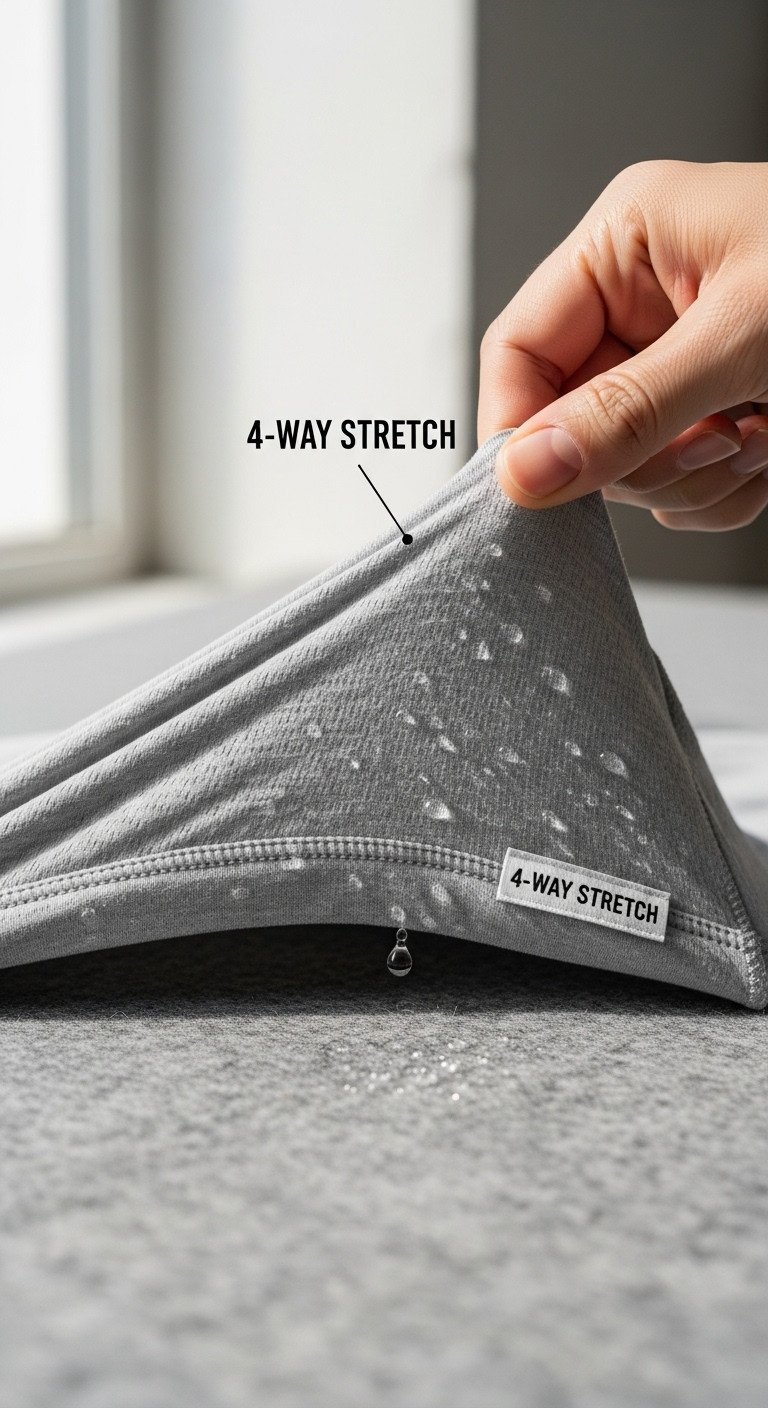
- Demand 4-Way Stretch: This is non-negotiable for golf pants and shorts. Four-way stretch allows the fabric to move with your hip rotation and when you squat to read a putt, preventing any binding or restriction.
- Check the UPF: Don’t assume a synthetic fabric provides sun protection. Before buying, check the tag for a specific Ultraviolet Protection Factor (UPF) rating to shield your skin during long rounds.
- Ask for Odor Control: High-quality performance wear is often treated with antimicrobial agents. This is essential for synthetic fabrics, which can retain odors more than natural fibers.
Pro-Tip: Fabric softeners are the enemy of performance golf wear. They leave a coating on the fibers that completely destroys their moisture-wicking capabilities. Always wash these garments separately with a sports-specific detergent and let them air dry.

3. Achieve the Perfect, Non-Restrictive Fit

Save this clever organization idea!
Fit is functional, not just fashionable. An outfit that is too tight or too baggy will directly interfere with your swing mechanics, costing you comfort and distance. The goal is a tailored, athletic fit that looks sharp and feels invisible.
Key Areas to Check for Fit:
- Shoulder Seam: The seam of your polo should sit directly on top of your shoulder bone. If it droops down your arm, it’s too loose and will restrict rotation; if it’s pulled tight, it’s too small.
- Pant Waist/Hips: Your bottoms must be comfortable and non-binding when you squat down or lean over to address the ball.
- Pant Length: For a modern, tailored look, your pants should have a ‘no break’ or ‘slight break’ where they meet your shoes. Avoid excessive bunching.
- Shorts Length: The ideal length for golf shorts is 1-2 inches above the knee, which typically corresponds to an 8 to 10-inch inseam.
Step-by-Step Mobility Test:
- The Address Position: Get into your athletic stance. Your polo should not pull at the waist or bunch up around your midsection.
- The Backswing Test: Take a full mock backswing. You should feel no binding or limitation from the shoulder seams or across your back.
- The Squat Test: Squat down completely as if reading a putt. The pants or shorts must stretch easily in the hips and knees without feeling tight.
- The Taper Check: If you’re wearing tapered pants, walk around to ensure the cuff doesn’t catch on the tongue of your golf shoe.
Lesson Learned: A restrictive shirt across the shoulders can shave 5-10 mph off your clubhead speed. Proper fit is a genuine performance enhancer.

4. Select Tailored Bottoms Over Casual Athletic Wear
Save this clever organization idea!
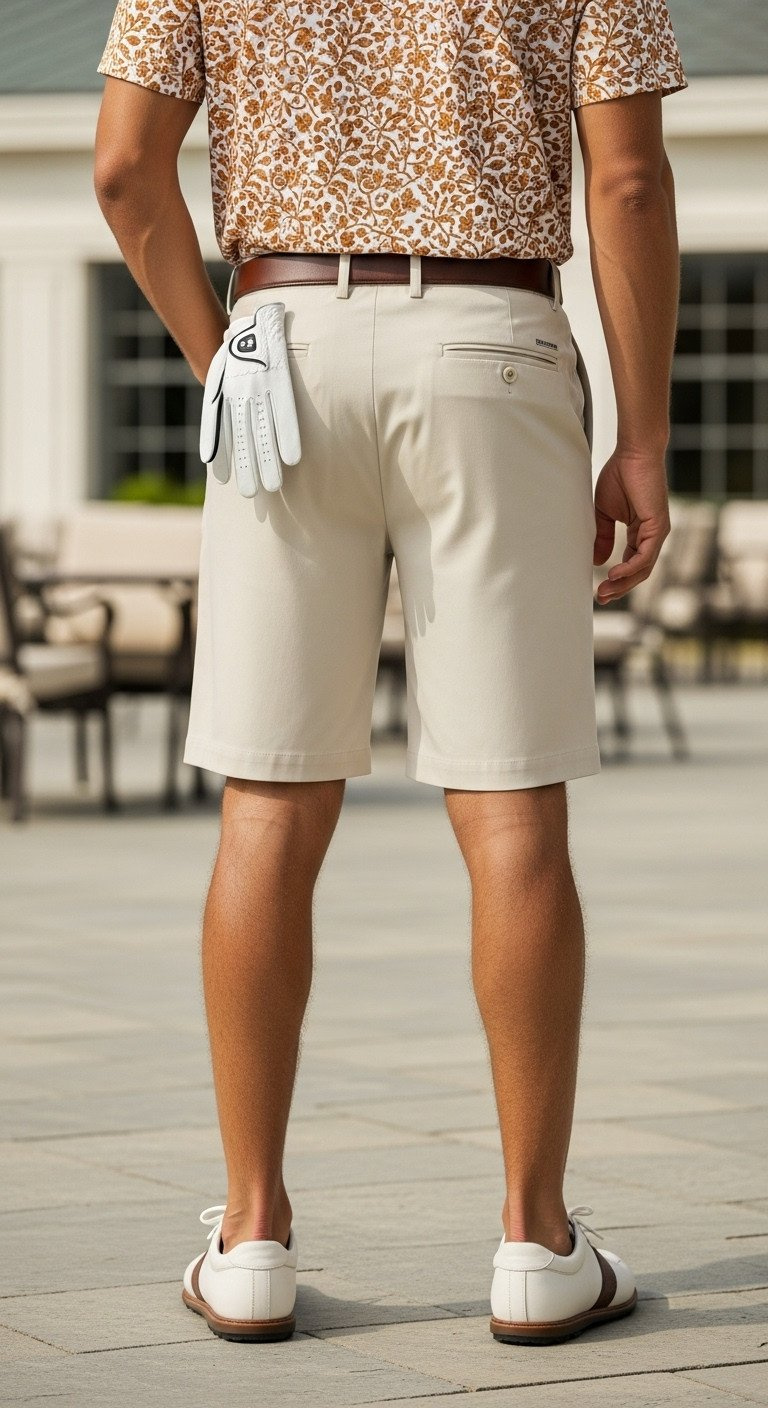
Your choice of pants or shorts is a clear indicator of your respect for the game’s traditions. Athletic shorts, track pants, and denim are universally forbidden. Instead, opt for tailored, chino-style bottoms made from performance fabric.
Bottom Requirements Checklist:
- Mandatory: Belt loops (this applies to all proper golf pants and shorts)
- Material: Lightweight performance blend with significant stretch
- Prohibited: Cargo pockets, drawstrings, exposed elastic waistbands, or any form of denim
- Short Length: 7 to 10-inch inseam only; longer styles look dated and may violate club rules
Decision-Making Tips (Shorts vs. Pants):
- Temperature Gauge: As a general rule, wear shorts when the temperature is consistently above 70°F. Below 65°F, pants provide more comfort and are often more appropriate.
- Formality Test: Always choose tailored golf pants for corporate outings, professional tournaments, or when playing at exclusive private clubs where a higher level of formality is expected.
- Color Versatility: Build your wardrobe around foundational colors like Navy, Khaki/Stone, or Charcoal Gray. These neutrals will pair with over 90% of your polo collection.
- Zipper Check: Look for bottoms with concealed or minimal zippers and fasteners. This ensures a clean, professional line and avoids the bulk common in casual trousers.
Pro-Tip: If you choose a bold or patterned polo, your shorts or pants must be a solid, neutral color (khaki, navy, gray). This simple rule prevents a chaotic “pattern clash failure.”

5. Always Wear the Right Belt and Footwear

Pin this genius tips to your ‘Golf Style Guide’ board!
Accessories are not an afterthought; they are essential components that complete the outfit and provide critical function. A belt is mandatory, and proper golf shoes are non-negotiable for safety and performance.
Accessory Requirements Checklist:
- Belt: Must be worn with any pants or shorts that have belt loops.
- Shoes: Must be golf-specific shoes (either spiked or spikeless). Running shoes, sandals, or boots are prohibited.
- Socks: Performance, moisture-wicking golf socks (ankle or crew length, with no visible athletic logos).
- Belts and Shoes: Material and color should generally complement each other (e.g., woven belt with mesh shoes; leather belt with leather shoes).
Tips for Shoe and Belt Selection:
- Spikeless vs. Spiked: Choose spikeless shoes for maximum comfort and versatility, as they can be worn in the clubhouse and even off-course. Opt for spiked shoes when you need maximum traction in wet or tournament conditions.
- The Flexibility Factor: For most rounds, a performance stretch belt made from woven fabric or an elastic strap is superior. They move much better with your body during the swing than a rigid leather belt.
- The Finishing Detail: Create a cohesive look by matching your accessories. If you’re wearing a white polo and navy shorts, a white or navy belt paired with white golf shoes ties the entire outfit together.
- Sock Rule: Your socks should be performance-based and rise at least to your ankle bone. Avoid low-cut “no-show” socks or novelty socks that might violate a club’s dress code.
Pro-Tip: Pay attention to your belt buckle. Oversized, flashy, or highly reflective buckles can detract from the clean, tailored aesthetic that premium golf attire demands.

6. The Golden Rule of Dress Code Compliance

Save this clever organization idea!
Not all golf courses have the same rules. A municipal course will have different expectations than an exclusive private club. Understanding these nuances is key to avoiding the embarrassment of a dress code violation.
Club Classification Checklist:
- Private Club: Expect the strictest rules. This typically means a tucked-in polo, tailored pants (shorts may be restricted), a leather belt, and no untraditional accessories.
- Semi-Private/Resort: Moderately strict rules. Performance shorts are usually welcome, and an untucked polo with a finished hem may be permitted.
- Public/Municipal Course: The most relaxed environment. A collared shirt and compliant bottoms are still required, but there is more flexibility with casual golf shoes and accessories.
Action Plan for Unknown Courses:
- Call Ahead: The easiest way to avoid a problem is to call the pro shop before your round. Ask specifically about their dress code, including rules on mock necks, untucked shirts, and shoe requirements.
- When in Doubt, Trousers: If you are ever unsure of a course’s formality, always default to wearing tailored golf pants instead of shorts.
- Always Wear a Belt: A belt is the universal signal of a complete and formal golf outfit. Never go without one.
- Pack a Backup: It’s a smart practice to keep a spare, solid-colored, compliant polo and a neutral pair of pants or shorts in your car for emergencies.
Pro-Tip: The clubhouse dining room or bar often has stricter rules than the course itself. Be prepared to remove your hat indoors, and some high-end clubs may require a jacket after 6 PM.

7. Layering for 4-Season Performance

Save this clever organization idea!
Weather can change dramatically over 18 holes. A smart layering system allows you to adapt to temperature swings and inclement weather without adding bulk that restricts your swing.
Layering System Components:
- Base Layer: A thin compression or thermal technical fabric worn directly against the skin, under your polo.
- Mid-Layer: A lightweight quarter-zip pullover or a vest to provide core warmth that’s easy to remove.
- Outer Shell: A windproof, water-resistant golf jacket or soft-shell that is thin and passes the ‘silent swing test’.
- Bottoms: Thermal-lined or windproof golf pants are essential for temperatures below 50°F.
Action Plan for Layering:
- Start Thin: Your first layer should always be the thinnest, highest-wicking fabric possible. Avoid putting heavy sweatshirts directly over your polo, as this traps moisture.
- Core Focus: Use vests and quarter-zip pullovers to warm your core without adding restrictive bulk to your arms, which are critical for a free swing.
- Check the Noise: Before you buy an outer shell, perform a mock swing while wearing it. If the jacket makes loud crinkling or swishing noises, it will become a major distraction on the course. Seek quieter fabrics.
- Prioritize Zippers: Your jacket and mid-layer should be easy to zip up or down with one hand, allowing for quick temperature adjustments between shots.
Pro-Tip: Choose mid-layers specifically designed for golf. They often feature raglan sleeves or special shoulder construction that prevents the garment from pulling or binding during your rotation.

8. Adopt the ‘Rule of Three’ for Style
Pin this genius tips to your ‘Dream Golf Outfit’ board!
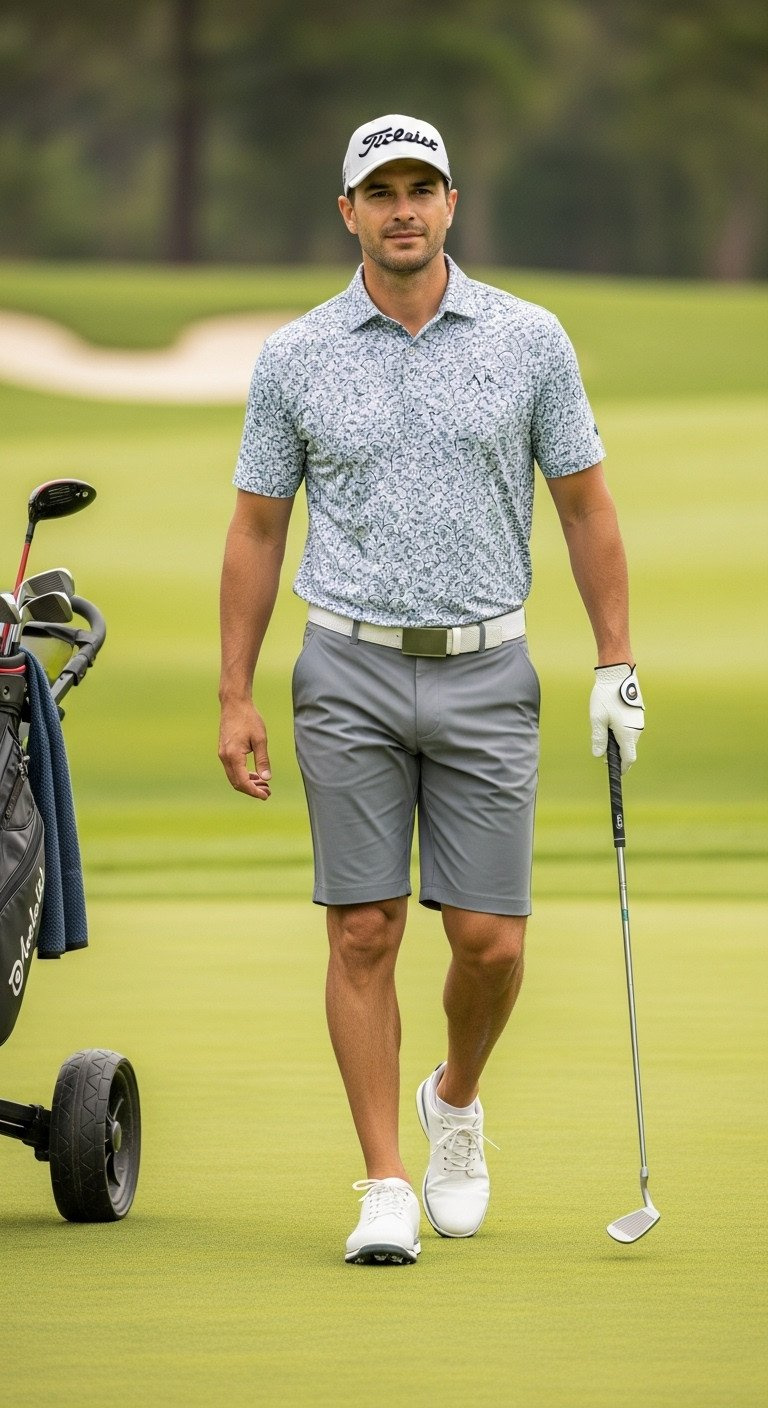
Looking stylish on the course doesn’t have to be complicated. The ‘Rule of Three’ is a simple framework for coordinating colors and patterns to create a polished, cohesive look every time.
The ‘Rule of Three’ Color Coordination:
- Piece 1 (The Anchor): Your bottoms (pants or shorts) should always be a solid, neutral color like Navy, Khaki, Gray, or White.
- Piece 2 (The Statement): Your polo, vest, or outerwear can feature a bold color or a pattern (such as stripes or micro-prints).
- Piece 3 (The Cohesion): Your belt and shoes should either match the neutral Anchor color or pick up a subtle accent color from your Statement piece.
Style Pairing Tips:
- Pattern Isolation: Never wear a patterned bottom with a patterned top. One statement piece is enough. If your polo is plaid, your shorts must be solid.
- Match Depth: Create visual balance by pairing deep colors (navy, burgundy) with lighter neutrals (khaki, white). This prevents the outfit from looking too heavy or drab.
- Avoid Black on Black: While acceptable, an all-black outfit can look severe on the golf course. Use navy or charcoal gray as your primary dark neutral for better versatility.
- The Pop of Color: Reserve bright, vibrant colors like lime green or coral for your polo shirt. Keep your bottoms and accessories grounded and muted.
Lesson Learned: A great outfit often uses just three colors in total. Introducing a fourth or fifth color can make the look feel chaotic and unpolished, distracting from the clean, tailored fit.

9. Invest in Proper Garment Care for Longevity

Save this clever organization idea!
Premium golf apparel is an investment. Proper care is essential to protect the technical features of the fabric, ensuring it performs well and lasts for many seasons.
Essential Care Supplies Needed:
- Sports-specific detergent (formulated to break down sweat and body oils)
- Mesh laundry bags (optional, but recommended for protecting fine-knit polos)
- Drying Rack or clothesline (air drying is crucial for synthetic longevity)
Quick Steps for Maximum Longevity:
- Skip the Softener: NEVER use fabric softener. It coats the synthetic fibers, completely destroying their moisture-wicking properties and trapping odor-causing bacteria.
- Cold Wash Only: Always wash performance golf apparel in cold water on a gentle cycle. This prevents the elastane/spandex fibers from stretching out or degrading.
- Pre-Treat Odor: For particularly stubborn odors, you can pre-soak garments in a solution of one part white vinegar to four parts cold water before washing.
- Air Dry Everything: Avoid the high heat of a dryer whenever possible. Heat degrades the stretch and elasticity of the fabric and can cause micro-tears, significantly reducing the lifespan of your apparel.
Lesson Learned: You should wash performance wear as soon as possible after a round, especially if you were sweating heavily. Allowing sweat to dry into the fabric makes it much more difficult to remove oils and odors later.

Key Takeaways: Your Quick Guide to the Perfect Golf Outfit
- The Three Core Components: Always start with a collared/mock-neck polo, tailored bottoms (shorts or pants), and golf-specific shoes.
- The Three Performance Musts: Demand UPF 30+ protection, 4-way stretch fabric, and advanced moisture-wicking technology in all core pieces.
- The Three Style Rules (Rule of Three): Restrict patterns to one item, keep the belt and shoes complementary, and choose solid neutral colors for your foundation pieces (Navy, Khaki, Gray).
- The Dress Code Bottom Line: When in doubt about club rules, default to tailored pants, a tucked solid polo, and classic colors to ensure compliance.
- Care Tip: Never use fabric softener or high heat on your performance golf wear.
People Also Ask About Men’s Golf Attire
What is the official golf dress code for men?
The official dress code typically mandates collared or mock-neck shirts, tailored trousers or golf shorts with belt loops, a belt, and golf-specific footwear. Denim, t-shirts, athletic track shorts, and non-golf shoes are almost universally prohibited. Adherence demonstrates respect for the traditions and rules of the game and the club environment.
Are golf shorts supposed to be above the knee?
Yes, the modern, tailored golf look dictates that shorts should hit 1 to 2 inches above the knee, typically translating to an 8, 9, or 10-inch inseam depending on height. Shorts that fall below the knee are considered dated and less athletic. They must also include belt loops and be made from stretch performance fabric.
How much should men budget for a complete golf outfit?
A budget-friendly yet compliance-ready men’s golf outfit (polo, shorts/pants, belt, and shoes) generally costs between $250 and $400. A premium outfit, featuring high-end brands and advanced textile technologies (like seamless wicking and high UPF rating), typically requires an investment of $500 to $800 or more per full ensemble.
Can men wear compression shirts under a golf polo?
Yes, men can and should wear compression shirts or thermal base layers underneath a golf polo, especially in cold weather. These layers are functional for muscle support and temperature regulation. However, the compression shirt must not be visible below the polo hem, and the polo should be the primary, visible garment adhering to the collar rules.
Is cotton fabric acceptable for golf shirts?
While technically allowed at most public courses, cotton is not recommended for golf polos, especially in warm or competitive conditions. Cotton absorbs and retains moisture, leading to heavy, damp fabric that can cause chafing and restrict the swing, whereas performance polyester blends are engineered for rapid moisture-wicking and comfort.
Final Thoughts
Mastering the nine rules of men’s golf apparel ensures that you step onto the course not only looking compliant and professional but also equipped for peak performance. By prioritizing technical fabrics, non-restrictive fit, and strategic color coordination, you solve the dual challenge of the golf outfit: blending tradition with modern athletic demands. Confidence on the course starts long before the first drive—it starts with what you choose to wear.
Which of these 9 rules has made the biggest difference in your golf game and style over the last 2026? Let us know your best advice in the comments below
Last update on 2026-01-17 / Affiliate links / Images from Amazon Product Advertising API
