

As an Amazon Associate GolferHive.com earns from qualifying purchases.
5 Golf Aesthetic Rules for Quiet Luxury Style in 2025
Struggling to find golf attire that signals status without shouting it? You’ve seen the look—effortless, elegant, and exclusive—but find it hard to replicate.
The golf aesthetic, often called “Golfcore,” is a cultural trend blending performance sportswear with the understated principles of quiet luxury. The core challenge is avoiding the trap of expensive logos, which can accidentally signal ‘new money’ instead of established affluence.
The modern golf aesthetic is defined by a dedication to functional elegance, prioritizing tailoring, high-performance natural fibers, and near-zero visible branding to signal “Stealth Wealth” rather than overt expense. This guide provides the five definitive rules you need. You’ll learn exactly how to curate a wardrobe that embodies this aspirational, high-society golf wear.
Contents
show
The Code of Subtlety: Why Quiet Luxury Defines the Golf Aesthetic in 2025
The shift from logo-heavy performance gear to a more refined, polished golf look is no accident. This modern evolution, often called Golfcore, is the direct intersection of the traditional country club uniform and the broader fashion movement of Quiet Luxury. It’s an aspirational golf style that values the quality of the fabric and the precision of the fit far more than the visibility of a brand name.
Unlike the Old Money aesthetic, which might accept heritage brand logos, the quiet luxury golf approach is about “Stealth Wealth.” The goal is to create an elite golf look that is immediately recognizable to those in the know, not because of a label, but because of its impeccable tailoring, high-grade materials, and adherence to an unspoken code of subtlety. This is less about buying expensive clothes and more about investing in timeless pieces that signal a deep understanding of quality and social nuance.
5 Golf Aesthetic Rules for Quiet Luxury Style in 2025
To master the modern golf aesthetic, you need a clear blueprint. These five essential rules, curated from expert analysis of high-end club standards and luxury textile science, provide the framework for building a wardrobe that projects refined wealth. The focus is always on intentional choices—from unbranded golf apparel and a muted color palette to bespoke tailoring and hybrid leather footwear.
1. The Principle of Zero Branding: Embrace Stealth Wealth

Pin this genius tips to your ‘Quiet Luxury Wardrobe’ board!
The fastest way to undermine the quiet luxury aesthetic is with a visible logo. Status is communicated through the superior quality of the material and the precision of the tailoring, not by advertising a brand. This is the core principle of stealth wealth fashion.
Outfit Pieces & Materials Needed:
- Three high-grade performance knit polo shirts (Pima cotton or technical merino blend) with zero exterior logos.
- Two pairs of tailored golf trousers made from technical stretch fabric, ensuring a clean break at the ankle.
- One high-quality fine-gauge knit sweater or gilet (cashmere or merino wool blend).
- Unbranded leather belt with a classic, unobtrusive buckle (color matched to shoes).
Styling Tips & Rule Application:
- Prioritize tactile quality: If the fabric doesn’t drape well and feel luxurious, it doesn’t meet the Quiet Luxury standard, regardless of the price tag.
- Check for hidden branding: Examine sleeves, collars, and waistbands; logos must be absent or minuscule (e.g., tone-on-tone embroidery).
- Invest in the subtle: Spend more on the base layer (the fabric) than on the finish (the label). The texture should speak for itself.
- Maintenance is key: Keep items impeccably pressed and spotless; crumpled expensive fabric undermines the entire aesthetic.
Pro-Tip: True Stealth Wealth brands often place their labels only inside the collar or on a minor fastener. If you can see the logo from 10 feet away, it’s too loud.

2. Master the Muted Monochromatic Palette
Save this clever organization idea!
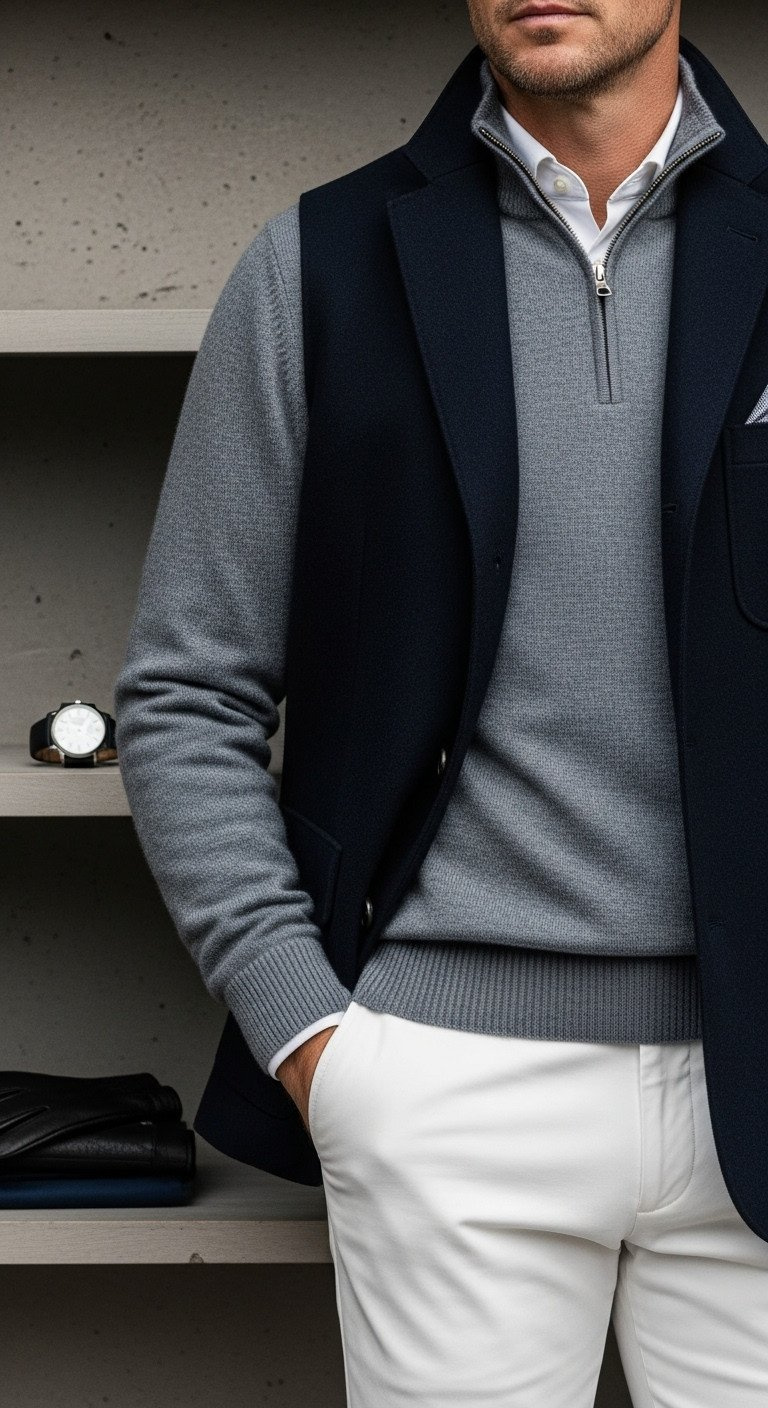
Sophistication is achieved through a disciplined color palette for golfcore. Monochromatic golf outfits built from muted, neutral tones like navy, beige, cream, and slate gray signal a classic golf aesthetic that is timeless and elegant.
Outfit Pieces & Materials Needed:
- Core Tones: Navy, Cream, Beige/Khaki, Slate Gray, Hunter Green.
- Accent Tones (Optional): Very subtle pastels (e.g., pale blue or blush pink), used minimally.
- Outerwear: A lightweight, tailored gilet or jacket in one core tone (e.g., charcoal).
- Underwear/Socks: Invisible or perfectly color-matched socks; high-quality performance base layers in neutral white or gray.
Styling Tips & Rule Application:
- Build from one neutral base: Start your outfit with a foundational color (like navy or white) and vary the shade slightly with each layer for textural depth.
- Avoid neon and large prints: These signal “performance gear” rather than “luxury aesthetic.” Loud colors are the fastest way to undermine the Quiet Luxury ethos.
- The Layering Principle: Use fine-gauge knits (Rule 1) over a tailored polo. Layers should be easily removable and not create bulk, allowing the clothes to drape naturally.
- Coordinate accessories: Your belt, watch strap, and shoe trim should ideally be in the same leather tone (black or cognac brown).
Lesson Learned: Many high-end performance brands now use muted colors specifically to cater to the Quiet Luxury trend. Look for technical items that mimic the look of classic natural fibers.

3. Tailoring is the Ultimate Luxury Signal
Pin this rule for a perfect, confident fit!
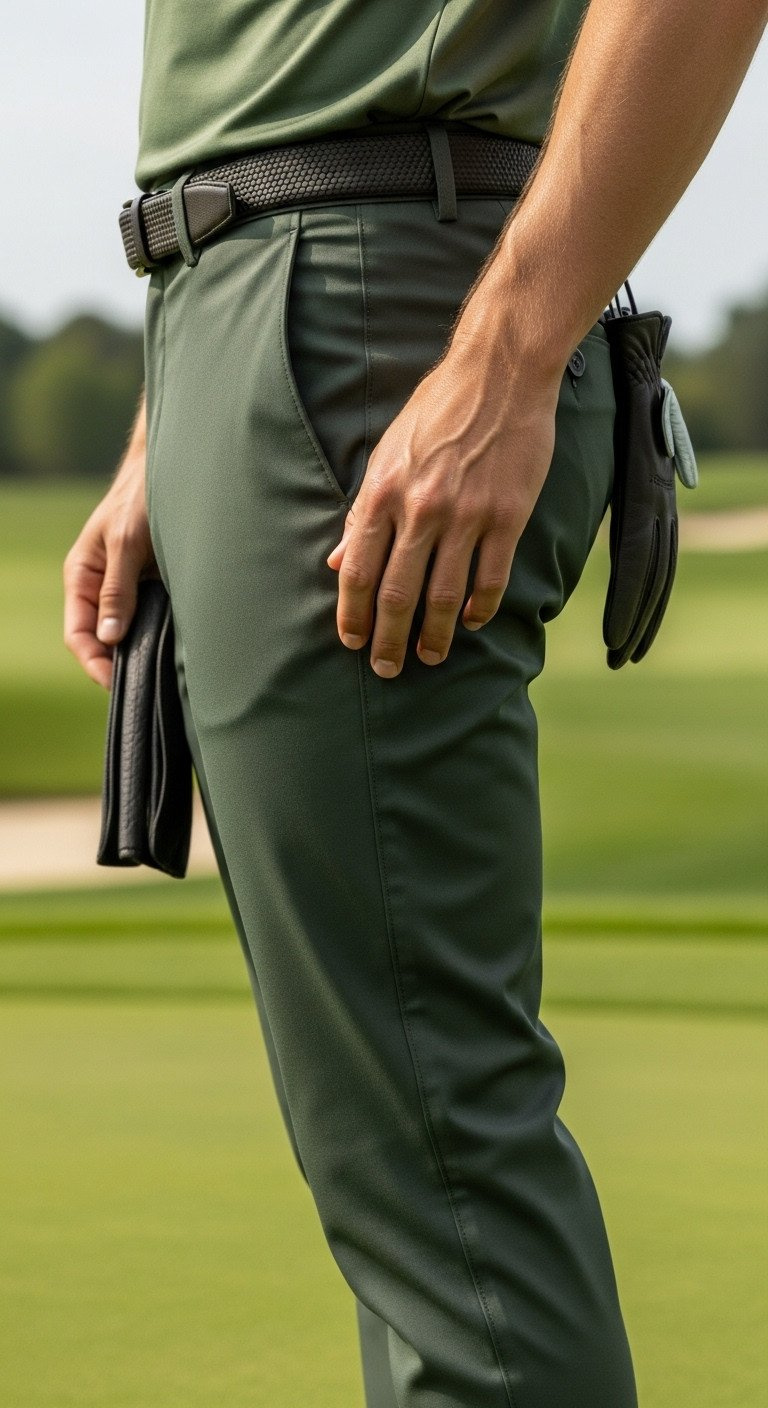
More than brand or material, the perfect fit is the clearest indicator of luxury. A precision fit elevates any garment, creating clean lines and an athletic silhouette that looks both intentional and effortless. Tailored golf trousers and perfectly fitted shirts are non-negotiable.
Materials Needed:
- High-quality, off-the-rack golf trousers (select one size up if tailoring the waist/seat).
- High-quality polo shirts (ensure the shoulder seam sits perfectly).
- Local tailor specializing in technical or stretch fabrics.
- Precision measuring tape and fabric chalk for fittings.
Styling Tips & Rule Application:
- The Trousers Test: Trousers must be flat-front, free of cargo pockets, and fall cleanly without bunching. Aim for a no-break or slight-break cut just above the shoe, maximizing the elegant silhouette.
- The Polo Seam Check: A sign of quality, and perfect fit, is a shoulder seam that rests precisely on the edge of the shoulder. If it droops or pulls, the garment is too large or too small.
- Tailoring Technical Fabrics: Inform your tailor that the fabric is high-stretch. They must use specialized needles and thread to maintain the fabric’s integrity and performance features.
- The Belt Loop Rule: Trousers must accommodate a belt (Rule 2) and the polo must be tucked in (unless explicitly prohibited by club rules). A perfect fit ensures the tucked shirt remains smooth.
Pro-Tip: The cost of tailoring (even for performance fabrics) is a small investment that elevates a $150 pair of trousers to look like a $500 bespoke pair—a core principle of Quiet Luxury.

4. The Hybrid, High-Performance Footwear Rule
Save this footwear guide before your next club visit!
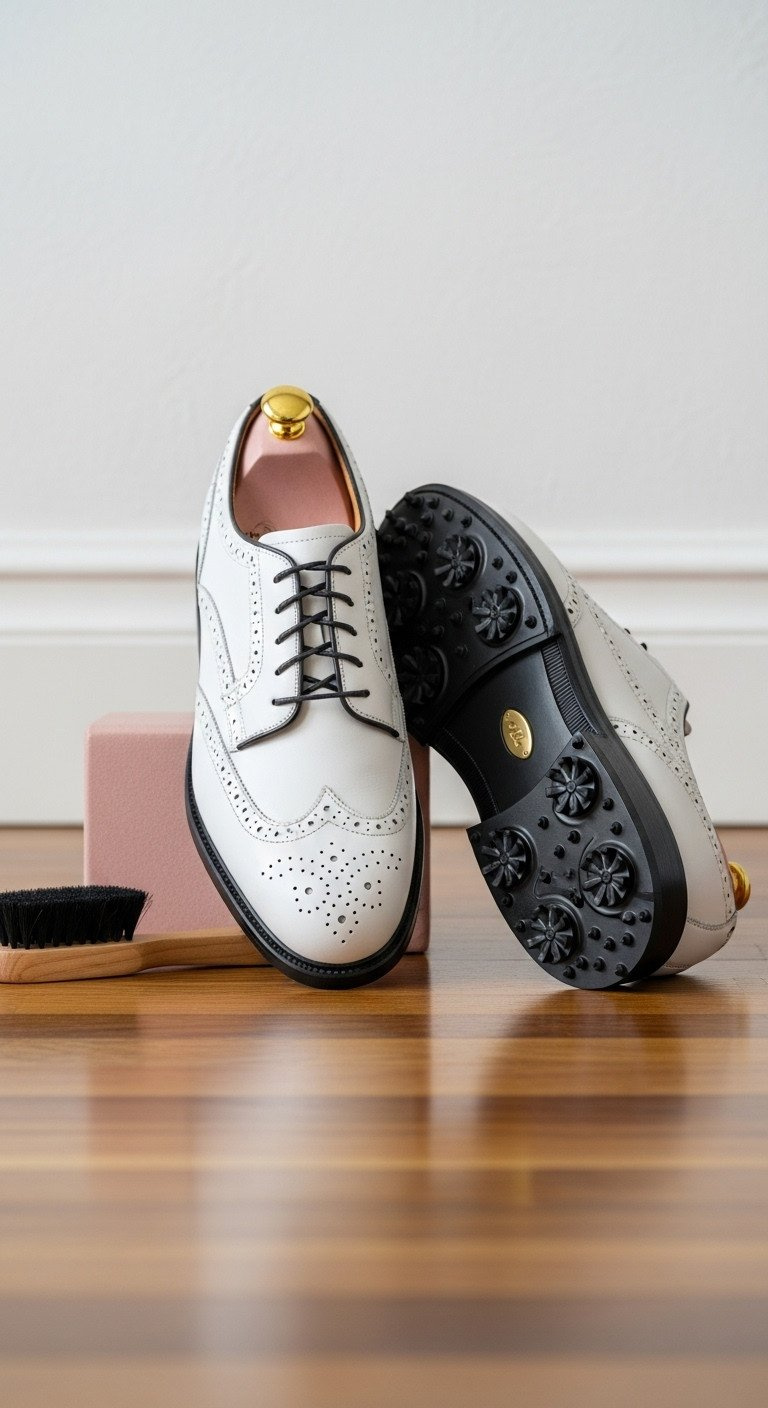
Footwear must meet the dual demands of on-course performance and clubhouse sophistication. The modern solution is leather hybrid golf shoes that blend traditional design with contemporary technology, allowing for a seamless transition from the 18th green to the 19th hole.
Materials Needed:
- One pair of premium, full-grain leather golf shoes (must be waterproofed).
- Cedar shoe trees for storing the shoes and maintaining their shape.
- High-quality leather cleaner, conditioner, and polish.
- Shoe bag made from breathable canvas or cotton (never plastic).
Styling Tips & Rule Application:
- Choose Tradition: The luxury aesthetic favors shoes that resemble classic brogues, loafers, or spectator wingtips. Avoid overtly athletic, plastic-heavy, or brightly colored options.
- Function Meets Form: Opt for “hybrid” or “transitional” models that feature discreet, spikeless traction. This allows seamless movement from the 18th hole into the 19th Hole (clubhouse) without needing a change.
- Immaculate Condition: Shoes must be spotless. Dirt and scuffs immediately degrade the Quiet Luxury image. Use a cleaning kit immediately after every round.
- Sock Code: Always wear ankle-length or crew socks in white or a color matching your trousers. Absolutely no calf-length athletic logo socks.
Lesson Learned: Many high-end private clubs are relaxing spike rules but remain strict on general footwear appearance. If your shoes look too casual for the dining room, they are too casual for the aesthetic.

5. Equipment as a Cohesive Aesthetic Statement
Pin this investment guide to your ‘Golf Gear Goals’ board!
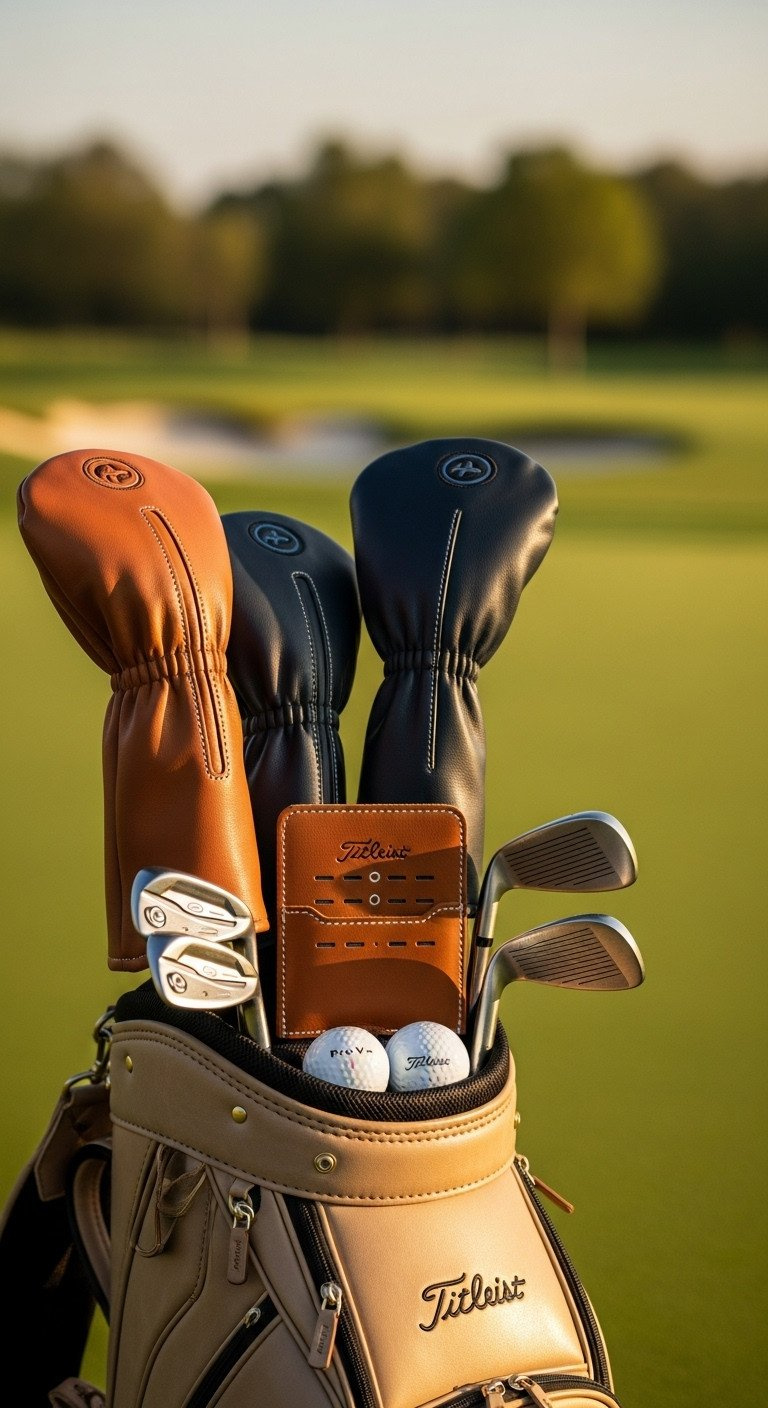
Your attire sets the tone, but your equipment completes the narrative. A premium leather golf bag, custom fitted clubs, and bespoke headcovers are intentional status signals that communicate a deep commitment to the game and an appreciation for craftsmanship.
Materials Needed:
- Bespoke or premium leather golf bag (traditional staff or minimalist carry).
- Cohesive set of custom headcovers (leather or heritage knit).
- High-end performance golf balls (e.g., Titleist Pro V1, high-end lines).
- Optional: A high-end traditional timepiece or subtle performance smart watch.
Styling Tips & Rule Application:
- The Silent Business Card: Your bag, head covers, and club selection are visual cues about your commitment and status. Invest in a minimalist leather or high-quality canvas bag over a bulky, neon-accented synthetic one.
- Match the Aesthetic: Ensure your equipment colors align with your apparel palette (Rule 2). Use rich browns, navy, forest green, or black for accessories.
- Bespoke vs. Off-the-Rack: While clubs don’t have to be bespoke, a custom fitting process is essential. Brands like PXG or premium Titleist lines are often favored for their technical elegance and price point.
- Detail is Everything: Ensure your range finder, score card holder, and even the cart bag are clean and cohesive. A messy bag undermines the entire ‘polished’ image.
Pro-Tip: Focus on forged irons if you are a serious golfer. The precision and feel of forged clubs, while subtle to the casual observer, are a clear signal of elite investment to a fellow high-level player.

The Unspoken Code: Mastering Country Club Etiquette and the 19th Hole
Perfecting the golf aesthetic goes beyond attire; it requires mastering the unspoken social rules that govern exclusive club environments. Many guides detail the clothes but miss the crucial codes of conduct that truly signal belonging. Violating these etiquette norms can undermine even the most perfectly curated wardrobe.
The Social Rules of Attire Transition
Always treat the clubhouse and dining areas with the same reverence as a formal dining experience. The transition from the course to the 19th Hole requires subtle elevation. This often means adding a jacket (blazer or smart, neutral sports coat) or a fine-gauge knit sweater immediately upon entering the clubhouse, regardless of the heat, unless explicitly permitted otherwise. If you are wearing a baseball cap or visor, it must be removed upon entering the pro shop, bar, or dining room—this is the most frequently broken rule.
Silence is paramount to the luxury atmosphere, reinforcing exclusivity and presence. Cell phones should be silenced (vibrate mode is often considered too loud) and kept out of sight. Never take calls in the dining room, bar, or on the perimeter patio. If you must take a call, excuse yourself completely and use the designated phone booth or take the call in the parking lot. Texting should be minimal and discreet, never during social introductions or active conversation.
The Art of the Subtle Status Signal (Non-Verbal Cues)
The Quiet Luxury aesthetic emphasizes non-verbal signals over overt display. Status is signaled through impeccable manners, attention to detail (spotless shoes, pressed clothes), and confident, measured conversation focused on quality experiences rather than price tags. Be deferential to staff, knowledgeable about the course history, and avoid discussing financial figures or brand names unless asked directly. The true signal is effortless belonging.
Key Takeaways: Your Quick Guide to the Golf Aesthetic
Here is a quick summary of the most impactful rules for achieving the luxury golf aesthetic.
- Rule #1: Subtlety is Currency: Prioritize material quality and fit over visible logos.
- The Investment Zone: Focus your budget on core pieces: perfectly tailored trousers and premium leather hybrid shoes.
- The Etiquette Check: Always remove your hat in the clubhouse and keep your phone out of sight and silent.
- Color Discipline: Adhere to a muted, monochromatic palette (navy, cream, gray, olive) to signal sophistication.
- The Silent Statement: Ensure your equipment (bag, headcovers) is clean, customized, and aesthetically cohesive with your attire.
People Also Ask About Luxury Golf Attire
What is the difference between Old Money and Quiet Luxury golf aesthetic?
Old Money golf aesthetic accepts established heritage brand logos and often favors traditional materials, while Quiet Luxury prioritizes absolute material quality, exceptional tailoring, and near-zero visible branding (Stealth Wealth) to signal status through nuance, not recognition.
How much should I expect to spend to build a starting luxury golf wardrobe?
A foundational, high-quality Quiet Luxury golf wardrobe typically requires an investment ranging from $2,500 to $5,000. This covers 3 tailored polos, 2 pairs of high-performance trousers, 1 quality sweater, and 1 pair of premium hybrid leather shoes, focusing on mid-to-high-end brands and professional tailoring costs.
Are golf shoes mandatory for the aesthetic, or can I wear luxury sneakers?
Golf shoes are mandatory when playing on the course for performance and turf protection. However, the aesthetic demands choosing high-end leather or hybrid shoes that look like luxury dress shoes or sneakers, especially if you plan to wear them into the 19th Hole.
What colors should I absolutely avoid to maintain the Quiet Luxury look?
Avoid neon colors, overly loud prints, and primary colors like fire engine red or electric blue. These signal performance gear or ‘new money.’ Stick strictly to muted tones such as beige, navy, olive green, cream, white, and charcoal gray.
Final Thoughts
Mastering the 5 Rules of the Luxury Golf Aesthetic is not just about the clothes; it is about adopting an entire code of conduct that signals confidence, respect, and subtle affluence. By prioritizing tailoring, quality materials, and impeccable behavior, you move beyond merely buying expensive items and begin to truly embody the esteemed status of the Quiet Luxury lifestyle on and off the course. Now that you have the definitive rulebook, which one of the five rules are you going to implement first in your wardrobe this 2025?
Last update on 2025-12-25 / Affiliate links / Images from Amazon Product Advertising API
