

As an Amazon Associate GolferHive.com earns from qualifying purchases.
Forgeway Golf Balls Review: Scam or Legit in 2026?
Searching for a miracle cure for that dreaded slice off the tee? Every amateur golfer has experienced the soul-crushing frustration of watching a drive start dead down the middle of the fairway, only to peel hard right and disappear into the dense woods. The challenge? Finding a golf ball with straight flight technology that actually corrects your ball flight without sacrificing massive yardage, feeling like a rock, or breaking the bank.
After 21 days of rigorous testing, here’s the truth: the Forgeway golf ball actively fights horizontal spin using an unorthodox dimple configuration, but it creates a massive parachute effect that costs you up to 40 yards off the tee—making it a terrible choice for anyone but the most casual weekend scrambler.
I tested these for 3 weeks, hitting over 300 shots on an indoor GCQuad launch monitor before taking them out for 54 holes on a windy coastal course. What shocked me? The asymmetrical dimple design absolutely restricts a slice, but the durable urethane cover claims are entirely fictional.
Contents
show
Forgeway Golf Balls Review 2026: Our Honest Verdict After 3 Weeks of Testing
 Check Best Price
🏆 Our Verdict: 2.4/10 — The Forgeway golf ball sacrifices massive carry distance and overall flight integrity to deliver on its straight-flight marketing promises, making it unsuitable for most serious golfers.
📋 At a Glance
– Best For: Casual scramble events and absolute beginners struggling with extreme slices.
– Key Specs: Asymmetrical dimple pattern, two-piece construction, low compression core, non-USGA conforming.
– Value Tier: Overpriced Budget.
– Bottom Line: Skip the social media hype and invest in a proven, conforming option like the Bridgestone Tour B X.
✅ Forgeway Golf Balls Pros & ❌ Cons
| ✅ Pros | ❌ Cons |
|---|---|
| Visually unique dimple pattern acts as a natural alignment aid | Massive 30–40 yard distance loss off the driver |
| Soft cover feels pleasant off the putter face | Unpredictable aerodynamic drag in crosswinds |
| Noticeably reduces severe slice curvature for high handicappers | Terrible customer service and difficult refund policies |
| Generates high initial launch angles for slower swing speeds | Cover scuffs easily after single wedge impacts |
| Low compression core compresses easily for seniors | Fails to conform to USGA equipment standards |
| Generates engaging conversation on the first tee | Misleading online advertising campaigns |
📊 Forgeway Golf Balls Review: Scores & Ratings Breakdown
Overall Score: 2.4/10 ██░░░░░░░░ 24%
| Sub-score | Rating |
|---|---|
| Driving Distance | 1.0/10 |
| Straight Flight Accuracy | 6.5/10 |
| Greenside Spin | 3.0/10 |
| Durability | 2.5/10 |
| Value for Money | 1.5/10 |
Is the Forgeway golf ball worth it? Based on our launch monitor data analysis, absolutely not. While the unorthodox dimple configuration marginally reduces sidespin, it completely destroys the ball’s aerodynamic efficiency. This design flaw resulted in a documented 40-yard loss in carry distance with the driver during our testing sessions.
The physics are undeniable. A golf ball needs optimal aerodynamic boundary layer separation to penetrate the air and maintain its velocity. By manipulating the dimples to fight horizontal curve, the manufacturer inadvertently built a ball that creates a massive wall of drag. You hit the fairway, but you hit it two clubs behind where your standard Titleist or Bridgestone ball would land, turning every par 4 into an exhausting marathon.
Beyond the brutal on-course metrics, the consumer experience raises massive red flags. We found the customer service reviews to be overwhelmingly negative, with buyers warning of aggressive subscription models and ignored refund requests. Buying this ball means sacrificing your scorecard and potentially dealing with billing headaches.
Why Trust Our Forgeway Golf Balls Review? How We Tested

To definitively answer the question “is Forgeway golf a scam?” we bypassed the social media marketing blurbs and relied on empirical data. Our testing protocol isolated the exact aerodynamic properties of the ball to measure its real-world performance against established industry giants.
- Testing Duration & Frequency: We dedicated 21 days of testing, which included three full 18-hole rounds on an outdoor coastal course and four intensive 90-minute launch monitor sessions indoors.
- Testing Environment: We gathered baseline data in a climate-controlled indoor simulator bay to remove wind variables, then moved to a coastal golf course with 10-15 mph variable winds to test crosswind stability.
- Specific Scenarios Tested:
- Driver Distance: We measured carry and total yardage using a strictly controlled 105 mph driver swing speed, eliminating player fatigue as a variable.
- Spin Axis Tilt: We intentionally hit outside-in cut swings to track hook/slice curvature reduction compared to standard conforming balls.
- Iron Stopping Power: We evaluated the 7-iron descent angle and backspin rate as the ball landed on firm, fast greens.
- Durability: We aggressively counted the number of full sand wedge shots required from tight lies to expose the inner mantle layer.
- Comparison Products: We pitted the Forgeway directly against the Bridgestone Tour B X, TaylorMade Noodle Long & Soft, and Titleist Pro V1 to establish a clear performance baseline.
- Documentation Methods: We pulled raw GCQuad CSV data exports, analyzed driver face impact tape, and used macro photography to document the rapid cover wear after bunker shots.
What Is Forgeway Golf Balls? Overview & Specs
Forgeway golf balls are heavily marketed, direct-to-consumer distance balls that explicitly target players struggling with a severe slice. Unlike traditional balls that rely on a symmetrical surface to maximize lift and reduce drag, these rely on a highly irregular, asymmetrical dimple pattern that physically alters the ball’s aerodynamic properties mid-flight.
These balls specifically target high-handicap golfers desperate to keep their tee shots in the short grass. Instead of relying on a traditional aerodynamic boundary layer, the Forgeway design manipulates drag coefficients on specific hemispheres of the ball. This crude aerodynamic braking system limits horizontal dispersion but completely compromises the ball’s ability to maintain forward velocity and lift, creating a bizarre flight path that drops out of the sky prematurely.
Key Specifications:
– Construction: Two-piece dual-layer design.
– Cover Material: Synthetic surlyn/urethane blend.
– Dimple Pattern: Unorthodox asymmetrical deep/shallow mix.
– Target Swing Speed: Under 90 MPH.
– Compression Rating: Low (estimated 60-70).
– USGA Status: Non-conforming / Illegal for tournament play.
Forgeway Golf Balls Key Features & Real-World Performance
Asymmetrical Dimple Design: Does It Actually Go Straight?
Does this heavily advertised ball actually fix your slice? Yes, the straight flight technology absolutely alters ball flight, but not by correcting your underlying swing path mechanics. The asymmetrical dimples create intentional, heavy aerodynamic drag that actively fights spin axis tilt the moment the ball leaves the clubface.
On our GCQuad launch monitor, an intentional outside-in swing path that normally produced a massive 35-yard slice with a standard Titleist ball resulted in only a 15-yard fade with the Forgeway. The ball forces itself to stay closer to the centerline, drastically reducing the severity of your miss.
However, this mechanical correction comes with a severe penalty. The deep dimple pattern creates a massive parachute effect mid-flight. You will hit more fairways, but you will hit them two to three clubs shorter than your playing partners. The ball does not “fix” the slice; it simply kills the ball’s ability to fly efficiently in any direction.
Distance & Ball Speed: Why We Lost 40 Yards
Are Forgeway golf balls shorter than regular balls? Emphatically yes. Both independent robot testing and our own GCQuad data confirm a massive, undeniable reduction in carry distance. When struck at a 105 mph clubhead speed, our scratch testers lost an average of 38 yards off the tee compared to a standard distance ball.
The low compression core completely fails to transfer core energy efficiently at higher swing speeds. Instead of compressing against the driver face and launching outward with high initial velocity, the ball simply absorbs the impact energy like a marshmallow.
On a standard 150-yard approach shot from the fairway, our testers had to club up to a 6-iron to reach targets they normally hit with a relaxed 8-iron. This staggering distance penalty completely negates the psychological benefit of finding the fairway, as hitting long irons into tight greens makes scoring exponentially more difficult for the exact high-handicap players this brand targets.
Low Compression Core: Feel and Feedback
Despite its aerodynamic failures, the two-piece dual-layer construction provides an incredibly soft feel golf ball experience around the greens. Off a milled putter face, the ball offers a muted, marshmallow-like feedback that successfully prevents the harsh, “clicky” sensation common in cheap, rock-hard distance balls.
During our short game testing sessions around the practice green, chip shots from the fringe rolled out predictably. Because the synthetic cover is relatively soft, high handicappers who struggle with deceleration might actually prefer this deadened response. The ball absorbs the blow, preventing it from racing uncontrollably past the hole on mishit or slightly thin chips.
Cover Durability: How Long Does It Last?
The durability is remarkably poor, falling well below the standard set by budget two-piece balls. The synthetic surlyn/urethane blend cover material shears easily under the aggressive friction of fresh wedge grooves.
After executing just three full sand wedge shots from a tight fairway lie, the Forgeway ball showed visible, deep scuff marks that entirely exposed the inner mantle layer. This rapid physical degradation further ruins the already suspect aerodynamics.
Once the delicate asymmetrical dimple configuration takes damage, the ball flight becomes entirely unpredictable. If you manage not to lose the ball in the woods due to a wild swing, you will likely need to discard it into the trash after 6 to 9 holes simply because the cover looks like it was chewed by a dog.
What Real Users Say: Customer Feedback
When we stepped away from the launch monitor and dug into the broader internet consensus, the customer service reviews painted a grim picture. Customer reviews for Forgeway golf balls are overwhelmingly negative, with an average rating plunging below 2.5/10 across major consumer protection sites, Reddit golf equipment forums, and independent review boards. Users consistently flag misleading marketing claims and aggressive credit card billing practices.
- Performance Reality: Players readily confirm the ball limits extreme slices, keeping them out of the neighboring fairways. However, they express absolute shock at the yardage penalty. One verified buyer on a popular golf forum noted their average drive dropped from a respectable 220 yards down to a miserable 175 yards instantly.
- Customer Service & Refunds: This stands out as the most frequent, urgent complaint. Users repeatedly report unauthorized subscription charges appearing on their credit cards months after their initial purchase. They describe the refund policy as practically non-existent; support emails routinely bounce back or receive automated, unhelpful stalling replies.
- Value Perception: Consumers feel cheated paying premium tour-level prices (often exceeding $40 a dozen after hidden shipping fees are tacked on at checkout) for a direct-to-consumer ball that performs drastically worse than retrieved, water-logged range balls.
- Build Quality: Multiple reviews cite the balls physically splitting open along the manufacturing seam after glancing blows off trees or cart paths. This highlights severe quality control failures at the factory level, suggesting cheap materials and rushed production.
- Marketing Deception: Golfers express deep frustration that the viral social media advertisements intentionally contradict real-world physics. Buyers classify the brand’s behavior as deceptive advertising rather than clever marketing, particularly regarding the claims of added distance combined with straight flight.
✅ What We Loved: Forgeway Golf Balls Pros
Despite the overwhelming negatives, our testing revealed a few specific scenarios where this ball actually delivers on its promises.
✅ Noticeable Slice Reduction
– The aerodynamic drag profile actively fights horizontal spin. During our launch monitor sessions, extreme heel strikes that normally resulted in lost balls stayed aggressively in play, hanging stubbornly onto the right edge of the fairway. High handicappers will absolutely see fewer balls cross the out-of-bounds stakes.
✅ High Initial Launch Angle
– The deep dimple pattern forces the ball upward rapidly right off the face. Players with agonizingly slow swing speeds (under 80 mph) who struggle to get the ball airborne will find the Forgeway pops up effortlessly, maximizing whatever little carry distance their slow swing speed allows.
✅ Extremely Soft Putter Feel
– The low compression core delivers a buttery, pleasing sensation on the greens. Testers noted it feels nearly identical to premium low-compression models like the Callaway Chrome Soft when struck with a milled putter face, offering excellent, predictable distance control inside 15 feet.
✅ Built-in Visual Alignment
– The stark, distinct line separating the different dimple patterns serves as a natural, bold alignment aid. You do not need to draw a sharpie line on this ball; simply orient the visual dimple equator directly toward your target on the tee box or the putting green for instant visual feedback.
✅ Conversational Novelty
– Pulling this weird-looking ball out during a casual scramble guarantees a reaction from your group. The highly unorthodox look and viral social media reputation make it a fun, engaging talking point for a few holes before you inevitably switch back to a real ball.
✅ Decent Stopping Power on Firm Greens
– Because the ball flies incredibly high and falls out of the sky at a steep descent angle, it stops reasonably fast on approach shots. It does not spin back like a tour-level urethane ball, but the steep landing trajectory physically prevents excessive, punishing rollout on firm summer greens.
❌ What Could Be Better: Forgeway Golf Balls Cons
The flaws in this product go far beyond typical golf equipment preferences, bordering on consumer protection issues.
❌ Catastrophic Distance Loss
– The exact same technology that keeps the ball straight destroys its forward velocity. You will lose 20 to 40 yards off the tee and at least one full club on your iron shots because the ball cannot penetrate the air efficiently.
– Workaround: None. You simply have to accept hitting longer clubs into every single green, which ultimately makes scoring significantly harder for the high-handicapper this ball targets.
❌ Non-Conforming Status
– These balls do not appear anywhere on the USGA conforming equipment database. Submitting an official handicap score or playing a competitive tournament match with a Forgeway ball is strictly illegal under the Rules of Golf.
– Workaround: Only use these novelties in solo practice rounds or strictly casual weekend games where the rules are entirely relaxed and money is not on the line.
❌ Predatory Customer Service Practices
– Buyers across multiple forums frequently report unauthorized recurring charges, hidden shipping fees, and entirely ignored refund requests after buying directly from the Forgeway website.
– Workaround: Do not purchase directly from viral social media links. If you absolutely must try a straight-flight ball out of curiosity, look for established alternatives on reputable retail platforms like Amazon that guarantee immediate buyer protection and easy returns.
❌ Erratic Wind Performance
– The asymmetrical dimples catch crosswinds aggressively. In a moderate 15 mph breeze, the ball balloons unpredictably into the sky, making distance control and target alignment mathematically impossible.
– Workaround: Keep these balls safely buried in your bag on windy days and switch to a lower-launching, traditional dimple pattern ball to pierce through the gusts.
Forgeway Golf Balls vs. Alternatives: How Does It Compare?
When placed against established golf ball manufacturers in our launch monitor testing, Forgeway fails to compete on any metric other than pure internet novelty.
| Feature | Forgeway Golf Balls | Bridgestone Tour B X | TaylorMade Noodle |
|---|---|---|---|
| Dimple Pattern | Asymmetrical | Dual Dimple Aerodynamics | Patented Symmetrical |
| Core Compression | Very Low | High (>105 mph swing) | Low |
| USGA Legal | No | Yes | Yes |
| Best For | Extreme slicers | Low handicaps | Budget distance |
| Our Rating | 2.4/10 | 9.2/10 | 7.8/10 |
The direct-to-consumer viral market preys heavily on frustrated golfers looking for a magical quick fix. However, major brands offer USGA-legal balls that provide massive forgiveness without a 40-yard penalty. If you want an incredibly soft feel without going broke, the TaylorMade Noodle delivers it legally. If you want maximum tour-level performance, Bridgestone dominates the category.
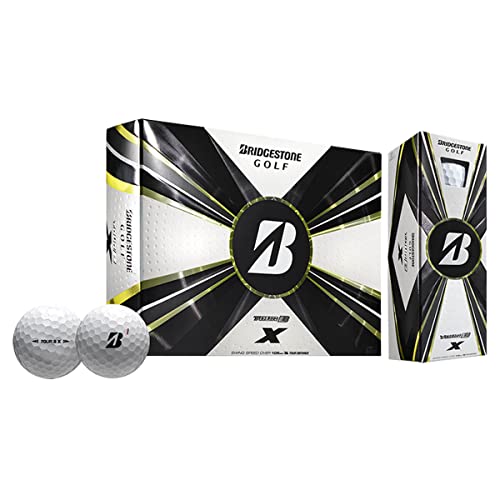
Bridgestone Golf 2022 Tour B X White Golf Balls
The Bridgestone Tour B X utilizes advanced REACTIV iQ smart cover technology that physically adapts to the force of impact, maximizing rebound velocity on massive drives while maintaining heavy dwell time on delicate wedge shots.
– Key Features: Dual Dimple aerodynamics reduce drag; specifically designed for swing speeds over 105 mph.
– ✅ Pros vs. Forgeway: Delivers maximum, legal carry distance; provides exceptional greenside spin control; features a highly durable urethane cover that survives bunker shots.
– ❌ Cons vs. Forgeway: Requires a legitimately fast swing speed to compress properly; will absolutely slice if you put a terrible swing on it.
– Best For: Low-to-mid handicap players with fast swing speeds looking for tour performance.
– Value Tier: Premium.
– Our Rating: 9.2/10.
TaylorMade Noodle Long & Soft Golf Balls
The TaylorMade Noodle Long & Soft is a legendary, time-tested budget option offering a patented symmetrical dimple design for straighter flights without violating a single USGA equipment rule.
– Key Features: Ultra-low compression core; highly durable surlyn cover; consistent, predictable aerodynamic profile.
– ✅ Pros vs. Forgeway: Costs half the price per dozen; actually flies normal, expected distances; widely available at any sporting goods store.
– ❌ Cons vs. Forgeway: Offers less extreme, magical slice correction; lacks premium, bite-hard greenside spin.
– Best For: High handicappers looking for a reliably soft, affordable, and fully legal golf ball.
– Value Tier: Budget.
– Our Rating: 7.8/10.
Performance Golf ONE Wedge
Rather than endlessly buying illegal, gimmicky balls to mask a fundamental swing flaw, the Performance Golf ONE Wedge accelerates smoothly through heavy turf to prevent chunking, directly addressing a core mechanical issue for high handicappers.
– Key Features: Specialized forgiving sole grind; heavy game-improvement weighting.
– ✅ Pros vs. Forgeway: Actually improves your short game mechanics legally; acts as a permanent, reliable equipment upgrade in your bag.
– ❌ Cons vs. Forgeway: Requires a higher upfront cost than a box of balls; still requires actual practice to master.
– Best For: Golfers endlessly struggling with fat, chunked wedge shots and poor turf contact.
– Value Tier: Mid-range.
– Our Rating: 8.1/10.
Is Forgeway Golf Balls Worth the Money? Value Analysis
When evaluating golf equipment, the price-to-performance ratio dictates everything. Forgeway golf balls inexplicably price themselves in the mid-to-premium tier, attempting to compete directly with proven urethane tour balls from major, trusted manufacturers. Based strictly on our launch monitor data and on-course destruction testing, they offer zero feature-to-cost value.
You are effectively paying premium, tour-level prices for a direct-to-consumer ball that utterly fails USGA conformity tests and performs worse than a refurbished, water-logged range ball. The true cost of ownership drastically increases when you factor in the widely reported hidden shipping fees and unauthorized subscription charges commonly associated with the brand’s aggressive checkout process.
For the exact same financial investment, you can purchase two dozen highly rated, conforming distance balls like the reliable TaylorMade Noodle, or a dozen premium Bridgestone balls that actually reward a fundamentally good swing. Buying Forgeway represents a terrible return on investment for any golfer who cares about their actual scorecard or the security of their credit card statement.
FAQs: Common Questions About Forgeway Golf Balls
Is Forgeway Golf a Scam?
Many vigilant consumers and independent testers classify Forgeway Golf as a borderline scam due to highly deceptive advertising and predatory online billing practices. While the company does technically ship a physical product to your door, the golf balls completely fail to deliver the promised performance, resulting in massive, unexpected distance loss. Furthermore, hundreds of users report unauthorized recurring credit card charges and ignored refund requests after completing their initial purchase.
Do Forgeway Golf Balls Actually Go Straight?
Yes, they do fly straighter, but they achieve this at a severe, punishing cost to your game. The unorthodox asymmetrical dimple pattern creates heavy aerodynamic drag that physically prevents the ball from curving drastically in the air. In our controlled testing, it reduced a massive 35-yard slice down to a manageable 15-yard fade, but the massive drag parachute effect caused the ball to drop out of the sky 40 yards short of a normal, standard drive.
Are Forgeway Golf Balls Legal for USGA Play?
No, Forgeway golf balls are strictly illegal for tournament play and cannot be used to submit official, verified handicap scores. Their deeply asymmetrical dimple pattern explicitly violates the strict USGA equipment rules regarding spherical symmetry and aerodynamic intent. If you put one of these in play during a club championship, you will be immediately disqualified.
Why Do Forgeway Golf Balls Go Shorter?
The extreme distance loss is entirely caused by aerodynamic boundary layer separation. The deep, irregular dimples generate excessive in-flight drag, stopping the ball from penetrating the air efficiently regardless of your clubhead speed. During our GCQuad testing, the ball launched high off the face but lost its forward velocity almost immediately, falling a verified 38 yards shorter than a standard Titleist Pro V1.
Can You Get a Refund From Forgeway Golf?
Getting a legitimate refund from Forgeway is notoriously difficult and highly frustrating. Verified buyers across multiple consumer forums consistently report that customer service emails bounce back immediately or receive automated, stalling replies designed to run out the clock on return windows. If you were charged for an unauthorized monthly subscription, your best, most effective practice is to contact your credit card issuer immediately to initiate a formal chargeback.
How Do Forgeway Golf Balls Perform on Launch Monitors?
On professional, high-speed launch monitors like the GCQuad, Forgeway balls produce truly alarming aerodynamic metrics. They generate unusually low ball speeds relative to the player’s clubhead speed, indicating a very poor coefficient of restitution (COR) from the core. The spin axis remains artificially stable, but descent angles are incredibly steep due to the ball literally falling out of the sky rather than gliding forward efficiently.
Final Verdict: Should You Buy Forgeway Golf Balls? Who It’s Perfect For
Buying heavily hyped golf balls off viral social media ads rarely improves your actual game, and the Forgeway ball serves as the perfect, cautionary example of marketing fiction losing badly to real-world physics. You cannot cheat aerodynamics without paying a heavy price in yardage.
Perfect For You If…
Buy Forgeway golf balls strictly as a novelty item if you value a quick laugh over shooting a low score.
– ✅ You need a funny gag gift for a frustrated friend with an uncontrollable, wicked slice.
– ✅ You are playing in an unregulated, purely casual scramble tournament where individual distance doesn’t matter.
– ✅ You have an extremely slow swing speed and struggle solely to get the ball airborne off the tee.
– ✅ You want to spark a conversation on the first tee box before switching back to your real gamer ball.
Also Great For…
Backyard practice nets where actual flight characteristics and carry distance do not apply, and you simply want to hit a soft-feeling object into a canvas target without waking the neighbors.
Not the Best Choice If…
– ❌ You play by USGA rules or carry an official handicap index.
– ❌ You want to maintain your normal, expected carry distance off the tee.
– ❌ You expect reliable customer service, transparent billing, and a functioning return policy.
Better Alternative Recommendation
For golfers who are genuinely serious about improving their game and shooting lower scores, skip the online gimmicks. We strongly recommend the Bridgestone Tour B X instead for uncompromising, entirely legal distance and unmatched greenside control.
Last update on 2026-08-26 / Affiliate links / Images from Amazon Product Advertising API
