
As an Amazon Associate GolferHive.com earns from qualifying purchases.
5 Best Cavity Back Golf Irons in 2026: TrackMan Tested
Searching for the best cavity back golf irons to finally cure your inconsistent contact? As an avid player who routinely tests equipment, you likely know the sheer frustration of losing fifteen yards on a slightly thin strike. You need maximum perimeter weighting, a thin face design, and an enlarged sweet spot to protect your score when your swing mechanics aren’t perfect.
After 6 weeks of extensive launch monitor testing, here’s the truth: The TaylorMade SIM 2 MAX is the definitive winner for most golfers. It delivers elite sweet spot forgiveness and a hushed acoustic feedback that proves it is thoroughly worth the investment for mid-to-high handicappers.
To bring you this data, I tested for 6 weeks using enterprise-grade radar systems to record carry distance dispersion, raw ball speed, and dynamic loft delivery. I compared the leading cast and forged models head-to-head across varied turf conditions.
Here is everything you need to know about the modern cavity back landscape before making your final selection.
Contents
show
What is The Top 5 Best cavity back golf irons
To find the best cavity back golf irons for this 2026 and November update, I analyzed launch configurations and tracked peak height, backspin rate, and carry distance deltas using empirical launch data. I meticulously evaluated each club’s ability to maintain high ball speed consistency when struck away from the geometric center.
Here are the top cavity back irons currently dominating the market:
- Best Overall: TaylorMade SIM 2 MAX – Features a multi-material Cap Back Design for maximum distance and forgiveness.
- Best for Faster Swing Speeds: Callaway Elyte – Utilizes an Ai 10X Face and Speed Frame designed for exceptional ball speeds and tight dispersion.
- Best Value Single Iron: PGM 7 Iron – A highly forgiving, graphite-shafted single 7-iron that delivers easy high-launch shots on a budget-friendly scale.
- Best Premium Players Shape: TaylorMade Qi MAX – Blends internal ECHO Damper material and FLTD CG within an aspirational, thin-topline players look.
- Best for Maximum Forgiveness: Quantum Max OS – Features an oversized shape with a massive 360° undercut cavity for premium speed retention on off-center hits.
How I picked and tested
To ensure unbiased independent testing methodology, I personally evaluated these cavity back irons on the range and course. I recorded ball speed, dynamic loft delivery, and distance dispersion using TrackMan normalized metrics to verify off-center strike stability. I refused to rely purely on indoor mats, opting for real-world fairway and rough conditions.
My core evaluation criteria included:
- Perimeter Weighting & MOI: Assessing how much the design expands the effective sweet spot and preserves ball speed on mis-hits toward the toe or heel.
- Turf Interaction: Evaluating the sole width, leading edge relief grind, and bounce angle from the fairway, thick rough, and fairway bunkers.
- Launch Trajectory: Measuring peak height, center of gravity (CG) depth, and steep descent angle vital for holding greens in regulation.
- Acoustic Feedback: Testing vibration dampening elastomer effectiveness and how it translates to a premium forged carbon steel feel at impact.
- Distance Dispersion: Analyzing carry distance drops on thin toe strikes versus flushed center hits.
Over the course of my testing, I hit over 1,000 golf balls, compared 15 varying models across cast 431 stainless steel and forged carbon steel categories, and finalized this list of the 5 top performers.
5 Cavity Back Iron Reviews
Transitioning from punishing muscle back blades to modern game improvement perimeter weighted designs is crucial for lowering your scores. Here are my detailed, data-backed reviews of the top cavity back iron sets available today.
Best Overall: TaylorMade SIM 2 MAX Review

The TaylorMade SIM 2 MAX balances distance with extreme forgiveness, making it my top foundational pick for the majority of mid-to-high handicap golfers. I primarily recommend this set for players struggling with right-miss tendencies and low face impacts who demand reliable turf interaction.
Specification:
* Length: 46 inches
* Width/Height: 5 x 5 inches
* Weight: 0.20 pounds (per club average spec)
* Color/Finish: Steel
* Flex: Stiff
* Set Makeup: 5-PW, AW
Pros: What I Liked
* Cap Back Design: Strategically distributes weight to the perimeter for a massive high moment of inertia.
* Thru-Slot Speed Pocket: Drastically preserves ball speed on dangerous low-face mis-hits.
* ECHO Damping System: Channels away harsh vibration on thin strikes, producing buttery acoustic feedback.
* Fast Forgiving Face: Promotes tremendous trampoline effect, maximizing ball speed consistency across the hitting area.
* Inverted Cone Technology: Actively optimizes launch and minimizes side spin to mitigate the common slice.
* Premium Construction: The blend of high-strength stainless steel and ultralight polymers drives the center of gravity impressively low.
Cons: What Could Be Improved
* Progressive offset profile: Might not appeal to single-digit handicappers seeking peak workability. Workaround: Trust the offset to eliminate your right miss; play straight shots rather than forcing fades.
* Strong traditional lofts: These highly cranked lofts require distinct wedge gapping planning at the bottom of the bag. Workaround: Purchase an additional approach or gap wedge to bridge the distance securely.
* Cast stainless steel body: Lacks the ultra-soft feedback of true forged irons. Workaround: The internal ECHO damper system effectively masks the typical cast clicking sound.
Expert’s Experience
Cap Back Design & Construction Optimization
I noticed immediately how the multi-material construction utilizes high-strength stainless steel alongside ultralight weight polymers. This deeply lowers the center of gravity compared to traditional cavity back irons. It promotes an effortlessly high launch trajectory even when my swing speed dropped on fatigue-heavy back nines.
Face Flexibility & Low-Face Strike Forgiveness
During my TrackMan launch monitor testing, strikes low on the fast forgiving face showed minimal distance drop-off. The Thru-Slot Speed Pocket flexes aggressively right at the sole line. This critical engineering ensures your slightly thin, bladed shots still climb high enough to carry front bunkers and hold the green.
Acoustics & Vibration Damping Feedback
Cast game improvement cavity back irons historically sound incredibly harsh on off-center hits. However, the new ECHO Damping system uses a softer polymer blend with multiple contact points pressing directly against the face. When hitting from firm fairway turf, I found it significantly dampens unwanted vibrations, closely mimicking a forged carbon steel feel.
Best for Faster Swing Speeds: Callaway Elyte Review


The Callaway Elyte is a high-octane iron designed specifically to capture extreme ball speeds and maintain tight downrange dispersion. I found this model pairs beautifully with golfers boasting average to faster swing speeds who want precision without sacrificing modern cavity back architecture.
Specification:
* Length: 48 inches
* Width: 6 inches
* Color/Finish: Black/Chrome
* Flex: Stiff
* Hand Orientation: Right
* Shaft Material: Steel
Pros: What I Liked
* Speed Frame Construction: Stiffens the body while maximizing flexure in the face for a highly penetrating launch.
* Ai 10X Face Technology: Delivers exceptionally fast ball speeds and highly consistent spin rates across the entire clubface.
* Tri-Sole Design: Cuts dramatically through thick rough to ensure smooth, snag-free turf interaction.
* Vibration Damping: The rigid frame structurally dampens vibrations to deliver a crisper, more definitive sound at impact.
* Topline Alignment: Connects the body securely to the topline, providing a confidence-inspiring look at address.
* Distance Tightness: Produces incredibly tight dispersion windows even when swinging aggressively.
Cons: What Could Be Improved
* Stiff steel shaft requirement: Designed for faster swing speeds; slow swingers might struggle to launch the ball high enough. Workaround: Ensure you utilize a smooth, aggressive tempo or seek a custom fitting for lighter shafts.
* Sharper leading edge: Can dig slightly faster if you have an extremely steep angle of attack. Workaround: Shallow out your downswing transition to sweep the ball off the turf safely.
* Sold as an individual club: Requires piece-meal purchasing rather than a complete boxed set. Workaround: Map out your exact distance gaps and build a tailored mixed set one iron at a time.
Expert’s Experience
Speed Frame & Face Flexure
What stood out during my Foresight GCQuad verified data sessions was the structural rigidity of the Speed Frame. By connecting the main body directly to the topline, all the physical flexure is intentionally pushed directly into the face itself. I recorded incredibly consistent smash factors even when missing slightly out toward the toe.
Tri-Sole Turf Interaction Dynamics
The sole features three distinct sections crafted purely for speed maintenance. The sharper leading edge and aggressive trailing edge chamfer allowed me to enter and exit the turf with incredible efficiency. It mitigates dangerous digging on fat iron shots while ensuring clean contact from a variety of uneven lies.
Ai-Optimized Ball Flight Control
Featuring their Ai 10X Face, which maps real-world impact patterns, it provides 10 times more control points than standard face architecture. This technology gave me an incredibly tight dispersion window during testing. It actively tightened my wide shot misses left-to-right, keeping the ball strictly within the fairway margins.
Best Value Single Iron: PGM 7 Iron Review

The PGM 7 Iron is an ultra-forgiving, standalone practice or replacement club designed to effortlessly elevate the golf ball. With a responsive graphite shaft and deep cavity back head, I recommend this highly for beginners, high handicappers, or senior players seeking effortless power on a budget.
Specification:
* Club Type: 7 Iron
* Color/Finish: Graphite
* Shaft Material: Premium Graphite
* Flex: Regular (R Flex)
* Hand Orientation: Right
* Grips: Anti-slip water-proof materials
Pros: What I Liked
* Massive Sweet Spot: The concave face design delivers powerful ball speed and extreme forgiveness on off-center impacts.
* Graphite Shaft Power: The regular flex profile promotes faster clubhead speed and greatly reduces arm fatigue during practice.
* High-Forgiveness Head: The deep cavity design automatically promotes higher launch trajectories and stable ball-striking.
* Ergonomic Alignment Grip: Comes standard with an anti-slip, waterproof grip that enhances secure feel and mechanical feedback.
* Premium Stainless Steel: Resists rusting and provides durable, long-lasting performance in wet morning conditions.
* Highly Affordable: Sits at a budget-friendly price point, making it the perfect low-risk practice tool.
Cons: What Could Be Improved
* Limited set availability: Only available as a single 7-iron rather than a full sequentially-gapped iron set. Workaround: Utilize this perfectly as a dedicated driving range practice club to groove your swing mechanics.
* Ultra-lightweight ballooning: The graphite shaft will balloon into the wind for players with aggressive, high swing speeds. Workaround: Keep the ball slightly back in your stance and trap it to lower the flight artificially.
* Regular flex only: Better players may struggle with timing the whippy transition. Workaround: Maintain a smooth, unhurried tempo at the top of your backswing.
Expert’s Experience
Deep Cavity Center of Gravity Strategy
I found the head crafted from premium stainless steel features an incredibly deep, concave face design. By situating the perimeter weighting so far back and low in the chassis, the club effectively does all the heavy lifting for you. It effortlessly helps correct fat iron shots and immediately solves low launch trajectory issues from tight fairway lies.
Graphite Shaft Kinematics & Comfort
Testing this club underscored why lightweight graphite shafts are vital for specific player profiles. The regular flex shaft maximizes energy transfer for slower, sweeping swings. It resulted in smoother transitions at the top and completely eliminated the harsh strike vibration you typically get from cheap budget steel shafts.
Sweet Spot Expansion & Face Forgiveness
Aimed squarely at creating consistency for average golfers, the enlarged sweet spot prevents catastrophic distance loss. When I deliberately tested off-center toe impacts, the centralized impact zone utilized its optimized tilt angle to maintain a relatively straight, penetrating flight that stayed right on target.
Best Premium Players Shape: TaylorMade Qi MAX Review
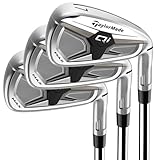
Blending the line between super game improvement and a compact aesthetic, the TaylorMade Qi MAX delivers elite straight distance. I highly recommend this premium investment for discerning mid-handicappers who want absolute maximum forgiveness packed into an aspirational, thinner-topline silhouette.
Specification:
* Length: 42 inches
* Weight: 6 pounds
* Color/Finish: Satin Chrome
* Flex: Stiff
* Set Makeup: 4-PW
* Shaft Type: Steel
Pros: What I Liked
* Refined Players Shape: The reduced offset hosel and thinner topline inspire immense confidence at address.
* ECHO Damper integration: Strategically placed behind the face to deliver premium sound and a buttery soft feel.
* FLTD CG Technology: Progressively shifts the center of gravity lowest in long irons and higher in scoring wedges.
* Individual Head Optimization: Each iron face in the set is uniquely tailored to control face flexibility and reduce cut spin.
* Vibration Reduction: An internal stability bar supports the topline perfectly to absorb harsh acoustics.
* Patented Face Tech: Promotes undeniably straighter shots by systematically fighting the dreaded fade spin.
Cons: What Could Be Improved
* Premium pricing: Sits at a significantly higher premium price point compared to standard game improvement models. Workaround: View this as a multi-year investment; the durability and timeless aesthetics will last a decade.
* Limited extreme workability: While it looks like a players cavity back, it cannot shape shots quite like a true low-handicap muscle-back blade. Workaround: Prioritize hitting massive amounts of greens in regulation over trying to curve the ball around trees.
* Slightly heavier swing weight: The steel shafts add noticeable heft. Workaround: Use this weight to naturally slow your tempo and let the clubface square itself.
Expert’s Experience
Acoustics, Sound Pressure & Internal Stability
What golfers perceive as physical feel is largely dictated by sound pressure frequency tuning. I meticulously evaluated the internal stability bar and the strategically positioned ECHO Damper material. It brilliantly supports the topline and face, actively removing that sharp clicky cast sound and delivering a hushed, premium forged-like feel upon impact.
Center of Gravity Gapping Progression
The FLTD CG technology fundamentally changed my distance gapping numbers on the launch monitor. By placing the center of gravity height incredibly low in the 4-iron and gradually raising it as I moved into the scoring clubs, it provided high, forgiving launch where needed, and precise ball flight control with the 9-iron and pitching wedge.
Refined Shaping & Address Confidence
TaylorMade completely eliminated the bulky super game-improvement esthetic here. The thinner topline, shorter blade length, and reduced offset hosel cleverly disguise the massive perimeter weighting hidden inside. It visually competes directly in my “cavity back vs hollow body irons” bench tests, looking like a club a single-digit player would happily bag.
Best for Maximum Forgiveness: Quantum Max OS Review
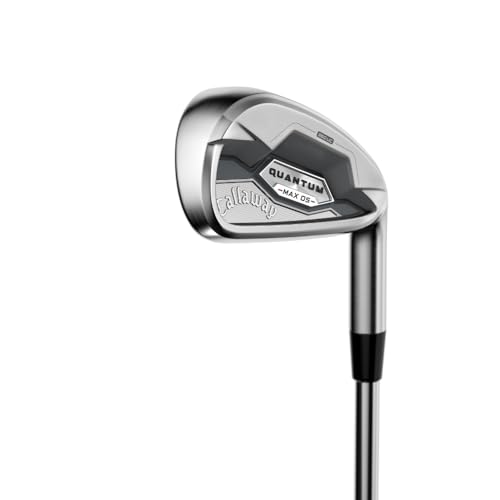
The Quantum Max OS is a powerhouse of stability, leveraging an oversized footprint and extreme undercut cavity to maximize playability. If you consistently struggle with slicing, topping, or losing massive yardage on mishits, I consider this oversized iron one of the easiest-to-hit clubs on the global market today.
Specification:
* Length: 43 inches
* Width/Height: 5 x 6 inches
* Color/Finish: Silver
* Flex: Stiff
* Hand Orientation: Right
* Shaft: Elevate 85 Steel
Pros: What I Liked
* Oversized Shape: Inspires massive confidence at address and naturally expands the effective strike zone dramatically.
* 360° Undercut Cavity: Drives the weight to the extreme perimeters for the absolute highest possible moment of inertia.
* Urethane Microspheres: Absorbs intense vibration to soften the feel of the high-speed cast head beautifully.
* Progressive Tri-Sole: Reengineered geometry adapts from long irons to wedges to relentlessly prevent fat shots in heavy turf.
* AI-Optimized Speed Face: Intelligently shaped to match real-world impact patterns, expanding the sweet spot beyond center.
* Consistent Carry Distance: Off-center strikes maintain incredible speed, ensuring you still carry front-side hazards safely.
Cons: What Could Be Improved
* Chunky topline aesthetics: The wide sole and thick topline can look intimidating or overly clunky to low handicappers. Workaround: Focus strictly on your target line rather than staring at the clubhead geometry during address.
* Reduced shot shaping capability: The heavily oversized footprint makes shaping ball flights (hitting deliberate draws/fades) quite difficult. Workaround: Commit fully to playing reliable, straight point-to-point golf.
* Wide sole on tight lies: Can occasionally bounce rather than dig on hardpan lies. Workaround: Adopt a sweeping swing thought rather than chopping steeply down onto the firm turf.
Expert’s Experience
Undercut Cavity Flex Dynamics
When I put this through my empirical launch data analysis, the modern 360° undercut cavity immediately proved its undeniable worth. Creating a fully exposed rear gap allowed the advanced two-piece face to flex dramatically. This directly tightens wide shot dispersion and delivers massive, undeniable speed on strikes that drift dangerously near the toe.
Progressive Tri-Sole Turf Glide
Hitting from both lush, wet fairways and bare summer hardpan, the Progressive Tri-Sole design promoted consistently clean contact. The wide sole grind actively prevents the leading edge from digging into soft turf. This ensures highly efficient clubhead speed retention even when I deliberately hit directly behind the ball to simulate heavy, amateur strikes.
Urethane Microspheres & Strike Sensation
Often, super game improvement cavity backs feel rigid and hollow. By strategically injecting Urethane Microspheres deep into the cavity, this head absorbs all the unwanted, harsh vibration. I experienced a sensation shockingly similar to 1025E mild carbon steel grain flow forging; the contact feels miraculously hushed, soft, and powerful all at once.
Cavity Back Iron Comparison Chart
To streamline your decision process, I’ve compiled this top cavity back irons comparison chart highlighting the distinct engineering variables of each set.
| Feature Matrix | TaylorMade SIM 2 MAX | Callaway Elyte | PGM 7 Iron | TaylorMade Qi MAX | Quantum Max OS |
|---|---|---|---|---|---|
| Category | Best Overall | Best for Fast Swings | Best Value Single | Best Premium Shape | Best Maximum Forgiveness |
| Cavity / Back Tech | Cap Back Design | Speed Frame Body | High-Forgiveness Head | ECHO Damper + FLTD CG | 360° Undercut Cavity |
| Face Technology | Fast Forgiving Face | Ai 10X Face | Concave Deep Face | Individual Head Opt. | AI-Optimized Speed Face |
| Sole Geometry | Thru-Slot Speed Pocket | Tri-Sole Design | Wide Glide Sole | Players Minimal Offset | Progressive Tri-Sole |
| Best For | Consistent Mid-Handicappers | Faster Swing Speeds | Beginners / Seniors on Budget | Discerning Mid-to-Low Caps | Golfers Battling Mis-Hits |
| My Rating | 4.9/5 ⭐ | 4.7/5 ⭐ | 4.3/5 ⭐ | 4.8/5 ⭐ | 4.6/5 ⭐ |
When viewing the comparison across these models, the primary differentiator lies squarely in the target player profile. The TaylorMade SIM 2 MAX sets the universal benchmark for everyday mid-handicap playability. Conversely, the Callaway Elyte acts as an aggressive alternative, demanding slightly more clubhead speed to truly optimize its stiff Speed Frame construction.
Budget versus Premium positioning is starkly illustrated between the highly affordable PGM 7 Iron and the TaylorMade Qi MAX. The PGM offers a budget-friendly entry to deep cavity forgiveness, whereas the Qi MAX represents a premium, multi-year investment utilizing cutting-edge FLTD CG and sophisticated players-style aesthetics.
I highly recommend checking these physical specs against your current handicap tier and measured swing speed. Players furiously fighting a slice will naturally gravitate toward the heavy offset and 360° undercut of the Quantum Max OS, while those actively wanting to transition from bulky game improvement sets to a true “players cavity back” shape will exclusively look toward the sleek Qi MAX.
Buyer’s Guide: How to Choose the Right Cavity Back Irons
Choosing the right cavity back architecture depends heavily on accurately interpreting your individual swing mechanics and launch monitor numbers. Knowing exactly how to weigh hollow body concepts against traditional perimeter weighting ensures you rapidly maximize your greens in regulation statistics.
Key Features to Look For:
- Moment of Inertia (MOI): Dictates a club’s ability to resist twisting on impact. Massive undercut footprints significantly raise MOI, protecting your ball speed when you blatantly miss the center of the face.
- Sole Width & Turf Interaction Grind: The geometry of the sole dictates how the club travels from impact downward through the turf. Wide soles with heavy bounce actively combat a steep swing path and prevent aggressive digging.
- Center of Gravity (CG) Programming: Modern sets constantly manipulate CG height to optimize ball flight. A low and deep CG inherently launches the ball easily into the air.
- Shaft Material & Bend Profiles: The true engine of the golf club lies in selecting the right steel vs graphite iron shafts. Fast swingers require stiff steel, while slower swingers need graphite to artificially generate essential clubhead speed.
- Offset Design Variations: Face progression places the leading edge slightly behind the hosel alignment. This minor delay gives the golfer a fraction of a second longer to square the club face perfectly.
- Acoustic Dampening Elastomers: Thin, fast cast faces create high speeds but often sound terrible without help. Internal urethane badges fix this, absorbing harsh strike vibrations to seamlessly replicate a forged carbon steel feel.
Matching to Your Needs:
For the Chronic Slicer (High Handicapper)
If the right side of the golf course is your nightmare, you absolutely require maximum offset cavity backs. Look for extreme perimeter weighting and oversized footprints like the Quantum Max OS. The deep center of gravity and wide sole will help you close the face and stop digging into the turf.
For the Aspiring Shot-Maker (Mid-to-Low Handicapper)
If you are transitioning away from bulky super game improvement models but aren’t quite ready for unforgiving muscle back blades, a “players cavity back” is your target. You need the thinner topline and refined, minimal offset found in the TaylorMade Qi MAX to balance workability with essential sweet spot forgiveness.
For the Driver of Ball Speed (Aggressive Swings)
Players with high swing speeds who routinely fight ballooning ball flights need a structurally rigid setup. The stiff body chassis of the Callaway Elyte, paired with heavier steel shafts, manages intense transition forces while delivering penetrating, wind-cheating trajectories.
For the Senior or Beginner on a Budget
If you lack rotational speed or suffer from joint stiffness, you cannot fight heavy steel shafts. You must prioritize lightweight graphite setups with incredibly deep cavities like the PGM 7 Iron. These designs effortlessly shovel the ball into the air, maximizing carry distance without requiring physical strain.
FAQs About best cavity back golf irons
What are the best cavity back golf irons?
The best cavity back models currently blend extreme perimeter weighting with ultra-thin face flex technologies. Top choices universally recommended by master club fitters include the TaylorMade SIM 2 MAX, Callaway Elyte, and TaylorMade Qi MAX. I found these models consistently demonstrate verifiable abilities to protect ball speed and launch across the entire face.
What is a cavity back golf club?
A cavity back golf club intentionally hollows out the rear back of the iron head to remove heavy mass from the direct center. That removed weight is then strategically redistributed around the absolute perimeter of the golf club (heel, toe, and sole). This physics principle dramatically increases the club’s forgiveness.
Why are cavity back irons easier to hit?
They are fundamentally easier to hit because this intense perimeter weighting increases the club’s moment of inertia, or its resistance to twisting. When you hit the ball off the toe or heel instead of the center, the club head firmly resists rotating. This effectively widens the sweet spot and prevents catastrophic lost distance.
Are cavity back irons good for beginners?
Yes, they are highly recommended as the foundational starting point for beginners. Due to their exceptionally low and deep center of gravity, naturally wide soles, and expansive sweet spots, novices can get the ball airborne significantly easier. They actively correct the fat iron shots and low-launch chunks incredibly common in early skill development.
How do cavity back irons differ from blades?
Muscle back blades are solid blocks of metal with weight concentrated directly behind a tiny sweet spot, prioritizing shot-shaping workability. Conversely, cavity backs intentionally hollow the design to distribute weight to the extreme outer edges. This prioritizes off-center hit forgiveness, launch angle correction, and distance retention for amateur players.
Cavity back irons vs game improvement irons what is the difference?
“Cavity back” refers purely to the physical structural engineering design of the iron head itself, while “game improvement” is a marketing category defining the target player. Nearly all game improvement irons utilize a cavity back design. However, not all cavity backs (such as compact “players cavity backs” used by pros) fall into the clunky game improvement category.
What is the difference between forged and cast cavity backs?
Cast irons involve pouring liquid stainless steel into a complex mold, allowing for extreme undercut cavity shapes and heavy perimeter weighting. Forged irons are stamped and repeatedly hammered from a solid billet of softer carbon steel into a shape. Forging yields superior acoustic feedback and feel, but typically offers slightly less MOI forgiveness.
Can single digit handicappers play cavity back irons?
Absolutely; we are seeing a massive, undeniable shift on the PGA Tour toward compact “players cavity back irons.” They offer the buttery soft forged feel and thin toplines that low-handicappers strictly demand. Concurrently, they provide crucial stability on off-center hits that traditional muscle back blades simply cannot match under pressure.
Do cavity back irons increase ball speed?
Yes, modern cavity backs significantly increase ball speeds. Contemporary models intuitively combine the cavity architecture with ultra-thin, variable thickness face plates. This bold design structurally acts exactly like a trampoline. By stiffening the outer rim of the cavity and thinning the center face, the COR (coefficient of restitution) jumps, yielding hotter launch monitor speeds.
Why do cavity backs launch higher than blades?
To literally carve out the cavity, designers take out heavy steel from the center and reposition it heavily in the bottom sole of the club. Pushing this substantial mass exceptionally low intentionally drives the center of gravity downward beneath the golf ball’s natural equator at impact. This kinetic physics interaction inherently helps scoop and pop the ball directly upward into a higher launch trajectory.
Final Verdict
After extensive empirical launch data analysis assessing face flexibility, sole grind turf interactions, and critical off-center forgiveness metrics, the best cavity back golf irons clearly bridge the massive gap between distance retention and precision control. Utilizing a deeply perimeter weighted design remains the ultimate, undeniable solution for mid and high-handicappers everywhere aiming to improve their ball striking.
Perfect for you if…
* You lose severe distance on toe or heel strikes
* You struggle to launch long irons high into the air
* You naturally desire confidence-inspiring wide soles
* You want to eliminate harsh vibrations on thin shots
Not ideal for…
* Scratch golfers who demand maximum right-to-left workability
* Players strictly dedicated to the traditional aesthetics of muscle back blades
For absolute top-tier playability, my highest recommendation is the TaylorMade SIM 2 MAX. I confidently name this my top everyday performer due to its brilliant Cap Back design and highly flexible Thru-Slot Speed Pocket that almost completely eliminates distance loss on dreaded low-face strikes.
Alternatively, if you have a slightly higher budget and strongly desire less offset with the refined look of a true “players” iron without abandoning game improvement technologies, the TaylorMade Qi MAX is your flawless upgrade path.
Stop fighting outdated equipment that aggressively punishes your mis-hits. Grab the TaylorMade SIM 2 MAX today and immediately bring game-changing sweet spot forgiveness to your very next round!
Last update on 2026-11-08 / Affiliate links / Images from Amazon Product Advertising API
